All posts by blackfriar

On parenting


http://www.philosophersmail.com/relationships/why-when-it-comes-to-children-love-may-not-be-enough/

Why – when it comes to children – love may not be enough

Anyone of childbearing age will be surrounded by examples of catastrophic parenting in their own and previous generations. We hear no end of gruesome stories about breakdowns and resentments, shame and addiction, chronic failures of self-confidence and inabilities to form satisfying relationships. And at the root of all these varieties of suffering, one central cause sticks out: a lack of love. It was because the parents were remote and domineering, unreliable and frightening that life has never been quite complete.

From such failures, a major assumption has come to dominate modern ideals of parenting: that one must, above all else, love one’s child thoroughly, with immense sympathy, gentleness and kindness and that if one does so, the child will develop into a happy, loving and fulfilled human being.

This is the Romantic view of parenting and it is at its most vivid and self-assured in the early years, especially at moments when the child (finally) lies asleep in its cot, defenceless before the world.

Official Pictures of Princess Estelle Silvia Ewa Mary of Sweden, Duchess of Ostergotland
© Getty

Yet, despite immense investments and profound devotion, one is – gradually – liable to be inducted into a far more complex and challenging set of truths: that love is not a universal panacea and that giving unconditional affection is no guarantee of all the results one had hoped for.

The terrifying 3am truths about parenting run a little like this:

You are a punchbag

Nursery
© UIG/Getty

The blades of your child’s remote-controlled helicopter snapped after five minutes, just as you were starting to get the hang of flying it. The fault lies squarely with the manufacturers. But, sadly, they were not present in the kitchen – so, at once and not for the first time, you became the target for the raging disappointment of your child.

The repeated bad behaviour is surprising of course (it wasn’t meant to be that way), but it is a perverse sort of tribute to you nevertheless. One has to feel rather safe around someone in order to be this difficult. You certainly weren’t so tricky with your parents when you were young, but then again, you never felt so loved. All those assurances – ‘I will always be on your side’ – have paid off perfectly: they have encouraged your child to direct their every frustration and disappointment onto the loving adult who has signalled that they can, and will, take it.

You have to be the spoil sport

Human nature has a strong – and exceedingly inconvenient – bias towards indulging in whatever is most immediately pleasant and fun. And yet the central, unavoidable task of being a loving parent is to encourage the child to delay gratification in the interests of longer-term fulfilment. That’s why there will be fights. Constantly.

After all, it is so much nicer to play Minecraft than to learn how to spell ‘scythe’ or ‘embarrassment’; so much more amusing to see what happens if you put a hosepipe in the car’s exhaust than to do maths homework; so much better to read a magazine than brush one’s teeth, so much more gratifying to stay in bed than have a shower.

Out of love, a parent must – all the time, in small ways and large – say no. And for this, they will be severely punished. They will be treated as if they had arbitrarily made up the mechanics of tooth decay or had designed an economic system where the playing of computer games was disconnected from a capacity to pay bills. They will be punished for always bringing up unwelcome facts. And they will be very unfavourably compared with people who give the child whatever they want – because they just don’t care about them. It’s the thoughtless hedonistic characters, the ones who suggest all-night cartoon sessions and come around with iPads, who will be viewed as the heroes while the caring, denying parent has to contend with being called a ‘meanie’ and, later perhaps, a fascist.

Two children playing while a man reads a newspaper, c 1949.
© SSPL/Getty

You have to exert authority rather than teach

The dream is to coax the child into doing certain difficult things without ever having to demand they do so by force. The dream is not to have to ‘exert authority’, by which one means, bypass reason in order to impose a conclusion. The dream is to teach, and never to rely on the more basic weapons, like the assertion that one is the older, richer, bigger party.

One thinks with distaste of the Victorian parent demanding obedience simply by saying ‘I am your mother, I am your father’. To the child, the meaning of these words, mother and father, have changed entirely; they now mean merely ‘someone who will make it nice for me’ and ‘someone I will agree with if I see the point of what they’re saying.’

But attempts to teach and appeal to a child’s reason can only go so far. Whatever one says in a gentle voice, the children won’t eat vegetables; they won’t want to get out of bed in the morning; they will want to mock their younger brother or sister; they won’t stop playing the computer game.

When the child is very small, it is easy enough to deal with these protests: one can just lift them up or distract them in some kindly way for a moment. But later, by six, one has to use authority: one must simply assert that one knows best without explaining one’s reasons.

The child wouldn’t have the relevant bits of experience that would render one’s lessons comprehensible. A nine-year-old girl cannot understand how humiliating her six-year-old brother physically is a bad idea because this might make it hard for him to relate easily to women when he is older. It isn’t her fault she can’t understand. It would indeed be wholly unreasonable to expect a nine-year-old to be reasonable – and correctly comprehend the force and direction of adult concern.

The dream is that one will be able to pass on insights to the child that were painfully accumulated through experience, and thereby save them time. But in the absence of experience, insight doesn’t work. One cannot rush children to conclusions; one cannot spare them time. They will need, with difficulty, to make many of the same mistakes (and a few new ones too) and waste a good part of their lives finding out what you already know full well.

You can’t make things too nice for them

Volume 2, Page 74, Picture, 1. A picture of a mother telling off her son. 1958
© Popperfoto/Getty

Modern culture is deeply vexed – and appalled – by the thought that development might require suffering. We have been traumatised by the barbaric old-fashioned enthusiasm for punishment, the view – expressed by generations of sadistic Victorian school masters – that success demands pain, that there is a necessary relationship between early discomfort and humiliation and later strength and ‘character’.

But we have not merely rejected the Victorian mechanisms for inflicting suffering (the cold showers, the beatings), we have for the most part sought to abolish suffering altogether. Kindness has been triumphant.

And yet this attempt to abolish suffering involves waging a counter-productive and ultimately cruel war with the facts of human nature. We know from our own experience that we have at key moments grown through things that had a painful side to them: that there were terrors, rejections and disappointments that – in the end – made us more mature and better able to pursue our goals. We know that the drive to accomplish certain things, to master some difficult material, to win out over others, gained some of its power from fear and desperate insecurity. Because someone (perhaps a parent) didn’t believe in us, we redoubled one’s efforts. Because we were afraid of the consequences of failure, because succeeding was the only way to impress someone we loved but who wasn’t easily impressed, we put on an extra spurt.

We desperately want our child to grow mature but without going through awful things. We hate being an agent of fear. We want always to cheer and to hug. We want everything to be nice. Yet we also know, in our hearts, that this can only be a path to ruin.

You can’t guarantee their goodness

The Romantic view of existence sees all humans as fundamentally good from birth: it is only upbringing and a lack of love that corrupts and damages us and in the process, makes us cruel. Romanticism states that if only a child can grow up anxiety free, secure and encased in love, it will never break another child’s toy, rip up their paintings or try to scare them. The child will be reliably kind if she or he has reliably been shown kindness.

But experience suggests the existence of some ineluctably dark sides hard-wired in us and beyond the reach of the gentlest behaviour: certain kinds of aggression, cruelty and violence appear to be a given. A child may just want to hit its sibling out of excess vitality, boredom or native sadism. It might just be fun to smack someone in the face to see what happens.

That’s why there used to be such an emphasis on manners. Those who upheld them didn’t believe that a child ever could be spontaneously good simply because they’d been shown love. Indeed, a firm denial of love was what was necessary to help the child to create a wall between what they might feel inside and what they knew they could express with others. Being strict wasn’t a route to making anyone evil, it was a way to teach a person to keep their evil firmly locked up inside themselves.

You can’t guarantee their success

Book At Bedtime
© Getty

The modern parent believes that it might be possible to mould a happy, fulfilled, successful human. From this flows the minute attention to detail, from the purchase of the cot to the time-tabling of after-school activities. It is this that explains the Mandarin lessons, the French horn, the educational trips to the countryside and the ruinous tutor fees – because with all this in place, fate and failure can surely be kept at bay.

Yet the relationship between effort and return is more bizarre and more random. We cannot spare those we love the cup of human sorrow – whatever the intensity of our after-school programmes. We are always statistically most likely to give birth to mediocrities.

You will be forgotten

You take great care not to be frightening. You make silly jokes, put on funny voices, pretend to be a bear or a camel – all so as not to intimidate, so as to be approachable, the way one’s own parents were not. It should be a recipe for reciprocated love.

But weirdly, we rather like difficult people in a way, people we can’t quite read, who aren’t around so often, who are a bit scary. They hook us in – in a way the kind, stable ones never quite do. One loses authority by being natural, approachable, friendly, a bit daft, the clown who doesn’t want to scare.

An even more dispiriting thought comes to mind. Love them reliably and without fear and you will be forgotten. Be distant, intermittent, often absent and deeply volatile, and they will be obsessed with you for life.

And with these thoughts fully aired, it will be time for the kindly parent to attempt to return to sleep. It will be a long day – with the kids – tomorrow.

When is one ready to get married?

This is all very excellent and pertinent…

http://www.philosophersmail.com/relationships/when-is-one-ready-to-get-married/

When is one ready to get married?

Fletcher Jones III And Dalene Kurtis Wedding
© WireImage

It used to be when you’d hit certain financial and social milestones: when you had a home to your name, a set of qualifications on the mantelpiece and a few cows and a parcel of land in your possession.

But when, under the influence of Romantic ideology, this grew to seem altogether too mercenary and calculating, the focus shifted to emotions. It came to be thought important to feel the right way. That was the true sign of a good union. And the right feelings included the sense that the other was ‘the one’, that you understood one another perfectly and that you’d both never want to sleep with anyone else again.

These ideas, though touching, have proved to be an almost sure recipe for the eventual dissolution of marriages – and have caused havoc in the emotional lives of millions of otherwise sane and well-meaning couples.

As a corrective to them, what follows is a proposal for a very different set of principles, more Classical in temper, which indicate when two people should properly consider themselves ready for marriage.

Baron Axel de Sambucy de Sorgue and Charlotte Paul-Reynaud wedding, Marrakech, Morocco - 08 Jun 2014
© REX/DNphotograhy/SIPA

We are ready for marriage…

1. When we give up on perfection 

We should not only admit in a general way that the person we are marrying is very far from perfect. We should also grasp the specifics of their imperfections: how they will be irritating, difficult, sometimes irrational, and often unable to sympathise or understand us. Vows should be rewritten to include the terse line: ‘I agree to marry this person even though they will, on a regular basis, drive me to distraction.’

However, these flaws should never be interpreted as merely capturing a local problem. No one else would be better. We are as bad. We are a flawed species. Whomever one got together with would be radically imperfect in a host of deeply serious ways. One must conclusively kill the idea that things would be ideal with any other creature in this galaxy. There can only ever be a ‘good enough’ marriage.

For this realisation to sink in, it helps to have had a number of relationships before marrying, not in order to have the chance to locate ‘the right person’, but so that one can have ample opportunity to discover at first hand, in many different contexts, the truth that everyone (even the most initially exciting prospect) really is a bit wrong close up.

2. When we despair of being understood

Alain Delon And Romy Schneider
© Mondadori/Getty

Love starts with the experience of being understood in a deeply supportive and uncommon way. They understand the lonely parts of you; you don’t have to explain why you find a particular joke so funny; you hate the same people; they too want to try out a particular sexual scenario.

This will not continue. Another vow should read: ‘However much the other seems to understand me, there will always be large tracts of my psyche that will remain incomprehensible to them, anyone else and even me.’

We shouldn’t, therefore, blame our lovers for a dereliction of duty in failing to interpret and grasp our internal workings. They were not tragically inept. They simply couldn’t understand who we were and what we needed – which is wholly normal. No one properly understands, and can therefore fully sympathise with, anyone else.

3. When we realise we are crazy

This is deeply counter-intuitive. We seem so normal and mostly so good. It’s the others…

But maturity is founded on an active sense of one’s folly. One is out of control for long periods, one has failed to master one’s past, one projects unhelpfully, one is permanently anxious. One is, to put it mildly, an idiot.

If we are not regularly and very deeply embarrassed about who we are, it can only be because we have a dangerous capacity for selective memory.

4. When we are ready to love rather than be loved 

Confusingly, we speak of ‘love’ as one thing, rather than discerning the two very different varieties that lie beneath the single word: being loved and loving. We should marry when we are ready to do the latter and are aware of our unnatural, immature fixation on the former.

We start out knowing only about ‘being loved.’ It comes to seem – very wrongly – like the norm. To the child, it feels as if the parent is simply spontaneously on hand to comfort, guide, entertain, feed, clear up and remain almost always warm and cheerful. Parents don’t reveal how often they have bitten their tongue, fought back the tears and been too tired to take off their clothes after a day of childcare. The relationship is almost entirely non-reciprocal. The parent loves; but they do not expect the favour to be returned in any significant way. The parent does not get upset when the child has not noticed the new hair cut, asked carefully-calibrated questions about how the meeting at work went or suggested that they go upstairs to take a nap. Parent and child may both ‘love’, but each party is on a very different end of the axis, unbeknownst to the child.

Bormes-les-Mimosas (Cote d'Azur, French Riviera)
© U. Baumgarten/Getty

This is why in adulthood, when we first say we long for love, what we predominantly mean is that we want to be loved as we were once loved by a parent. We want a recreation in adulthood of what it felt like to be ministered to and indulged. In a secret part of our minds, we picture someone who will understand our needs, bring us what we want, be immensely patient and sympathetic to us, act selflessly and make it all better.

This is – naturally – a disaster. For a marriage to work, we need to move firmly out of the child – and into the parental position. We need to become someone who will be willing to subordinate their own demands and concerns to the needs of another.

There’s a further lesson to be learnt. When a child says to its parent ‘I hate you’, the parent does not automatically go numb with shock or threaten to leave the house and never come back, because the parent knows that the child is not giving the executive summary of a deeply thought-out and patient investigation into the state of the relationship. The cause of these words might be hunger, a lost but crucial piece of Lego, the fact that they went to a cocktail party last night, that they won’t let them play a computer game, or that they have an earache…

Parents become very good at not hearing the explicit words and listening instead to what the child means but doesn’t yet know how to say: ‘I’m lonely, in pain, or frightened’ – distress which then unfairly comes out as an attack on the safest, kindest, most reliable thing in the child’s world: the parent.

We find it exceptionally hard to make this move with our partners: to hear what they truly mean, rather than responding (furiously) to what they are saying.

A third vow should state: ‘Whenever I have the strength in me to do so, I will imitate those who once loved me and take care of my partner as these figures cared for me. The task isn’t an unfair chore or a departure from the true nature of love. It is the only kind of love really worthy of that exalted word.’

5. When we are ready for administration

The Romantic person instinctively sees marriage in terms of emotions. But what a couple actually get up to together over a lifetime has much more in common with the workings of a small business. They must draw up work rosters, clean, chauffeur, cook, fix, throw away, mind, hire, fire, reconcile and budget.

None of these activities have any glamour whatsoever within the current arrangement of society. Those obliged to do them are therefore highly likely to resent them and feel that something has gone wrong with their lives for having to involve themselves so closely with them. And yet these tasks are what is truly ‘romantic’ in the sense of ‘conducive and sustaining of love’ and should be interpreted as the bedrock of a successful marriage, and accorded all the honour currently given to other activities in society, like mountain climbing or motor sport.

A central vow should read: ‘I accept the dignity of the ironing board.’

Mid adult man looking at iron over colored background
© REX/Mood Board

6. When we understand that sex and love do and don’t belong together

The Romantic view expects that love and sex will be aligned. But in truth, they won’t stay so beyond a few months or, at best, one or two years. This is not anyone’s fault. Because marriage has other key concerns (companionship, administration, another generation), sex will suffer. We are ready to get married when we accept a large degree of sexual resignation and the task of sublimation.

Both parties must therefore scrupulously avoid making the marriage ‘about sex’. They must also, from the outset, plan for the most challenging issue that will, statistically-speaking, arise for them: that one or the other will have affairs. Someone is properly ready for marriage when they are ready to behave maturely around betraying and being betrayed.

The inexperienced, immature view of betrayal goes like this: sex doesn’t have to be part of love. It can be quick and meaningless, just like playing tennis. Two people shouldn’t try to own each other’s bodies. It’s just a bit of fun. So one’s partner shouldn’t mind so much.

Jealous Wife
© Getty

But this is wilfully to ignore impregnable basics of human nature. No one can be the victim of adultery and not feel that they have been found fundamentally wanting and cut to the core of their being. They will never get over it. It makes no sense, of course, but that isn’t the point. Many things about us make little sense – and yet have to be respected. The adulterer has to be ready to honour and forgive the partner’s extreme capacity for jealousy, and so must as far as is possible resist the urge to have sex with other people, must take every possible measure to prevent it being known if they do and must respond with extraordinary kindness and patience if the truth does ever emerge. They should above all never try to persuade their partner that it isn’t right to be jealous or that jealousy is unnatural, ‘bad’ or a bourgeois construct.

On the other side of the equation, one should ready oneself for betrayal. That is, one should make strenuous efforts to try to understand what might go through the partner’s mind when they have sex with someone else. One is likely to think that there is no other option but that they are deliberately trying to humiliate one and that all their love has evaporated. The more likely truth – that one’s partner just wants to have more, or different, sex – is as hard to master as Mandarin or the oboe and requires as much practice.

One is ready to get married when two very difficult things are in place: one is ready to believe in one’s partner’s genuine capacity to separate love and sex. And at the same time, one is ready to believe in one’s partner’s stubborn inability to keep love and sex apart.

Two people have to be able to master both feats, because they may – over a lifetime – be called upon to demonstrate both capacities. This – rather than a vow never to have sex with another human again – should be the relevant test for getting married.

7. When we are happy to be taught and calm about teaching

We are ready for marriage when we accept that in certain very significant areas, our partners will be wiser, more reasonable and more mature than we are. We should want to learn from them. We should bear having things pointed out to us. We should, at key points, see them as the teacher and ourselves as pupils. At the same time, we should be ready to take on the task of teaching them certain things and like good teachers, not shout, lose our tempers or expect them simply to know. Marriage should be recognised as a process of mutual education.

8. When we realise we’re not that compatible

The Romantic view of marriage stresses that the ‘right’ person means someone who shares our tastes, interests and general attitudes to life. This might be true in the short term. But, over an extended period of time, the relevance of this fades dramatically; because differences inevitably emerge. The person who is truly best suited to us is not the person who shares our tastes, but the person who can negotiate differences in taste intelligently and wisely.

Rather than some notional idea of perfect complementarity, it is the capacity to tolerate difference that is the true marker of the ‘right’ person. Compatibility is an achievement of love; it shouldn’t be its precondition.

Conclusion 

Healthy Marriage Initiative Classes Held In Pennsylvania
© Getty

We have accepted that it is a truly good idea to attend some classes before having children. This is now the norm for all educated people in all developed nations.

Yet there is as yet no widespread acceptability for the idea of having classes before getting married. The results are around for all to see.

The time has come to bury the Romantic intuition-based view of marriage and learn to practice and rehearse marriage as one would ice-skating or violin playing, activities no more complex and no more deserving of systematic periods of instruction.

For now, while the infrastructure of new vows and classes is put in place, we all deserve untold sympathy for our struggles. We are trying to do something enormously difficult without the bare minimum of support necessary. It is not surprising if – very often – we have troubles.

Restaurant & Bar Hit Lists


Moon Park

  • http://www.moon-park.com.au/
  • Level 1, 34B Redfern Street (Cnr Elizabeth) Redfern
  • Tel.: 02 9690 0111

Six Penny

  • http://www.sixpenny.com.au
  • http://www.goodfood.com.au/good-food/eat-out/review/restaurant/sixpenny-20120325-2ajnn.html

Tapavino

  • http://www.tapavino.com.au

Bulletin Place

  • http://www.bulletinplace.com

The Sparrow’s Mill

  • http://www.justinfox.com.au/the-sparrows-mill

Hot Star Large Fried Chicken

  • http://www.hotstarchicken.com.au/

House of Crabs

  • http://www.houseofcrabs.com.au

Swine & Co

  • http://www.swineandco.com.au

Riley Street Garage

  • http://www.rileystreetgarage.com

Good news on health care performance in the US

This means more people alive and less money spent on complications. We can squabble endlessly about how to define value in health care, but deaths avoided and dollars saved? That’s the real thing.

http://www.commonwealthfund.org/publications/blog/2014/apr/drop-in-infections

Reflecting on Health Reform: Good News! High Performance in Action

Sometimes the news is good.

Recently, the Centers for Disease Control and Prevention (CDC) released data showing that health care–acquired infections (HAIs) are decreasing in the nation’s hospitals. Dropping fastest are central line–associated blood stream infections (44 percent from 2008–12) and some surgical site infections (down as much as 20 percent). This means more people alive and less money spent on complications. We can squabble endlessly about how to define value in health care, but deaths avoided and dollars saved? That’s the real thing.

Now the questions are: how did we accomplish this and how can we build on success? The credit flows in many directions.Infections declining

Decades of scholarship have demonstrated the toll that medical mishaps, including preventable infections, take on patients; these avoidable complications cause tens of thousands of unnecessary deaths and injuries every year in U.S. hospitals. The 1999 Institute of Medicine report, To Err Is Human, was a landmark document that focused attention on patient safety, and thousands of studies since then have illuminated the specific problems that compromise patient safety and how to solve some of them.

Government research agencies, such as the Agency for Healthcare Research and Quality, funded many of these studies and have worked with private-sector groups, including hospital associations, the Institute for Healthcare Improvement, and a variety of regional improvement organizations and foundations to get the word out. Stakeholders hammered out valid, reliable, and widely accepted measures of infections that resulted in National Quality Forum–endorsed standards. The CDC has tracked infection rates, giving hospitals benchmarks against which to measure their own progress, and the Centers for Medicare and Medicaid Services has implemented new programs, established under the Affordable Care Act (ACA), that penalize hospitals with large numbers of preventable infections. The ACA also created a national network of hospitals to support improvements in patient safety.

health care acquired infections

The lesson: progress is possible when you have good scholarship documenting a really bad, solvable problem and then mobilize both the government and the private sector to take it on.

There is a lot more work to do. Some states are doing much better than others in tackling health care–acquired infections, as the infographic shows. Lagging states need to learn from leading ones. Progress is not uniform across the different types of infections. The number of catheter-associated urinary tract infections has actually increased slightly (3 percent).

But with so much to complain about in health care, we should take heart when science, government, and the private sector point the way toward a higher-performing health care system. And we should be realistic about what is required to maintain progress: we need government-supported scholarship to create a sound evidence base, private-sector leadership to implement new findings, and government regulations and incentives to spur that leadership on.

Vegetarian Recipe Blogs


http://www.theguardian.com/lifeandstyle/2014/jun/09/10-best-vegetarian-vegan-bloggers

10 vegetarian and vegan blogs you need to know about

If you’re passionate about healthy eating as well as vegetarian and vegan cooking, bookmark these mouthwatering blogs

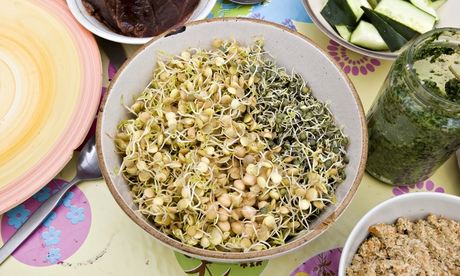
theguardian.comBeansprouts

Beansprouts are healthy regulars on many vegetarian and vegan recipes. Photograph: Martin Argles for the Guardian

1. 101 Cookbooks
One of the grand dames of the blogosphere, Heidi Swanson began 101 Cookbooks in 2003 with the aim of working her way through her vast collection of books (that’s where the 101 bit comes in). Now, 11 years and one New York Times bestseller later, Heidi still cooks from her books, but it’s her own wholegrain, vegetarian recipes that really shine.

2. Tinned Tomatoes
Also known as the Scottish Vegetarian, Jaqueline cooks for her young son and vegan husband, while also running the Dundee branch of the Clandestine Cake Club, so her site is a great source for the sweet-toothed, vegetarian or not. She also does a great line in curries and pub grub – think roasted veg vindaloo and vegetarian haggis pasties.

3. Sprouted Kitchen
Created by California-based couple Sara and Hugh Forte, Sprouted Kitchen’s super healthy, wholefood recipes will leave you glowing green from all the good living, or green with envy of their lifestyle. Either way, Hugh’s stunning photography and Sara’s personable writing style make it one to bookmark.

4. The Veg Space
Hertfordshire-based Kate Ford has been a vegetarian for more than 20 years, and it really shows with her extensive and varied repertoire. Recently awarded best veggie blog by Vegetarian Living, her stuffed naan breads and toffee apple and peanut pudding are definitely on the to-eat list.

5. The First Mess
Brought up on a farm, educated at a cookery school and now working in restaurants, Canadian Laura Wright has a heartfelt passion for produce, and an enthusiasm for cooking that’s explored through mostly vegan, and often gluten-free eating. The dirty chai pancakes are a must.

6. Naturally Ella
Erin Alderson’s path to seasonal vegetarian living was preceded by a lifetime of fast food and processed meat, until her father had a heart attack at the age of 45. Despite the circumstances, this blog is far from preachy – Erin’s refreshing approach to vegetarian cooking feels more like a journal, less like an example. Her tex-mex-inspired recipes are particularly good.

7. Veggie Runners
Mother and daughter Jayne and Bibi Rogers from Leeds are as as fanatical about running as they are about vegetarian food, but if you’re not 100% committed to either of those things, don’t be put off – there’s a great mix of healthy, protein-packed mains, and more indulgent sweet treats.

8. My New Roots
Toronto-born, Copenhagen based Sarah Brittain is of the Kinfolk tribe, so this is a good place to start if aspirational is your thing. Also a holistic nutritionist, this blog makes for a great read, and Sarah’s recipes are actually refreshingly simple and straight-forward.

9. Ramsons and Bramble
Ramson and Bramble, created by a vegetarian chef, is a step closer to indulgence than some veggie blogs, but all the better for it. With a great mix of savoury and sweet, this lady is an out and proud cheese fanatic, and it shows. Courgette, feta and fresh herb fritters make the perfect summer dinner.

10. Post Punk Kitchen
This fun, vibrant vegan blog from Brooklynite Isa is one of the most approachable out there, but with a clear sense of moral and ethical reasons behind meat and dairy free cooking. It’s particularly good if you’re on the hunt for vegan bakes and desserts.

Have we missed your favourite vegan or vegetarian food blog? Let us know in the comments below.

Interested in finding out more about how you can live better? Take a look atthis month’s Live Better Challenge here.

The Live Better Challenge is funded by Unilever; its focus is sustainable living. All content is editorially independent except for pieces labelled advertisement feature. Find out more here.

Wired: AI telling doctors how to treat…


http://www.wired.com/2014/06/ai-healthcare/

Artificial Intelligence Is Now Telling Doctors How to Treat You

  • BY DANIELA HERNANDEZ, KAISER HEALTH NEWS

Image: Courtesy of Modernizing Medicine

Long Island dermatologist Kavita Mariwalla knows how to treat acne, burns, and rashes. But when a patient came in with a potentially disfiguring case of bullous pemphigoid–a rare skin condition that causes large, watery blisters–she was stumped. The medication doctors usually prescribe for the autoimmune disorder wasn’t available. So she logged in to Modernizing Medicine, a web-based repository of medical information and insights.

Within seconds, she had the name of another drug that had worked in comparable cases. “It gives you access to data, and data is king,” Mariwalla says of Modernizing Medicine. “It’s been very helpful, especially in clinically challenging situations.”

The system, one of a growing number of similar tools around the country, lets Mariwalla tap the collective knowledge gathered from roughly 3,700 providers and more than 14 million patient visits, as well as data on treatments other doctors have provided to patients with similar profiles. Using the same kind of artificial intelligence that underpins some of the web’s largest sites, it instantly mines this data and spits out recommendations. It’s a bit like Amazon.com recommending purchases based on its massive trove of data about what people have bought in the past.

Using the same kind of artificial intelligence that underpins some of the web’s largest sites, it instantly mines this data and spits out recommendations.

Tech titans like Google, Amazon, Microsoft, and Apple already have made huge investments in artificial intelligence to deliver tailored search results and build virtual personal assistants. Now, that approach is starting to trickle down into health care, thanks in part to the push under the health reform law to leverage new technologies to improve outcomes and reduce costs–and to the availability of cheaper and more powerful computers. In an effort to better treat their patients, doctors are now exploring the use of everything from IBM’s Watson supercomputer, the machine that won at Jeopardy, to iPhone-like pop-up notifications that appear in your online medical records.

Artificial intelligence is still in the very early stages of development–in so many ways, it can’t match our own intelligence–and computers certainly can’t replace doctors at the bedside. But today’s machines are capable of crunching vast amounts of data and identifying patterns that humans can’t. Artificial intelligence–essentially the complex algorithms that analyze this data–can be a tool to take full advantage of electronic medical records, transforming them from mere e-filing cabinets into full-fledged doctors’ aides that can deliver clinically relevant, high-quality data in real time. “Electronic health records [are] like large quarries where there’s lots of gold, and we’re just beginning to mine them,” said Dr. Eric Horvitz, who is the managing director of Microsoft Research and specializes in applying artificial intelligence in health care settings.

Increasingly, physician practices and hospitals around the country are using supercomputers and homegrown systems to identify patients who might be at risk for kidney failure, cardiac disease, or postoperative infections, and to prevent hospital re-admissions, another key focus of health reform. And they’re starting to combine patients’ individual health data–including genetic information–with the wealth of material available in public databases, textbooks, and journals to help come up with more personalized treatments.

For now, the recommendations from Modernizing Medicine are largely based on what is most popular among fellow professionals–say, how often doctors on the platform prescribe a given drug or order a particular lab test. But this month, the system will display data on patient outcomes that the company has collected from its subscribers over the past year. Doctors will also be able to double-check the information against the latest clinical research by querying Watson, IBM’s artificially intelligent supercomputer. “What happens in the real world should be informed by what’s happening in the medical journals,” said Daniel Cane, CEO of Florida-based Modernizing Medicine. “That information needs to get to the provider at the point of care.”

‘Quick and Seamless’

Using homegrown systems, doctors at Vanderbilt University Medical Center in Nashville and St. Jude’s Medical Center in Memphis are getting pop-up notifications within individual patients’ electronic medical records. The alerts tell them, for instance, when a drug might not work for a patient with certain genetic traits. It shows up in bright yellow at the top of a doctor’s computer screen–hard to miss. “With a single click, the doctor can prescribe another medication. It’s a very quick and seamless process,” says Vanderbilt’s Dr. Joshua Denny, one of the researchers who developed the system there.

‘Computers are notoriously bad at understanding English. It’s a slow haul, but I’m still optimistic.’

Denny and others used e-medical records on 16,000 patients to help computers predict which patients were likely to need certain medications in the future. Take the anti-blood clot medication Plavix. Some people can’t break it down. The Vanderbilt system warns doctors to give patients likely to need the medication a genetic test to see whether they can. If not, it gives physicians suggestions on alternative drugs.

Doctors heed the computer’s advice about two-thirds of the time, figuring in, for example, the risks associated with the alternative medication. “The algorithm is pretty good,” says Denny, referring to its ability to predict who’s going to need a certain drug. “It was smarter than my intuition.”

So far, computers have gotten really good at parsing so-called structured data—information that can easily fit in buckets, or categories. In health care, this data is often stored as billing codes or lab test values. But this data doesn’t capture patients’ full-range of symptoms or even their treatments. Images, radiology reports, and the notes doctors write about each patient can be more useful. That’s unstructured data, and computers are less savvy at handling it because it requires making inferences and a certain understanding of context and intent.

That’s the stuff humans are really good at doing–and it’s what scientists are trying to teach machines to do better. “Computers are notoriously bad at understanding English,” said Peter Szolovits, the director of MIT’s Clinical Decision Making Group. “It’s a slow haul, but I’m still optimistic.”

The Challenge Ahead

Computers are getting better at reading unstructured information. Suppose a patient says he doesn’t smoke. His doctor checks ‘no’ in a box–structured data, easily captured by a machine. But then the doctor notes that the patient’s teeth are discolored or that there are nicotine stains on his fingers–a clue that the patient in fact does smoke. Soon a computer may be able to highlight such discrepancies, bringing to the fore information that otherwise might have been overlooked.

In recent years, universities, tech companies, and venture capital firms have invested millions into making computers better at analyzing images and words. Companies are popping up to capitalize on findings in studies suggesting that artificial intelligence can be used to improve care. “Artificial intelligence–ultimately that’s where the biggest quality improvements will be made,” says Euan Thomson, a partner at venture capital firm Khosla Ventures.

The data is often stored in servers at individual clinics or hospitals, making it difficult to build a comprehensive reservoir of medical information.

But many challenges remain, experts say. Among them is the tremendous expense and difficulty of gaining access to high-quality data and of developing smart models and training them to pick up patterns. Most electronic medical record-keeping systems aren’t compatible with each other. The data is often stored in servers at individual clinics or hospitals, making it difficult to build a comprehensive reservoir of medical information.

Moreover, the systems often aren’t hooked up to the internet and therefore can’t be widely distributed or accessed like other information in the cloud. So, unlike the vast amount of data on Google and Facebook, the information can’t be mined from anywhere by those interested in analyzing it. From the perspective of privacy advocates, this makes some good sense: A researcher’s treasure trove is a hacker’s playground. “It’s not the greatest time to talk about” health records on the web, given security scandals such as the Edward Snowden leaks and the Heartbleed bug, says Dr. Russ Altman, the director of Stanford University’s biomedical informatics training program.

Drawing the Line

Also standing in the way are concerns about how far computers should encroach on doctors’ turf. As artificial intelligence systems get smarter, experts say, the line between making recommendations and making decisions could become more murky. That could cause regulators to view the systems as a medical devices, subject to the review of the U.S. Food and Drug Administration.

Wary of the time and expense required for FDA approval, companies engineering the systems–at least for now–are careful not to describe them as diagnostic tools but rather as information banks. “The FDA would be down on them like a ton of bricks because then they would be claiming to practice medicine,” says MIT’s Szolovits.

At the moment, he said, the technology isn’t good enough to tell doctors with 100 percent certainty what the best course of treatment for a patient may be. Others agree. “It’s going to be a long road,” says Michael Matheny, a biostatistician at the Vanderbilt School of Medicine.

Back at her clinic in Long Island, Dr. Mariwalla is thankful for the information that the artificial intelligence system can provide. For the patient with that blistering skin condition, she took the machine’s suggestion for an alternative medication. The patient has recovered, Mariwalla says, but she’s careful to add that she made the call herself—based in part on her conversation with her patient. “That’s where medical judgment comes in,” she says. “You can’t [just] rely on a system to tell you what to do.”

Kaiser Health News is an editorially independent program of the Henry J. Kaiser Family Foundation, a nonprofit, nonpartisan health policy research and communication organization not affiliated with Kaiser Permanente.

SINGAPORE BAK KUT TEH

On the back of our recent Singaporean adventures, this recipe from Jen…

http://fatboo.com/2013/05/singapore-bak-kut-teh-teochew-recipe.html

SINGAPORE BAK KUT TEH RECIPE (肉骨茶)

Bak Kut Teh is a comforting hawker dish consisting of pork rib soup served with white rice and Chinese tea. As a food from childhood, I grew up eating and loving it. For a more detailed account on the origins of this dish, you can read this post about my favourite bak kut teh stall in Singapore.

Cooking this dish at home isn’t rocket science. In fact, there are many premade spice packets that you can buy from your local Asian grocer that will make a pretty decent bak kut teh. Just add water & simmer the pork ribs.

All the same, for the purpose of authenticity, I was still keen on recreating this dish using self-selected herbs from my cupboard full of Traditional Chinese herbs (I’d like to thank Fakegf’s dad for passing the recipe to me verbally). For cooking nerds, getting to know the individual herbs that make up bak kut teh may interest you!

Singapore Bak Kut Teh Recipe (肉骨茶)

But first, I’d like to make the distinction that this recipe is for the Teochew-style (peppery / garlicky) bak kut teh that’s commonly served in Singapore. The darker, herbal bak kut teh (more often seen in Malaysia) is a completely different recipe which I won’t be touching on here.

Singapore Bak Kut Teh Recipe (肉骨茶)From left: dang gui (angelica sinesis), codonopsis, garlic, white pepeprcorns, onion

These are the core ingredients for Singapore-style bak kut teh. As you can see, making the stock features heaps of white peppercorns, garlic, and not that much herbs. When cooked correctly, the herbs push in as a very mild hint only.

On that note, when following this recipe, please stick with the suggested 2-3 slices of dang gui. Adding too much will make the soup unbalanced and bitter.

Singapore Bak Kut Teh Recipe (肉骨茶)Goji berries, liquorice bark, star anise, ligusticum

These are optional ingredients for the stock, once again used sparingly. I like to add the goji berries during the last 30 mins of cooking, too much goji berries can sour the soup. Both the ligusticum and licorice bark helps sweeten the soup while the star anise can make it a touch more mellow.

To learn more about the herbs used here, how to prepare them and their medicinal properties, please check out my compendium post ‘Traditional Chinese Herbs, A Beginner’s Guide‘.

Singapore Bak Kut Teh Recipe (肉骨茶)

And of course, you’ll need pork ribs. If I were you, I’d source free range pork.

One problem I have making this is there just isn’t enough soup to go with the proportion of pork ribs used. Using too much water makes the soup thin, but I really love drinking the soup! I guess you could make more stock by using pork bones.

Singapore Bak Kut Teh Recipe (肉骨茶)Singapore Bak Kut Teh Recipe (肉骨茶)Tang oh

Like many hawker dishes, bak kut teh isn’t a dish with veggies in it. So I normally have bak kut teh with a bowl tang-oh(garland chrysanthemum). It’s a delightful Asian vegetable with an uplifting coriander-like fragrance that goes very well in Chinese soups. Just blanch it in the bak kut teh stock till cooked (about 30-60 secs) and serve in a separate bowl.

You can probably do this with other Asian veggies like choy sum or buk choy (but not kai lan).

Singapore Bak Kut Teh Recipe (肉骨茶)

Singapore Bak Kut Teh

(Adapted from Fake Father-In-Law’s recipe, Serves 3)

600g free range pork ribs
1.2 litres water
1 bulb garlic, cloves separated but not peeled
Half a big red onion
3-5g crushed white peppercorns (depending on how peppery you want it to be)
2-3 slices of dang gui
2 sticks of codonopsis
4g goji berries

Red chillies
Dark soya sauce
Long grain jasmine rice

Optional:
2-3 pieces liquorice root
Few slices of ligusticum
1 small star anise

Method:

Blanch the pork ribs in a pot of boiling water to remove the scum
Drain, cut into rib pieces
Leave aside in a bowl of cool water

Add garliconioncrushed white peppercornsdang guicodonopsis (and the 3 optional ingredients if you’re using it) into a stock pot with 1.2L of water, bring to a boil.
Lower the rib pieces into the stock
Cover and simmer for 1 hour

30 minutes before serving, add the goji berries

Before serving, season to taste with saltlight soya sauce and sugar

Serve with Chinese tea, blanched veggies, steamed jasmine rice and cut red chillies in dark soya sauce

Singapore Bak Kut Teh Recipe (肉骨茶)

Tips: For a more flavoursome stock, turn off the heat and let the soup cool down for a few hours to half a day. Bring it back to a boil when you want to serve. To serve piping hot soup to your guests, pre-warm the serving bowls by ladling the hot stock into them, giving it a brief swirl, and pour that stock back into the pot.

For more comforting home recipes, check out my recipe section.

Prolonged fasting (2-4days) regenerates immune system…

The study has major implications for healthier aging, in which immune system decline contributes to increased susceptibility to disease as we age. By outlining how prolonged fasting cycles — periods of no food for two to four days at a time over the course of six months — kill older and damaged immune cells and generate new ones, the research also has implications for chemotherapy tolerance and for those with a wide range of immune system deficiencies, including autoimmunity disorders.


Fasting triggers stem cell regeneration of damaged, old immune system

Date:
June 5, 2014
Source:
University of Southern California
Summary:
In the first evidence of a natural intervention triggering stem cell-based regeneration of an organ or system, a study shows that cycles of prolonged fasting not only protect against immune system damage — a major side effect of chemotherapy — but also induce immune system regeneration, shifting stem cells from a dormant state to a state of self-renewal.

During fasting the number of hematopoietic stem cells increases but the number of the normally much more abundant white blood cells decreases. In young or healthy mice undergoing multiple fasting/re-feeding cycles, the population of stem cells increases in size although the number of white blood cells remain normal. In mice treated with chemotherapy or in old mice, the cycles of fasting reverse the immunosuppression and immunosenescence, respectively.
Credit: Cell Stem Cell, Cheng et al.

In the first evidence of a natural intervention triggering stem cell-based regeneration of an organ or system, a study in the June 5 issue of the Cell Press journal Cell Stem Cell shows that cycles of prolonged fasting not only protect against immune system damage — a major side effect of chemotherapy — but also induce immune system regeneration, shifting stem cells from a dormant state to a state of self-renewal.

In both mice and a Phase 1 human clinical trial, long periods of not eating significantly lowered white blood cell counts. In mice, fasting cycles then “flipped a regenerative switch”: changing the signaling pathways for hematopoietic stem cells, which are responsible for the generation of blood and immune systems, the research showed.

The study has major implications for healthier aging, in which immune system decline contributes to increased susceptibility to disease as we age. By outlining how prolonged fasting cycles — periods of no food for two to four days at a time over the course of six months — kill older and damaged immune cells and generate new ones, the research also has implications for chemotherapy tolerance and for those with a wide range of immune system deficiencies, including autoimmunity disorders.

“We could not predict that prolonged fasting would have such a remarkable effect in promoting stem cell-based regeneration of the hematopoietic system,” said corresponding author Valter Longo, the Edna M. Jones Professor of Gerontology and the Biological Sciences at the USC Davis School of Gerontology, and director of the USC Longevity Institute.

“When you starve, the system tries to save energy, and one of the things it can do to save energy is to recycle a lot of the immune cells that are not needed, especially those that may be damaged,” Longo said. “What we started noticing in both our human work and animal work is that the white blood cell count goes down with prolonged fasting. Then when you re-feed, the blood cells come back. So we started thinking, well, where does it come from?”

Prolonged fasting forces the body to use stores of glucose, fat and ketones, but also breaks down a significant portion of white blood cells. Longo likens the effect to lightening a plane of excess cargo.

During each cycle of fasting, this depletion of white blood cells induces changes that trigger stem cell-based regeneration of new immune system cells. In particular, prolonged fasting reduced the enzyme PKA, an effect previously discovered by the Longo team to extend longevity in simple organisms and which has been linked in other research to the regulation of stem cell self-renewal and pluripotency — that is, the potential for one cell to develop into many different cell types. Prolonged fasting also lowered levels of IGF-1, a growth-factor hormone that Longo and others have linked to aging, tumor progression and cancer risk.

“PKA is the key gene that needs to shut down in order for these stem cells to switch into regenerative mode. It gives the ‘okay’ for stem cells to go ahead and begin proliferating and rebuild the entire system,” explained Longo, noting the potential of clinical applications that mimic the effects of prolonged fasting to rejuvenate the immune system. “And the good news is that the body got rid of the parts of the system that might be damaged or old, the inefficient parts, during the fasting. Now, if you start with a system heavily damaged by chemotherapy or aging, fasting cycles can generate, literally, a new immune system.”

Prolonged fasting also protected against toxicity in a pilot clinical trial in which a small group of patients fasted for a 72-hour period prior to chemotherapy, extending Longo’s influential past research: “While chemotherapy saves lives, it causes significant collateral damage to the immune system. The results of this study suggest that fasting may mitigate some of the harmful effects of chemotherapy,” said co-author Tanya Dorff, assistant professor of clinical medicine at the USC Norris Comprehensive Cancer Center and Hospital. “More clinical studies are needed, and any such dietary intervention should be undertaken only under the guidance of a physician.”

“We are investigating the possibility that these effects are applicable to many different systems and organs, not just the immune system,” said Longo, whose lab is in the process of conducting further research on controlled dietary interventions and stem cell regeneration in both animal and clinical studies.


Story Source:

The above story is based on materials provided by University of Southern California. The original article was written by Suzanne Wu. Note: Materials may be edited for content and length.


Journal Reference:

  1. Chia-Wei Cheng, Gregor B. Adams, Laura Perin, Min Wei, Xiaoying Zhou, Ben S. Lam, Stefano Da Sacco, Mario Mirisola, David I. Quinn, Tanya B. Dorff, John J. Kopchick, Valter D. Longo. Prolonged Fasting Reduces IGF-1/PKA to Promote Hematopoietic-Stem-Cell-Based Regeneration and Reverse ImmunosuppressionCell Stem Cell, 2014; 14 (6): 810 DOI:10.1016/j.stem.2014.04.014

Cite This Page:

University of Southern California. “Fasting triggers stem cell regeneration of damaged, old immune system.” ScienceDaily. ScienceDaily, 5 June 2014. <www.sciencedaily.com/releases/2014/06/140605141507.htm>.

Menadue: Auction off provider numbers

Now there’s an interesting thought:

Another option to overcome shortages of doctors in rural Australia would be to auction provider numbers by postcode but that would probably be too radical for many professional people who don’t like open markets.

John Menadue. Have we too many doctors?

John Menadue. Have we too many doctors?

There are no international comparisons that I can find that show that we have a shortage of doctors in Australia. In fact, we may be moving into a situation of having a surplus of doctors.  In its “Health at a glance” the OECD found that we are above the average in our supply of doctors. The OECD provided details of “practising doctors per 1000 of population in 2011” for over 40 major countries. The OECD average was 3.2 practising doctors per1000 of population. Australia was slightly above the average with3.3 practising doctor’s per1000 of population. For the Netherlands it was 3.0, for the UK 2.8, for NZ 2.6 and Canada 2.4. The top four countries with over 4 practising doctors per 1000 were Greece, Russia, Austria and Italy. The OECD is quite explicit about trends in Australia It says “in several countries (e.g. Australia, Canada, Denmark, the Netherlands and the UK) the number of medical graduates has risen strongly since 2000 reflecting past decisions to expand training capacity…In Australia the number of medical graduates has increased two and a half times between 1990 and 2010 with most of the growth occurring since 2000”

In 2004 when Tony Abbott was Minister for Health he decided against advice that we had a shortage of doctors. As a result the number of domestic students graduating from medical schools in Australia increased dramatically from 1,287 in 2004 to 2,507 in 2011. It has been described as a “tsunami” of medical graduates. The OECD found that in 2011 with 12.1 medical graduates per 10,000 of population we were well above the OECD average of 10.6. We know that this increase in numbers is making it very difficult to find training places for the increased number of medical graduates.

We also know that with bulk billing and with patient dependence on the advice of their doctor about future appointments, tests and referrals, doctors have an ability to generate work for themselves and other professionals. Doctors can and do drive the demand for their services through fee for service.  That has serious cost implications.
Apart from the total numbers the other important issue is the distribution of doctors across Australia.  All the data shows serious shortages of doctors and other health professionals in rural and remote Australia. These shortages are occurring despite the fact that we now have about 3,000 International Medical Graduates (IMGs) who are tied to areas of need. These IMGs have performed a useful role in rural areas although there has been some concern over language and sometimes professional skills. However it seems logical and legally defensible (“civil conscription”) that if we can determine where IMGs can work, why can’t we do the same for Australian medical graduates and insist that new provider numbers only be issued according to need in Australia. We don’t need more provider numbers and doctors in Belleview Hill and Toorak, but we do need them in rural and remote Australia.  Through governments, taxpayers subsidise medical education and about 80% of the remuneration of doctors comes from government. There is a legitimate interest in new doctors working in areas of need, at least in the early stages of their career. Hopefully they will find professional and personal satisfaction in country areas and decide to stay.

Another option to overcome shortages of doctors in rural Australia would be to auction provider numbers by postcode but that would probably be too radical for many professional people who don’t like open markets.

In short we are moving to a surplus in the total number of practising doctors but serious shortages still exist in rural and remote Australia which could be addressed, at least in part by limiting new provider numbers to areas of need.

Why can we send teachers to areas of need but not doctors?