All posts by blackfriar

Katz on managing severe obesity

good, balanced diatribe..

http://www.linkedin.com/today/post/article/20140408142414-23027997-severe-obesity-let-em-eat-kale

Severe Obesity? Let ‘Em Eat Kale!

The tale of aristocratic indifference on the part of Marie Antoinette, Queen of France at the time of the French Revolution, wife of Louis XVI, is, we now know, likely apocryphal. Still, like many historical distortions, this one reverberates through modern culture just the same, and harbors meaning as archetype, if not as reliably archived fact. You no doubt know the tale:

The peasants were starving and had no bread. Marie allegedly suggested: “let them eat cake!”

We find a modern day analogue in the advice dispensed by foodie elite who suggest that the masses should just eat “real” food. The definition of “real” is generally left open to interpretation- but of course, Marie never said what kind of cake, either.

The connotations of “real” are clear enough: pure, unpackaged foods; those icons of nutritional virtue about which the wholesome truth is so self-evident that ingredient lists and nutrition fact panels are superfluous. Wild salmon comes to mind. And broccoli, presumably organic. And fresh berries.

In other words, since the people have no whole-grain bread: let ‘em eat kale!

Now, frankly, I’m quite partial to kale. And, for that matter, the potentially even more nutritious fiddlehead ferns. But I have a real antipathy for fiddling around, or issuing jejune exhortations, while Rome is burning. And burning, it is.

For those inclined to celebrate the recent and radically distorted ping about childhood obesity rates ‘plummeting,’ came this week’s predictably countervailing pongthey have not plummeted after all. More importantly, the most recent paper on childhood obesity trends shows that severe obesity is rising disproportionately.

That’s worth reiterating: whatever is happening to overall obesity rates, rates of severe obesity are rising briskly in children. Prior research had already indicated that was true in both children and adults, so speaking of cake, this is really just icing on what was already well baked. But we seemed in need of a timely reminder.

Fundamentally, this means that it may no longer help us much to ask and answer: how many Americans are overweight or obese? That number, or percentage, may now be level and rather uninteresting, if only because it is pressed up against the ceiling. To gauge the severity of hyperendemic obesity in our culture, we may now need to ask: how overweight and obese are the many?

The answer, ever more often, is: severely.

That severe obesity rates are rising steadily and perhaps steeply has two flagrant implications. The first is that we are not doing nearly enough at the level of our culture to make eating well, being active, and thereby controlling weight the prevailing norm. These two behaviors and one outcome remain exception rather than rule, costing us dearly- in every currency that matters, human potential above all.

The second implication is that we need good treatments for severe obesity, since it is already well established among us.

I have first hand experience with severe obesity, in adults and kids alike. Unlike garden-variety weight gain, severe obesity generally occurs in the context of diverse hardships. Sometimes, there is the duress of a dysfunctional family dynamic. Sometimes there is an underlying mental health problem. Sometimes the propagating factors are preferentially, if not exclusively, socioeconomic: a rough neighborhood, with lack of access to “real” food and recreational opportunities, and the inevitable clustering of fast food franchises. That latter peril makes me think of wolves surrounding the most vulnerable member of a herd. Almost inevitably, there is ridicule, disparagement, and disadvantage; the literal, daily addition of insult to injury.

Bariatric surgery is effective treatment for severe obesity, and I have long advocated strenuously that it should be available, and reimbursable, for all who truly need it. But meaning no disrespect to the surgeons who provide or patients who receive it, it’s a rather poor option and should be a last resort, not a first, especially for children. The surgery is potentially major, and thus encumbered by all of the customary risks. The long-term effects are far from perfect, and substantially unknown for children. The monetary costs are apt to be unmanageable if this becomes the “go to” solution for an increasingly prevalent problem.

And most importantly: nobody learns anything under general anesthesia. The root causes of severe obesity are not addressed with scalpels. There is no way to share the benefits of a redirected gastrointestinal tract. In contrast, “skillpower” can be shared. A systematic effort to empower those most in need with the skills and resources needed to eat well, be active, lose weight, and find health- physical and mental- would allow for paying it forward, to family and friends, and the next generation. The good of surgery is contained within a body. The good of propagating skills and resources for healthy living reverberates throughout the body politic.

My friend David Freedman, the highly accomplished health journalist, and I have had a spirited and fairly public exchange on the topic of “getting there” from here. When Mr. Freedman suggested that better junk food could be part of the answerI protested: anything that is genuinely part of the solution is, by definition, no longer junk. When I emphasized the importance of knowing what dietary pattern is best for healthMr. Freedman parried back that I might be diverting attention from the critical need to pave a way of getting there from here, accessible in particular for those currently most forestalled.

But in the end, our private exchanges indicated that our public argument was mostly smoke and just about no fire. We both agree that we can’t have good diets supporting good health if we don’t acknowledge we know what a good diet is. And we both agree that knowing that “real” food is good does just about nothing to help modify and improve the diets and health of real people.

For that, we need an expansive cultural commitment; a movement; perhaps even a revolution. We need approaches to severe obesity that don’t just fix it after it happens. Big Surgery and Big Pharma may be beneficiaries of this, but the rest of us will be in one helluva fix. The better way is introducing innovative solutions that confront it at its origins and spread of their own accord.

We need to reorient our cultural attitude about obesity so it is not an excuse to argue the respective merits of personal responsibility and public policy. Rather, if we are to fix it at its origins, we need to acknowledge that people who are empowered are most capable, and most inclined, to exercise responsibility. So let’s build it, and see what comes.

We can, and should, empower people to trade up the food choices they are already making.Better chips may not satisfy the purists, but the evidence is in hand that improving food choices- even among the homely fare that comes in bags, boxes, bottles, jars, and cans- adds up to make a truly important difference for populations, and individuals alike. This can be done without spending more moneyurban legend to the contrary notwithstanding. Still, we could likely accomplish far more by combining nutrition guidance systems with financial incentives that encourage their use.

Among such approaches, too, are community and New-Age approaches to gardening that might even allow many more of us to grow our own kale- and perhaps fiddlehead ferns.

But “let ‘em eat kale” simply won’t do. It’s fatuous, unrealistic, elitist nonsense. It’s fiddling around. And all the while, Rome burns.

-fin

Dr. David L

Is Big Food the new Tobacco?

Finally commented on the Food Politics blog. Excitement.

APR172014

Is Big Food the new Tobacco?

Thanks to Maggie Hennessy at FoodNavigator-USA for her report on a meeting I wish I’d been able to attend—the Perrin Conference on “Challenges Facing the Food and Beverage Industries in Complex Consumer Litigations.”

Hennessey quotes from a speech by Steven Parrish, of the Steve Parrish Consulting Group describing parallels between tobacco and food litigation.

From the first lawsuit filed against [tobacco] industry member in 1953 to mid-1990s, the industry never lost or settled a smoking and health product liability suit. In the mid ‘90s the eggs hit the fan because the industry for all those decades had smugly thought it had a legal problem. But over time, it came to realize it had a society problem. Litigation was a symptom of the disease, not the disease itself.

…When it came time to resolve the litigation, we couldn’t just sit in a room and say, ‘how much money do you want?…A lot had nothing to do with money. It had to do with reining the industry in…We spent so much time early on talking to ourselves about greedy trial lawyers, out-of-touch regulators, media-addicted elected officials and public health people who didn’t know how to run a business. At the end of the day, it didn’t matter. We would have been much better off recognizing these people had legitimate agendas.”

… Maybe there are some parallels, but I urge people not to succumb to the temptation to say, ‘cigarettes kill you, cigarettes are addictive. But mac and cheese, coffee, and Oscar Meyers wieners don’t. That may be true, but there are still risks for the industry.

The article also quotes Michael Reese, plaintiff’s attorney for Reese Richman LLP, talking about the increasingly accusatory tone of media coverage of Big Food:

There’s this idea, which has picked up steam in the media, that large food companies are manipulating ingredients to hook people on food. It hasn’t been manifest in litigation yet, but we’re seeing it with legislative initiatives, like Mayor Bloomberg in New York City saying sugar hooks people and causes diabetes. We’ve seen some with GMOs, though most of that legislation is about consumers’ right to know. But there’s this overarching concept that Big Food is somehow manipulating our food supply and as a result, giving us non-food.

Sounds like the message is getting across loud and clear.

Thoughts?

Quantified Diet Findings

  • sdfsdfsdfsdjf’;klj

People have more goals than they have willpower for. That’s just the way our ambition works. They give up, get distracted, or prioritize some other goal.

https://medium.com/inside-lift/be4809e34563

TLDR; This is the story of how we used the Lift Goal Coaching app to build an ongoing 15,000+ person experiment to compare popular diets. The good news is that dieting works, especially if it means giving up sugar and fast food. See our charts below or take our weight loss calculator. Or better, join one of our diets and contribute to science.

About a year ago, we ran a one-off research project into the Slow-Carb Diet™ that turned up surprisingly strong results. Over a four week period, people who stuck to the diet showed an 84% success rate and an average weight loss 0f 8.6lbs.

But are those results legit? If I picked a person at random out of a crowd, could they expect to see the same results? Almost immediately after publishing the results we started getting feedback about experimental bias.

This first study was biased, which means it doesn’t carry any scientific confidence. That’s a fixable problem, so we set off to redo the study in a bigger and more rigorous way.

That led to the Quantified Diet, our quest to verify and compare every popular diet. We now have initial results for ten diets. This is the story of our experiment and how we’re interpreting the diet data we’ve collected.

Understanding Bias

To understand bias, here’s quick alternative explanation for our initial Slow-Carb data: a group of highly motivated, very overweight people joined the diet and lost what, for them, is a very small amount of weight. In this alternative explanation, the results really are not very interesting and they definitely aren’t generalizable.

However, we had some advice from academics at Berkeley aimed specifically at overcoming the biases of the people who were self-selecting into our study. The keys: a control group following non-diet advice and randomized assignment into a comparative group of diets.

Our Experimental Design

The gist of our experimental design hinged on the following elements:

  • We were going to start by comparing ten approaches to diet: Slow-Carb, Paleo, Whole Foods, Vegetarian, Gluten-free, No sweets, DASH, Calorie Counting, Sleep More, Mindful Eating.
  • Lift wrote instructions for each diet, with the help of diet experts, and provided 28-day goals (with community support) for each diet inside our app.
  • We included two control groups, one with the task of reading more and the other with the task of flossing more.
  • Participants were going to choose which of the approaches they were willing to try and then we would randomly assign from within that group. Leaving some room for choice allowed people to maintain control over their health, while still giving us room to apply a statistically relevant analysis.
  • Participants who said they were willing to try a control group and at least two others were in the experiment. This is who we were studying.
  • A lot of people didn’t meet this criteria, or opted out at some point along the way. We have observational data on this group, but they can’t be considered scientifically valid results for the reasons around bias covered above.
  • Full writeup of the methodology coming.

Top Level Results

At the beginning of the study, everyone thought we were going to choose a winning diet. Which of the ten diets was the best?

Nine of the diets performed well as measured by weight loss. Here’s the ranking, with weight loss measured as a percentage of body weight. Slow-Carb, Paleo and DASH look like they led the pack (but keep reading because this chart absolutely does not tell the whole story).

If you don’t like doing math, the above chart translates to between 3-5lbs per month for most people. If you really don’t like doing math, we built acalculator for you that will estimate a weight loss specific to you.

Sleep, which never really had a strong weight loss hypotheses, lost. We ended up calling this a placebo control in order to bolster our statistical relevance.

Before moving on, lets just call out that people in the diets were losing 4-ish pounds over a one month period on average. That’s great given that our data set contains people who didn’t even follow their diet completely.

The Value of the Control

The control groups help us understand whether the experimental advice (to diet) is better than doing nothing. Maybe everyone loses weight no matter what they do?

This sounds unlikely, but we were all surprised to see that the control groups lost 1.1% of their body weight (just by sleeping, reading and flossing!)

Is that because they were monitoring their weight? Is it because the bulk of the study occurred in January, right after people finished holiday gorging? We don’t actually know why the control groups lost weight, but we do know that dieting was better than being in the control.

Here’s the weight-loss chart revised to show the difference between each diet and the control (this chart shows the experimental effect).

The Value of Randomized Assignment

Randomized assignment helps us feel confident that the weight loss is not specific to the fans of a particular diet.

Because of the randomization, we can ask the following question. For each diet, what happens if we assigned the person to a different diet?

This is an indicator of whether a diet is actually better or if the people who are attracted to a diet have some other characteristic that is effecting our observational results.

The obvious example of bias would be a skew toward male or female. Bigger people have more weight to lose (male), plus we observed that males tended to lose a higher percentage of their body weight (2.8% vs. 1.8%).

Comparing the diets this way adds another promising diet approach: no sweets. But let’s, be real, the differences between these diets are very small, less than half a pound over four weeks, as compared to doing any diet at all, five pounds over four weeks. Our advice is pick the diet that’s most appealing (rather than trying to optimize).

Soda is bad! And other Correlations.

What else leads to weight loss?

  • It helps if your existing diet is terrible (your new diet is even better in comparison). People who reported heavy pre-diet soda consumption lost an extra 0.6% body weight.
  • Giving up fast food was also good for an extra 0.6% (but probably not worth adding fast food just to give it up).
  • Men lost more weight (2.6% vs 1.8%).
  • Adherence mattered (duh). Here’s a chart with weight loss by adherence.

How much of the time did people follow the diet advice?

Choosing a Diet

Ok. Now I think I’ve explained enough that you could choose one of these diets. All of them are available via the Lift app available on the webiPhoneand Android.

Given that all the diets work, the real question you should be asking yourself is which one do you most want to follow.

I can’t stress that enough. It’s not just about which had the most weight loss. Choose a diet you can stick to.

Let’s Talk Success Rate

Adherence matters. Even half-way adherence to a diet led to more than 1% weight loss (better than the control groups).

This brings up an interesting point. So far, our data is based on the people who made it all the way to the end of our study. This is the survivor bias. We don’t know what happened to the other people (hopefully the diets weren’t fatal).

In order to judge the success rate of dieting you’ll have to use some judgement. But we can give you the most optimistic and most pessimistic estimates. The truth is somewhere in between.

Of people who gave us all of their data over four weeks, 75% lost weight. Let’s call this the success rate ceiling. It includes many reasons for not losing weight, including low adherence. But at least they paid attention to the goal for the entire time. The weight loss averages are based on this group.

Of people who joined the study, only 16% completed the entire study (and 75% of those lost weight). So, merely joining a diet, with no other data about your commitment, has a success rate of 12%. Let’s call this thesuccess rate floor.

Read that floor as 12% of people who merely said that they were interested in doing a diet had definitely lost weight four weeks later. There’s no measure of commitment in that result. If we filter by even a simple commitment measure, such as the person fills out the first survey on day one, then the success rate jumps from 12% to 28%.

If you are making public policy, then maybe that 12% number looks important. People have more goals than they have willpower for. That’s just the way our ambition works. They give up, get distracted, or prioritize some other goal.

If you are an individual, I’d put more weight in the ceiling. You want to know that whatever path you choose has a chance of succeeding. 75% is a number that should give you confidence.

Losing Weight?

We’ve focused on losing weight for two reasons. One, it’s a very common goal. But, two, it’s also the strongest signal we got out of our data.

We also measured happiness and energy but the signal was weak. We didn’t measure any other markers of health. That’s important to note.

We are behavior designers, so we’re looking at the effectiveness of behavior change advice. You should still consult a nutritionist when it comes to the full scope of health impacts from a diet change. For example, you could work with our partner WellnessFX for a blood workup (and talk to their doctors).

Open Sourcing the Research

We’ve open sourced the research. You can grab the raw data and some example code to evaluate it from our GitHub repository.

All of the participants were expecting to have their data anonymized for the purposes of research. Take a look and please share your work back (it’s required by the CC and MIT licenses).

There was some lossiness in the anonymization process. We’ve stripped out personal information (of course), but also made sure that rows in the data set can’t be tied back to individual Lift accounts. For that reason some of the data is summarized. For example, weight is expressed as percentage weight loss and adherence is expressed on a 1-5 scale.

If you want to go digging around in the data, I would suggest starting by looking at our surveys where we got extra data about the participants: day 1,week 1week 2week 3week 4.

Citizen Science or No Science

I’m expecting that our research will spark some debate about the validity of scientific research from non-traditional sources. I expect this because I’ve already been on the receiving end of this debate.

Here’s how we’re seeing it right now. I acknowledge that we already have a robust scientific process living in academia. And I acknowledge that the way we ran this research broke the norms of that process.

The closest parallel I can think of is the rise of citizen journalism (mostly through blogs) as a complement to traditional journalism. At the beginning there was a lot of criticism of the approach as dangerous and irresponsible. Now we know that the approach brought a lot of benefits, namely: breadth, analysis and speed.

That’s the same with citizen science. We studied these diets because we didn’t see anyone else doing it. And we’re continuing to do other research (for example: meditation) because we’re imagining a world where everything in the self-improvement space, from fitness to diet to self-help, is verifiably trustworthy.

Continuing Research

One of our core tenants with this research is that we can revise it. We didn’t have to write a grant proposal and it didn’t cost us anything to run the study. In fact, we’re already revising it.

To start with, we’re adding in one more diet: “Don’t Drink Sugar.”

We wrote this diet based on the study results and a belief in minimal effective interventions. So, if you’re at all interested in losing weight while contributing to science, please sign up for the Quantified Diet.

Thanks

Special thanks to many academics who commented on our process along the way, along with our sponsors who helped drive people into the study:The Four Hour BodyNo Meat AthleteFoodistZenHabitsNerdFitness,PaleoHacksDeborah EnosDr. Kevin CampbellTania MercerSarah StanleyWithingsGreatistHintZicoWellnessFXO’Reilly Media,Dreena’s Plant Powered KitchenEat TribalPolarRunHundredFeast,BasisZestyKinduBiome.

an idea of earth shattering significance

ok.

been looking for alignment between a significant industry sector and human health. it’s a surprisingly difficult alignment to find… go figure?

but I had lunch with joran laird from nab health today, and something amazing dawned on me, on the back of the AIA Vitality launch.

Life (not health) insurance is the vehicle. The longer you pay premiums, the more money they make.

AMAZING… AN ALIGNMENT!!!

This puts the pressure on prevention advocates to put their money where their mouth is.

If they can extend healthy life by a second, how many billions of dollars does that make for life insurers?

imagine, a health intervention that doesn’t actually involve the blundering health system!!?? PERFECT!!!

And Australia’s the perfect test bed given the opt out status of life insurance and superannuation.

Joran wants to introduce me to the MLC guys.

What could possibly go wrong??????

Dodgy wearables…

Dodgy wearables indiegogo pitch.

Airo gets a mention.

OK, I get it.

http://pando.com/2014/03/20/on-indiegogo-a-miracle-health-device-raises-730k-and-a-whole-load-of-red-flags/

On Indiegogo, a miracle health device crowdfunds $730k. One problem: it might be total bullshit

319462_10150807895075313_1360808361_nBY 
ON MARCH 20, 2014

healbe
It’s the stuff that crowdfunding dreams are made of.

An Indiegogo campaign for a gorgeous piece of wearable tech, shown off in a slick video with some great visuals. Speaking with a thick Russian accent, Healbe CEO Artem Shipitsyn describes what his company calls the ‘The Original 100% Automatic Body Manager.’ It’s called the ‘GoBe’ and it does everything a Fitbit can but so, so much more. Using Healbe’s “Flow” technology – pressure and impedance sensors mixed with an accelerometer – the device is capable of reading glucose levels through your skin to give an accurate calorie count of everything you’ve eaten, against all the energy we’ve burnt. Despite Shipitsyn’s accent, the device’s Indiegogo page says that the company is based in San Francisco.

“Tell it nothing. Know everything. Go be you,” the video signs off. The GoBe will be delivered by June of this year, to anyone who stumps up just $199.

This, ladies and gentlemen, is a market changer. Step right up!

And people have certainly stepped up. As of midday today, Shipitsyn’s campaign has raised $730,294 in two weeks, from 3253 backers — more than seven times its initial funding goal. Thirty-three backers have paid $1175 for a “Club Pack” including ten GoBe-s.

No shame in admitting it: I was impressed. If GoBe did what it claimed, this was the end of the Fitbit, the Up and just about every other weight loss technology.

And so, keen to be the first reporter to cover this marvelous piece of technology, I started asking questions. What I discovered was something far from the slick, bay area startup Healbe purported to be. Rather, I found a publicity shy company, operated remotely from Russia, promoting a device unsupported by any medical or scientific evidence whatsoever. One that thousands of backers have supported to the tune of almost three quarters of a million dollars, and one that Indiegogo says raises no red flags. In the exact words from an Indiegogo spokesperson: ”We have no reason to believe that this company’s Indiegogo campaign is at all fraudulent.”

[UPDATE: The day after publication, a different spokesperson for Indiegogo took issue with the idea that no red flags were ever raised by the campaign, finally confirming to us that the campaign was indeed investigated– and cleared– by Indiegogo’s usual anti-fraud methods. She declined to explain why the basic mistruths and inconsistencies we found in our reporting– which haven’t been denied by Healbe– didn’t concern Indiegogo. She also declined to explain what types of discoveries would lead Indiegogo to conclude an offering was fraudulent.]

My initial doubts were raised last week when I contacted the company’s information line and received no response. This is odd. Normally when I contact the folks behind crowdfunding campaigns, the response is prompt, and enthusiastic. The more publicity, the more money, after all.

I try again this past Monday. Finally, Meghan Donovan, from MicroArts Creative Agency in Greenland, New Hampshire replies, asking if we can talk the next day. There’s just one problem, she explains when we speak: everyone at Healbe was travelling through the end of the week. She promises to get back to me within a couple of days.

A Google search shows that the GoBe has been the subject of about two dozen press articles, but all of them either quote from the press release or the Indiegogo campaign itself. No major tech website has covered the device, and no scientists seem to be as excited as I am about its apparent medical breakthrough. Healbe might be the most press-shy successful startup on earth.

Artem Shipitsyn (also spelt as Shipitsin) and five of his six colleagues listed on the Indiegogo page – George Mikaberydze, Stanislav Povolotskiy, Michael Rubin, Eugene Sokolov, Pavel Mussel – are traceable online only in relation to this one Indiegogo campaign. Shipitsyn lists himself on the page as “a major developer of market solutions and new products for global brands such as Rostelcorn, Sberbank, L’Oreal, Valio, Reebok, Hearst Shkulev, Discovery Channel and more.” And yet on hisLinkedIn profile he lists none of that, describing himself instead as the owner, since 2004, of Iridium, a marketing company in Russia with little discernible online footprint. And now the CEO of Healbe.

Healbe’s website lists no contact details except for the email address that connected me to Donovan’s PR agency in New Hampshire. An address listed for Healbe Incorporated on an old version of its website leads to a law firm, White Summers, in Redwood City. A receptionist for White Summers confirms that Healbe is a client. The company itself is registered in Delaware. This is apparently the extent of its American infrastructure.

Meanwhile, some of GoBe’s backers are getting cold feet: requests for refunds are starting to trickle on to Healbe’s Indiegogo page, dissent is growing on the company’s Facebook and a few Redditers are getting twitchy.

Michelle MacDonald, a clinical dietician at the National Jewish Health hospital in Denver, tells me that her eyebrows were raised almost immediately when she read Healbe’s claims that, through an “algorithm,” it can work out from glucose levels in our cells what our caloric intake was. “Of course they’re claiming an algorithm, because it’s a fun word,” McDonald laughs.

The problem is, MacDonald explains, the three main nutrients that determine caloric intake are carbohydrates, protein and fats. Glucose provides only a small part of the picture. A company that invented a non-invasive way to measure glucose would be a huge hit with the treatment of diabetes. Currently, diabetes sufferers have to prick their skin and make themselves bleed. The technology is probably coming soon, MacDonald says, but when it does it will be the size of a shoebox. It will also likely involve some form of infrared light shone through the skin that will measure the fluid in interstitial cells to approximate the blood glucose level in a simple milligrams per deciliter figure. It will come from a big lab, will be huge news and make a lot of money.

“If you actually had this technology, Indiegogo would be the last channel you’d go through,” MacDonald says.

Let’s imagine that Healbe really has perfected this technology, though. Even so, MacDonald says, nothing described in the video could do what it claims to. The impedance monitor could look at hydration, the pressure monitor could examine pulse and the accelerometer could tell us about action. But none of those three things could tell you anything about glucose levels. A graphic of Healbe’s accompanying smartphone app even shows it measuring fat and carbohydrates, which is doubly ridiculous.

MacDonald takes particular umbrage at Healbe listing its chief scientist Eugene Sokolov as having a background as a rocket scientist. “I wish I was a standup comedian. I could really run with that,” she laughs. Maybe they’ve left out the key part from the video, she hedges. “But when you fail to explain it, that’s always a red flag.”

In fact there are multiple red flags.

I call Meghan Donovan back. She assures me that the GoBe is a real, working device. Her company was employed by Healbe in Fall 2013 and Shipitsyn came into the MicroArts office to film the Indiegogo video in January. He bought two models in for the video, but Donovan admits that she never saw the device in action. Shipitsyn told her that they were doing their own internal tests. But, she tells me, Healbe displayed its product at CES. That’s something.

On closer inspection, Healbe’s Indiegogo page talks about having “unveiled” the GoBe at CES. Except when I look, there’s no reference to Healbe in the CES directory of exhibiting companies in 2014.

I talk to Healbe’s industrial designer Jozeph Forakis, who has done work for Motorola and Swatch in the past. Over Skype from Italy, Forakis confirms that he has worked with Shipitsyn and Healbe for a year on several different prototypes, “the most recent of which were shown in January in CES.”

Why, then, can’t I find any reference to Healbe in the CES directory? Well, Healbe wasn’t technically at CES Forakis admits. But Shipitsyn was in Las Vegas at the time, taking meetings in his hotel room.

Forakis and Donovan are the only two people I can find who claim to have seen a GoBe in real life. Neither are willing to vouch for the science behind it.

At least Indiegogo believes in Shipitsyn. The Healbe campaign raises no red flags, a company spokesperson tells me. Indiegogo, she says, has a vested interest in security. It prides itself on its “equal opportunity, open platform… literally anyone from anywhere in the world can raise money here.”

In October last year, a Canadian company called Airo Health promised a wearable that could do the same thing as Healbe, with a slightly different technique – looking at nutrient levels in our blood by shining a light through it. The company took pre-orders through its website, but a month later refunded all of its customers. “Through conversations with others in the industry, we have come to realize that it requires further testing,” the company said in a release.

Indiegogo protects itself against fraud with an algorithm — that word again — that detects troublesome accounts, alongside human vetting and the group mentality of crowdfunding picking  out bad eggs.

Fraud is a slippery term, though. It doesn’t account for more subtle manipulations. Healbe’s Gobe activity tracker looks enough like a Fitbit that the average shopper can grasp what it is, and what it might be able to do. The automatic calorie reader claim is an advancement that we can all appreciate the significance of, but few of us can pick apart the science behind. Indiegogo can protect against an outright fraudster, but a snake oil salesman with an unproven product is a different matter. Since the beginning of recorded history, opportunists have been using impressive pitches to sell miracle health potions and devices — really the only thing that’s changed is the technology (although it used to be that if you were conned by a snake oil salesman, at least you’d end up with a pretty glass bottle. Indiegogo can’t even promise that.)

Indiegogo wants to keep these concerns inside the domain of the campaigner-funder relationship. Despite $730,000 in pledges, Indiegogo’s position is that as long as there’s a real company claiming to make something that doesn’t violate its terms of service, it has no moral or legal obligation to ensure that the GoBe is legit. All backers can do is wait until June to see if their miracle band shows up and does what it says in the video.

I was finally able to reach Shipitsyn and Healbe’s managing director George Mikaberydze this morning in Moscow, Russia, via Skype, two hours before my deadline for this piece. Their schedules had apparently become more flexible since I started asking questions.

Shipitsyn holds the device close to the camera — it seems to be the same as in the video — while Mikaberydze points to a fuzzy line on an app that, he says, breaks down his energy consumption over the last 20 minutes since he ate a Snickers bar. They were at CES, they say, as the guest of Levin Consulting, with their own meeting room. They hold up an attendee badge showing, at least, that they visited the conference.

So what about the science? Shipitsyn says that the impedance monitor in the Gobe can measure glucose by monitoring the water moving in and out of cells. Insulin opens up the cells when you eat sugar, he says. The company will publish their own clinical tests soon and are discussing with a third party clinic in America, Shipitsyn insists. They’ve slipped off the medical radar because the accuracy rates range between 80 and 90 percent. The head of Samsung Russia is apparently a huge fan.

It’s a breezy, confident pitch. Shipitsyn and Mikaberydze have a ready response to all of my concerns — the subtext being that I really ought to trust them.

But here’s the rub: I don’t. Or at least not enough to part with $199 for a device for which they haven’t yet released any clinical test results (despite their insistence that these apparently do exist) and which, right now, only exists as a demo on a screen.

I’ve jostled myself right up to the soapbox, pushed my face as close to the screen as it’s possible to get, and I still have absolutely no hard evidence that this device is any more than a smart mock up. Shipitsyn says its a miracle machine, at least one expert says it can’t possibly exist.

What I know for a fact is this: in about three weeks, Healbe will be close to three quarters of a million dollars richer, at least. Indiegogo says they have no reason to withhold the money raised, or to doubt that it will be used to deliver GoBes to three-and-a-bit thousand backers who have, presumably, weighed up the risks for themselves and decided to put their faith in Shipitsyn and his partners. Shipitsyn himself says there’s nothing to worry about, but it won’t be until at least June — plenty of time for the money to have moved from a Delaware corporation to a bank account in Moscow — before we know the truth.

Pando will keep pushing HealBe to publish their trial results and I’ll embed them in this post if and when they do. In the meantime, anyone who is inclined to bet $199 or more on a miracle weight loss device might recall the old maxim: if something seems too good to be true, it probably is.

Shipitsyn has a hell of a pitch, but my $199 is staying in my pocket.

See here for the latest updates on this story.

319462_10150807895075313_1360808361_n

James Robinson is a staff writer for PandoDaily covering hardware, advertising technology and the Internet of Things… among many other general goings on. Follow him on Twitter: @jalrobinson

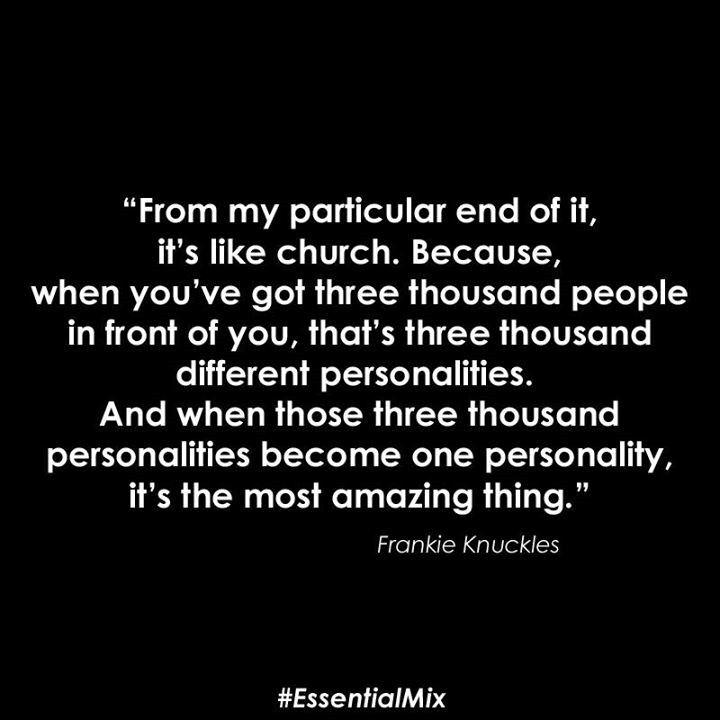
Vale Frankie Knuckles: “On a scale of 1 to 10, it’s 12.”

“How hot is house music now?” an interviewer asks Knuckles in the video.

“On a scale of 1 to 10, it’s 12.”

http://www.huffingtonpost.com/2014/04/02/godfather-of-house-music-video_n_5078764.html?utm_hp_ref=chicago&ir=Chicago

Rare Video Footage Proves The ‘Godfather’ Of House Music Will Live On Forever

The Huffington Post  | by  Joseph Erbentraut

Consider yourself warned: This clip will probably bum you out that time travel still isn’t a thing.

On the heels of the passing of Grammy-winning house music pioneer Frankie Knucklesthe Media Burn video archive shared a previously unseen mini-documentary of the Oct. 25, 1986 opening of the Power House club in Chicago on Wednesday. The documentary was produced by filmmaker Phil Ranstrom.

The clip features a brief interview with Knuckles, plus footage of patrons dancing to what Knuckles coined as “disco’s revenge” and a performance from the Steve “Silk” Hurley-led J.M. Silk. These were the glory days of Chicago house.

“House music to me represents yet another form of black music that has broken from the street into peoples’ homes,” Simon Low, then an executive with RCA Records, says in the clip. “House music is intrinsically a Chicago phenomenon. You can hear it. I mean, all this music they’re playing tonight has come out of Chicago.”

Knuckles had his own Chicago club, the Power Plant, from 1982 to 1987. He then began the residency at Power House, but according to Tim Lawrence, author of “Love Saves the Day: A History of American Dance Music Culture, 1970-79,” Knuckles left Chicago for New York after Power House closed and was renamed the Music Box in 1988.

“How hot is house music now?” an interviewer asks Knuckles in the video.

“On a scale of 1 to 10, it’s 12.”

(h/t Gapers Block)