Category Archives: healthy habits

Uber-broccoli

  • two natural additives could prolong shelf life and increase levels of anti-cancer compounds
  • Extremely significant… bring on the broccoli magnate!

http://www.foodnavigator.com/Science-Nutrition/Better-broccoli-Researchers-identify-method-to-increase-shelf-life-and-beneficial-compounds/

Better broccoli: Researchers identify method to increase shelf life and beneficial compounds

Post a comment

By Nathan Gray+

12-Feb-2014

The combined application of two natural compounds to broccoli could help to increase levels of its suggested anti-cancer compounds while also increasing shelf life, say researchers.

The findings, published in PLoS One, come from research investigating new methods to increase levels of broccoli’s much mooted anti-cancer compounds glucosinolate (GS) and quinone reductase (QR –  an in vitro anti-cancer biomarker) through the use of natural plant based compounds.

However, while researching methods to increase these suggested beneficial compounds, the US-based team also found a way to prolong the vegetable’s shelf life – offering up a natural and inexpensive method to produce broccoli that has even more potential health benefits and won’t spoil so quickly in storage.

“We had figured out ways to increase the anti-cancer activity in broccoli, but the way we figured it out created a situation that would cause the product to deteriorate more rapidly after application,”explained Jack Juvik from the University of Illinois – who led the research. “For fresh-market broccoli that you harvest, it’s not too big a deal, but many of these products have to be shipped, frozen, cut up, and put into other products.”

“If we could figure out a way to prolong the appearance, taste, and flavour long after harvest and maintain the improved health-promoting properties, that’s always of great interest to growers,”he added.

Study details

Juvik and his team first used methyl jasmonate (MeJA), a non-toxic plant-signal compound that is produced naturally in plants to increase the broccoli’s anti-cancer potential, which they sprayed on the broccoli about four days before harvest.

When applied, MeJA initiates a process of gene activity affiliated with the biosynthesis of glucosinolates (GS), which have been identified as potent cancer-preventative agents because of their ability to produce enzymes, such as quinone reductase (QR), that detoxify and eliminate carcinogens from the human body, explained the researchers.

However, during this process, MeJA the team found that also signals a network of genes that lead to plant decay, by inducing the release of ethylene, explained Juvik.

“While we can use MeJA to turn on phytochemicals like the glucosinolates and dramatically increase the abundance of those helpful anti-cancer compounds, MeJA also reduces the shelf life after harvest,” he said.

Therefore the researchers tried using a recently developed compound known as 1-methylcyclopropene (1-MCP), which has been shown to interfere with receptor proteins in the plant that are receptor-sensitive to ethylene.

By applying the compound after harvesting to the same broccoli that had already been treated with MeJA before harvest, the team hoped to procude broccoli with increased levels of GS without the issues relating to shelf life.

Like MeJA, 1-MCP is also a non-toxic compound naturally produced in plants, although Juvik noted that synthetic forms can also be produced.

“It’s very cheap, and it’s about as toxic as salt. It takes very little to elevate all the desirable aspects. It’s volatile and disappears from the product after about 10 hours,” he said – stressing that both the MeJA and 1-MCP sprays required very small amounts of the compounds.

Food security and battling malnutrition

Juvik suggested that use of the new method could make a great impact on important global dilemmas such as food security issues and health-care costs.

“It’s a fairly cheap way to maintain quality, but it provides a preventative approach to all the medical costs associated with degenerative diseases,” he said.

“It’s a way to protect people by reducing the risk they currently have to different diseases. It won’t take it away, but it could prevent further damage,” he said.

As for its impact on impending global food security concerns, Juvik commented that any mechanism which improves people’s health, especially later in life, will benefit food security.

“We need to look at what mechanisms we can use to improve not only food security but the functioning of people later in their life spans,” he said.

“When you look at how much the United States spends on medical costs associated with these diseases, you see it’s a huge burden on the economy, which is the same in all countries. It basically takes away resources that could be used to improve food security,” Juvik opined.“Also, promoting and prolonging food stability with quality after harvest means less waste, which is a big issue in terms of food security.”

Source: PLoS One
Published online ahead of print, doi: 10.1371/journal.pone.0077127 
“Methyl jasmonate and 1-Methylcyclopropene treatment effects on quinone reductase inducing activity and post-harvest quality of broccoli”
Authors: Kang Mo Ku, Jeong Hee Choi, Hyoung Seok Kim, Mosbah M. Kushad, Elizabeth H. Jeffery, John A. Juvik

Feeding time significance in fat metabolism…

An interesting new dimension in research that would readily emerge from data…

http://www.foodnavigator.com/Science-Nutrition/Meal-times-may-have-significant-impact-on-liver-fats-and-metabolism-Mouse-data/

Meal times may have significant impact on liver fats and metabolism: Mouse data

Post a comment

By Nathan Gray+

10-Feb-2014

Alterations to meal times may have a significant effect on the levels of triglycerides in the liver, according to new research that links such effects to a range of metabolic conditions.

The study, published in Cell Metabolism, investigated the role of circadian clocks and meal timings in lipid homeostasis, by performing lipidomic analysis of liver tissues from wild-type and clock-disrupted mice either fed ad libitum or night fed.

Led by Yaarit Adamovich and colleagues at the Weizmann Institute’s Biological Chemistry Department, the team measured the levels of hundreds of different lipids present in the mouse liver – finding that levels of triglycerides (TAG) in the liver were reduced by 50% in mice that were fed during the night-time only.

“The striking outcome of restricted nighttime feeding — lowering liver TAG levels in the very short time period of 10 days in the mice — is of clinical importance,”explained Asher. “Hyperlipidemia and hypertriglyceridemia are common diseases characterized by abnormally elevated levels of lipids in blood and liver cells, which lead to fatty liver and other metabolic diseases.”

“Yet no currently available drugs have been shown to change lipid accumulation as efficiently and drastically as simply adjusting meal time — not to mention the possible side effects that may be associated with such drugs.”

Of course, mice are nocturnal animals, so in order to construe these results for humans, the timetable would need to be reversed, the team added.

Reporter app – self-discovery through data

At least it won’t harm you, physically…

Reporter app, for self-discovery through data

Reporter app, for self-discovery through data

FEBRUARY 13, 2014  |  SELF-SURVEILLANCE

Reporter app

Nicholas Felton, Drew Breunig, and Friends of the Web released Reporter for iPhone. The app—$3.99 on the app store—prompts you with quizzes, such as who you’re with or what you’re doing, sparsely throughout the day to help you collect data about yourself and surroundings. You can also create your own survey questions to collect data on what interests you and use your phone’s existing capabilities to record location, sound levels, weather, and photo counts automatically.

Those who are familiar with Felton’s annual reports will recognize the design of the app, as it has a familiar look and feel, and it works almost how you’d expect an interactive version of his printed reports would. The charts are straightforward. They provide a quick summary of the data you collect.

Photo_Working

But back to the survey collection process. This is the part that interests me most, because as those who have collected data about themselves know, the collection is the hard part and the most important.

When collection is all automatic, it’s easy to forget about and oftentimes we lose context, whereas when collection is all manual, you have to remember to log things and collection grows to be a chore. Reporter is a hybrid between automatic and manual. The automatic part serves as metadata, and the manual portion tries to be as quick and painless as possible (and it is for the most part).

I’ve been using the app for the past week, and it’s actually kind of fun to collect. It takes about as much time as a check-in on Foursquare or a status update on Twitter or Facebook, and all the data stays on your phone or saves to Dropbox, if you like. Export your data as CSV or JSON.

From there, do what you want, because it’s your data. Most people will probably stay inside the app, but the best part is what can be done outside.

Of course, this is still the honeymoon phase of personal data collection, where I want to log everything in the whole wide world. I’ll let you know what it’s like in a month. For now though, the Reporter app is nice.

Wrist tracker and diary

Clumsy and cumbersome, but on the right track. Shrink it and make it predictive and then you’ve got something… Apple?

http://www.medgadget.com/2014/02/camntech-receives-fda-clearance-for-wrist-worn-motion-tracker-and-diary.html

CamNtech Receives FDA Clearance for Wrist-Worn Motion Tracker and Diary

by WOUTER STOMP on Feb 12, 2014 • 5:54 pm

MotionWatch 8 CamNtech Receives FDA Clearance for Wrist Worn Motion Tracker and Diary
CamNtech has received FDA approval for two wrist-worn products to monitor patient activity for clinical purposes and in research trials. First is the MotionWatch 8, a small and light-weight waterproof wrist-worn device that uses a digital tri-axial accelerometer to monitor patient activity, similarly to many consumer fitness trackers. Furthermore, it contains a light sensor and activity marker. Data can be transferred to a PC using a USB connection. Accompanying software converts the data into activity plots to quantify the intensity and duration of daily physical activity. Example use cases indicated by CamNtech include as an indicator of a particular lifestyle, to monitor the effects on mobility of a medical condition or efficacy of its treatment, or to identify irregular activity patterns for assessment of sleep quality.

PRO Diary CamNtech Receives FDA Clearance for Wrist Worn Motion Tracker and Diary

The second cleared device is the PRO-Diary, a compact wrist–worn electronic diary which also integrates the same activity monitor as the MotionWatch. The PRO–Diary features an OLED screen along with a touch sensitive slider and two buttons, which enables patients to answer questions at any moment of the day. Questionnaires are uploaded to the device via USB and questions can be asked at given times, random times or can be user initiated. The PRO-Diary has a battery life of two weeks. By being on the patient’s wrist at all times, the PRO–Diary should result in higher levels of compliance than paper based or other electronic alternatives.

Press release: MotionWatch and PRO-Diary gain FDA clearance…

Product pages: MotionWatch 8…PRO-Diary…

Apple stalking wearable opportunities


http://rockhealth.com/2014/02/five-signs-apple-creating-health-product/

Five signs that Apple is creating a health product

Malay Gandhi
February 03, 2014

Last week, Apple announced record quarterly revenue and earnings and was subsequently rewarded with almost 10% of its stock value being wiped out. Analysts cited anemic growth for the tech giant, and apparent saturation in the high-end smartphone market. Not surprisingly, many investors are wondering whether the category invented by the iPhone was a once in a lifetime opportunity. In fact, smartphones represent an era of computing that has far exceeded the previous era of personal computers in both install base and usage. Apple seems less concerned, perhaps because their eyes are set on the next era of computing—wearables.

Over the past year, Apple has been quietly building up the resources necessary to release a health product of their own. If the past continues to repeat itself, the digital health landscape could see a huge shift as the standard setter works to create a product that consumers love and use. Culminating in a meeting late last year between senior Apple execs and the FDA, here are five signs that a potentially game-changing digital health product is on the horizon.

1. “The whole sensor field is going to explode.” -Apple CEO Tim Cook

Tim Cook has indicated that wearables are an area of intense interest for Apple, labeling it as a “key branch of the tree” for the post-PC world at D11 last year.

2. The M7 coprocessor.

Apple has already released dedicated hardware for tracking health. The M7 coprocessor is included in every iPhone 5s and has been designed specifically to monitor physical activity, using motion data from the phone’s embedded sensors. The chip has been engineered from the ground up to sip power, extending battery life while allowing for high resolution capture of activity data. Leading fitness apps including Moves, Nike+ Move and Fitbit’s MobileTrack feature take advantage of the new hardware.

Shipping this component in the high volume iPhone product category has allowed Apple to bring the M7 to scale much faster than if they had initially released it within a new product category. The company’s relentless focus on integrated hardware and software experience has allowed them to achieve unmatched performance, and battery life is likely to be one of the keys to winning in wearables.

Bonus: With its “secure enclave” in the A7 processor designed for managing fingerprint data, Apple has also proven it can manage biometric data that is intended to be kept highly secure.

3. They’re hiring medical device experts.

  • Ravi Narasimhan, a Stanford PhD with expertise in “biomedical algorithms, data analysis and wireless technologies” and former VP of R&D in Biosensor Technologies at Vital Connect joined Apple in December 2013 (LinkedIn).
  • Nancy Dougherty, who previously worked at digital health sensor startups Proteus and Sano Intelligence, was hired in December (LinkedIn).

  • Michael O’Reilly, the former CMO of Masimo, developers of a pulse oximeter for the iPhone, joined Apple in July (LinkedIn).
  • Dr. Todd Whitehurst, a self-proclaimed “medical device R&D professional” and former VP of Product Development of Senseonics, a developer of glucose sensors, joined Apple 8 months ago as a Director of Hardware Development (LinkedIn).

  • Ueyn Block who was formerly with C8 MediSensors developing “non-invasive measurement of substances in the human body” joined 10 months ago as a Technical Lead for Optical Sensing (LinkedIn).

  • Yuming Liu, who previously worked at O2MedTech and Accuvein, was hired as an Analog Engineer (LinkedIn).

  • Bob Mansfield, Apple’s longtime lead for hardware engineering, was lured out of retirement to develop unspecified “future products.” The New York Times reports that Mansfield has been exploring sensor technologies for health and is directly involved with the future smartwatch project.

4. Intellectual property.

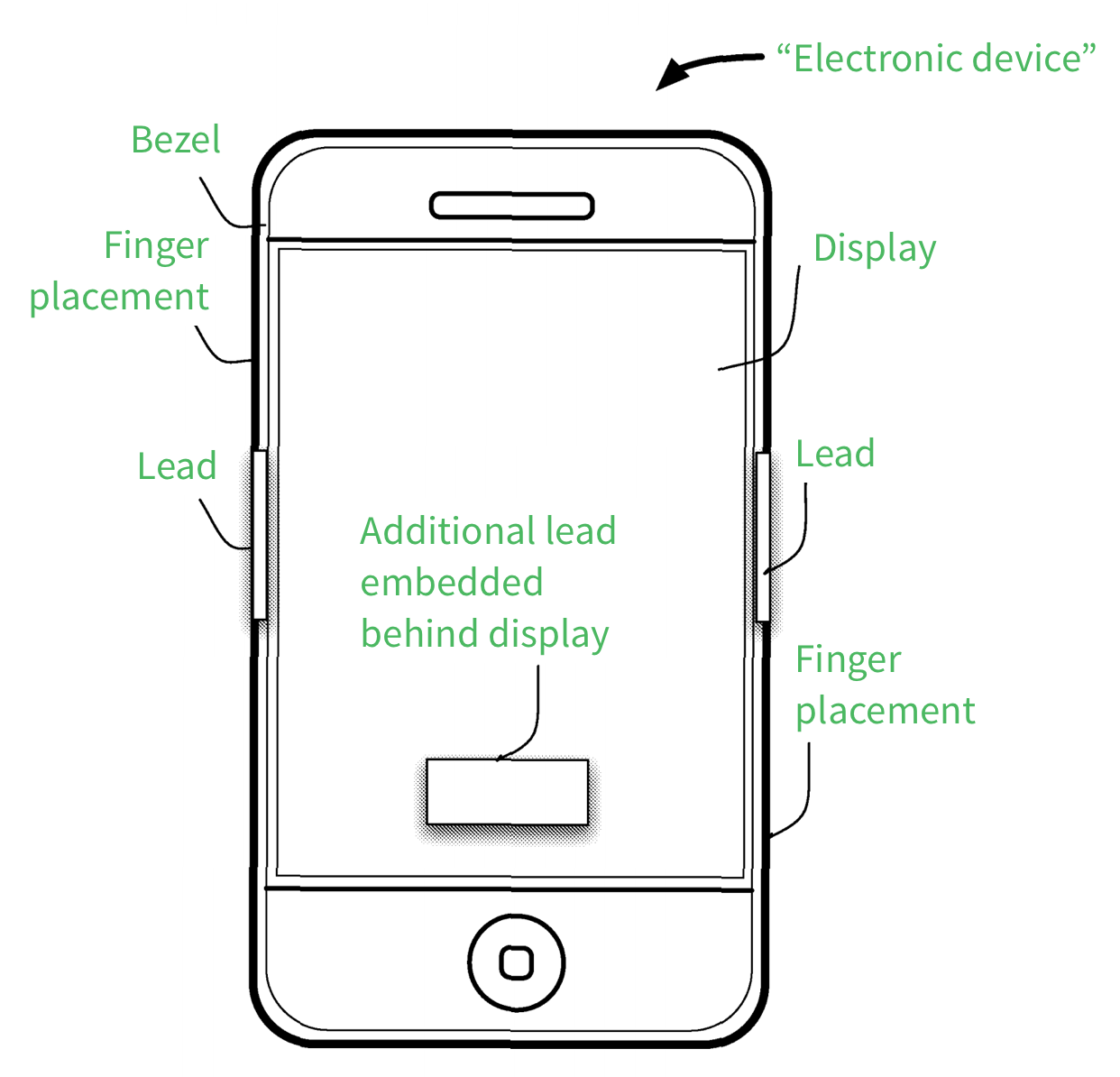
In 2009, Apple filed a patent for a “seamlessly embedded heart rate monitor” and was ultimatelyawarded the patent by the United States Patent and Trademark Office (USPTO) in late 2013. The patent covers the use of embedded sensors to measure a user’s heartbeat, heart rate, or other cardiac signals. The patent further covers locating the leads in accessories, such as headphones (or perhaps a wearable device).Embedded Heart Sensor

Source: USPTO, annotations by Rock Health

Apple has also explored using personal area networks that would cover items such as the “event monitor device” (EMD) that would include an adhesive strip, a processor, a detector, and a communications port. The patent provides an example of monitoring an individual’s heart rate for events over a threshold (e.g., 180 beats per minute). While such a device sounds familiar to iRhytm’s Zio patch, the patent suggests Apple is looking more broadly into the development of an ecosystem of products that would be anchored by a single wearable platform device (likely wrist-worn), and augmented through various hardware sensors that could live in, on, or around the body and communicate with the primary device.

EMD Heart Rate Monitor Patch

Source: USPTO, annotations by Rock Health

Most recently, Patently Apple has uncovered a patent application for a medical app that can monitor physiological data (e.g., arrhythmias), and either store it on a device like an iPhone and/or transmit the data to health facilities via a communication network. The patent was filed by Naeem Ansari, who was also behind a recent financial system patent that was ultimately assigned to Apple.

5.  Check-in with the Food and Drug Administration (FDA).

Senior Apple executives met with FDA leadership, including the Director of the Agency’s Center for Devices and Radiological Health, which has oversight of medical devices, and Bakul Patel, the author of the FDA’s guidance on mobile medical applications. Patel’s guidance indicates that any mobile technologies which are intended for use in the diagnosis of a medical condition, or in the cure, mitigation or treatment of one will be regulated as medical devices.

Twitter can tell when you’re depressed

  • Eric Horwitz leading the way on mining twitter feeds for signs of depression
  • He muses on looking at the impact of news on mood at a population level
  • Conway’s team is looking at some of the tough ethical questions involved, by “investigating public attitudes towards the ethics of using social media for public health monitoring,” he says. “This ethical component of the work is particularly important given the evolving role of social media in society and concerns regarding the activities of the NSA.”

http://business.time.com/2014/01/27/how-twitter-knows-when-youre-depressed/

How Twitter Knows When You’re Depressed

Scientists can now accurately predict if you have the blues—just by looking at your Twitter feed

FRANCE-TECHNOLOGY-BLOGGING-TWITTER-FEATURE
AFP/Getty Images / AFP/Getty Images

With its 230 million regular users, Twitter has become such a broad stream of personal expression that researchers are beginning to use it as a tool to dig into public health problems. Believe it or not, a scientist out there might actually care about the sandwich you ate for lunch—even if most of your followers don’t.

“Our attitude is that Twitter is the largest observational study of human behavior we’ve ever known, and we’re working very hard to take advantage of it,” explains Tyler McCormick of the Center for Statistics and the Social Sciences at the University of Washington.

What if, for example, an artificial intelligence model could scan your Twitter feed and tell you if you’re at risk for depression? And what if you could receive notices from third parties, for instance, that warned you that you may want to seek help, just based on an automated scan of your tweets? Eric Horvitz, co-director of Microsoft Research Redmond has helped pioneer research on Twitter and depression. He says that could one day be a possibility.

“We wondered if we could actually build measures that might be able to detect if someone is severely depressed, just in publicly posted media. What are people telling the world in public spaces?” asks Horvitz. “You might imagine tools that could make people aware of a swing in mood, even before they can feel it themselves.”

Horvitz and a team of researchers helped develop a model that can scan tweets and predict depression in Twitter users, with an accuracy they claim to be 70%. Researchers say the system is still far from perfect. When the model scans your tweets, it misses some signals and doesn’t diagnose many people—about 30%—who really will get depression. And the system has a “false positive” issue, Horvitz said, causing it to incorrectly predict that healthy Twitter users will get depression in about 10% of cases.

The Microsoft team found 476 Twitter users, 171 of whom were seriously depressed. They went back into users’ Twitter histories as far as a year in advance of their depression diagnosis, examining their tweets for language, level of engagement, mentions of certain medications, and other factors, using computer models to sift through a total of 2.2 million tweets. By comparing depressed Twitter users’ feeds with the non-depressed user sample class, they came up with a method for predicting depression diagnoses before they happened. When they tested the model on a different set of Twitter users, it showed 70% accuracy in predicting depression before its onset.

Some tweets the scientists looked at in the depressed group pretty obviously indicate some level of emotional distress. For example, the study cited tweets like these from their depressed user group:

“Having a job again makes me happy. Less time to be depressed and eat all day while watching sad movies.”

“I want someone to hold me and be there for me when I’m sad.”

“‘Are you okay?’ Yes… I understand that I am upset and hopeless and nothing can help me… I’m okay… but I am not all right.”

Not all users’ feeds are so clear. Microsoft’s researchers looked at factors like the number of tweets users made per day, what time of day users tweeted, how often users interacted with each other, and what kind of language tweeters were using. For example, seemingly depressed tweeters were more likely to post messages late at night (between 9pm and 6am) compared with healthy tweeters, who were most active during the day and after work hours.

The team also noticed that certain isolated words in Twitter posts also were characteristic of depression. Words like anxiety, severe, appetite, suicidal, nausea, drowsiness, fatigue, nervousness, addictive, attacks, episodes, andsleep were used by depressed users, but more surprisingly, words like she, him, girl, game, men, home, fun, house, favorite, wants, tolerance, cope, amazing, love, care, songs, and movie could be indications of depression as well.

The volume of tweets mattered too, as did the percentage of exchanges—users who are depressed begin to tweet less, and tweet less at other people, indicating a possible loss of social connectedness, said Horvitz. Of course, just because a Twitter user makes a post that includes the word fatigue and house at 4am, that doesn’t mean they’re depressed. The Microsoft team’s classifier looked at users’ feeds over long periods of time and incorporated many factors. A second Microsoft study that focused more on broader populations using slightly different methods achieved similar results, determining depression in tweets with around 70% accuracy.

One area of public health where this kind of research could come in handy is in measuring public reactions to events. Tracking public Twitter feeds after profound or traumatic events could help scientists understand how we’re affected by the news. “We really didn’t used to have many tools available traditionally for that kind of fine-grained analysis,” says said Horvitz. “Now there’s a new direction for doing the science.”

McCormick, of the University of Washington, said part of the research he and his team is now doing will involve improving earlier Twitter depression models, by weeding out false or misleading data and figuring out areas where depression-related data is being underreported. His team has also identified a group of first-year students at a number of colleges across the country based on their Twitter feeds—hashtags, posts relating to orientation—and is following them for “red flags” that could indicate emotional issues.

A study by University of California San Diego will also build on that research. Funded by the federal government’s National Institute of Health, UCSD’s Michael Conway is creating models that will eventually track depression in communities and figure out how to apply mental health resources better assess public health. “The ultimate goal of this work is to provide a cost-effective, real-time means of monitoring the prevalence of depression in the general population,” Conway said in an email.

In a post-Snowden era, privacy is a major concern facing any kind of mass-data collection. The Twitter users in the Microsoft study permitted Horvitz and his team to examine their tweets, but a possible future in which computer programs  automatically sift through your tweets to make judgments on your health could understandably set off alarms with big data skeptics.

Conway’s team is looking at some of the tough ethical questions involved, by “investigating public attitudes towards the ethics of using social media for public health monitoring,” he says. “This ethical component of the work is particularly important given the evolving role of social media in society and concerns regarding the activities of the NSA.”

It may be some time before the research is developed enough for Twitter to warn individuals at risk for depression to seek help. Horvitz says part of what’s driven his research is the staggering number of suicides in the United States every year due to depression: 30,000. “If we can even save through interventions a few of those 30,000 people each year, it will make this research well worth it,” he said.

Shivering increases brown fat

Seems like they’ve been reading four hour body…!

http://www.medicalobserver.com.au/news/shivering-may-burn-more-kilojoules-than-workout

Shivering may burn more kilojoules than workout

Lynnette Hoffman   all articles by this author

TEN to 15 minutes of shivering in the cold may be as good as an hour of moderate cycling when it comes to converting energy-storing ‘white fat’ into beneficial energy-burning ‘brown fat’, according to research from the Garvan Institute.

The two activities increase levels of two hormones known to be instrumental in that process —irisin, produced by muscle, and FGF21, produced by brown fat.

People with more brown fat tend to be slimmer and have lower glucose levels than those who have less.

Endocrinologist Dr Paul Lee showed that when 10 healthy adult volunteers were exposed to temperatures cold enough to make them shiver, which occurred between 14°C and 16°C, they produced the same amount of irisin in less than 15 minutes as was produced after an hour of moderate exercise.

“We speculate exercise could be mimicking shivering because there is muscle contraction during both processes, and that exercise-stimulated irisin could have evolved from shivering in the cold,” Dr Lee said.

While 50g of white fat stores more than 1255.2 kilojoules (300 kilocalories) of energy, that amount of brown fat can burn up to the same number of kilojoules, he said.

“White fat transformation into brown fat could protect animals against diabetes, obesity and fatty liver,” Dr Lee said.
But don’t dive into the cool room just yet.

“Cold exposure is a bit like exercise in that perhaps it requires training at the start too, so for instance, you could consider wearing a light jacket rather than a big jumper on a cool day, or not turn the temperature on the heater too high in winter. This is similar to how one would train running shorter distance first before attempting a marathon,” he said.

Cell Metabolism 2014; 19(2):302-309

Obesity and cancer

  • OBESITY has become the biggest preventable risk factor for cancer in Australia after smoking, a study from the World Health Organization has shown.
  • The majority of cancer-related deaths in Western countries are due to lifestyle factors such as weight, alcohol intake and physical inactivity, said Terry Slevin, a spokesman for the Cancer Council Australia.
  • Approximately 5% of cancer incidence is caused by alcohol consumption.

http://www.medicalobserver.com.au/news/obesity-is-now-the-leading-preventable-risk-factor-for-cancer

Also: http://www.foodmanufacture.co.uk/Ingredients/Alcohol-and-sugar-laws-needed-to-stem-cancer-tidal-wave

Obesity is now the leading preventable risk factor for cancer

Emily Dunn   all articles by this author

OBESITY has become the biggest preventable risk factor for cancer in Australia after smoking, a study from the World Health Organization has shown.

The 2014 World Cancer Report, last released six years ago, also showed that cancer has overtaken heart disease as the leading cause of death in Australia and almost every other country, killing an estimated eight million people globally each year, including more than 43,000 Australians.

This number is expected to rise to 20 million globally by 2025.

The majority of cancer-related deaths in Western countries are due to lifestyle factors such as weight, alcohol intake and physical inactivity, said Terry Slevin, a spokesman for the Cancer Council Australia.

Approximately 5% of cancer incidence is caused by alcohol consumption.

“For non-smokers, the single biggest preventable cause of cancer is obesity in terms of the number of cancer sites affected,” Mr Slevin told MO.

Australia also has one the highest incidence of cancer, third in the world behind Denmark and France, due to our ageing population and successful screening programs.
“In a perverse way, a high rate of cancer indicates a relatively healthy population because it indicates a longer life expectancy, Australia is in the top four in terms of life expectancy,” Mr Slevin said.

Mirroring worldwide trends, Australia has seen an increase in the incidence of breast cancer and prostate cancer, largely due to systematic screening, an effect that is expected to be seen also with the continued roll-out of bowel cancer screening.

Reassuringly, Mr Slevin said, mortality from cancer has also decreased in developing countries thanks to early detection and developments in treatment, and Australia has also seen a slight decrease in incidence of melanoma.

The report estimated the global cost of cancer to be $1.33 trillion a year in 2010, equating to 2% of the world’s GDP, a figure that could be reduced by up to $200 billion a year if more was done to prevent cancer.

Sugar and CV risk

  • JAMA study focused on added sugars
  • WHO recommend less than 10% of daily energy intake come from added sugars

http://www.medicalobserver.com.au/news/sugar-triples-cv-risk

Sugar triples CV risk

Press Association   all articles by this author

CONSUMING too many sugary sweets, desserts and drinks can triple your chances of dying from heart disease.

Scientists in the US have found a relevant association between the proportion of daily calories supplied by sugar-laden foods and heart disease death rates.

The researchers specifically focused on added sugar in the diet – that is, sugar added in the processing or preparing of food, rather than natural sources.

One sugar-sweetened beverage a day is enough to increase the risk of dying from cardiovascular disease (CVD).

For people obtaining a quarter of their calories from added sugar, the risk tripled compared with those whose sugar contribution was less than 10%.

Sugar consumption in the top fifth of the range studied doubled the likelihood of death from heart disease.

Dietary guidelines from the World Health Organization recommend that added sugar should make up less than 10% of total calorie intake.

A single can of fizzy drink can contain 35g of sugar, providing 140 calories.

The study, led by Dr Quanhe Yang, from the Centres for Disease Control and Prevention in Atlanta, used US national health survey data to determine how much added sugar people were consuming.

The authors concluded: “Our findings indicate that most US adults consume more added sugar than is recommended for a healthy diet.

“A higher percentage of calories from added sugar is associated with significantly increased risk of CVD mortality.”

Professor Naveed Satta, from the British Heart Foundation Glasgow Cardiovascular Research Centre at the University of Glasgow, said: “We have known for years about the dangers of excess saturated fat intake, an observation which led the food industry to replace unhealthy fats with presumed ‘healthier’ sugars in many food products.

“However, the present study, perhaps more strongly than previous ones, suggests that those whose diet is high in added sugars may also have an increased risk of heart attack. Of course, sugar per se is not harmful – we need it for the body’s energy needs – but when consumed in excess it will contribute to weight gain and, in turn, may accelerate heart disease.

“Helping individuals cut not only their excessive fat intake, but also refined sugar intake, could have major health benefits including lessening obesity and heart attacks. The first target, now taken up by an increasing number of countries, is to tax sugar-rich drinks.”

JAMA Internal Med 2014; online 3 February