Category Archives: healthcare

US pricing transparency initiatives…

It looks like they’re moving in the right direction in the US… 11 states have established pricing databases already, but I’d be surprised if they’d incorporated sophisticated visualisation/prediction tools like I+PLUS.

Washington State Officials Want To Lift Veil On Health Care Pricing

TOPICS: STATESHEALTH COSTS

By Lisa Stiffler, The Seattle Times

FEB 05, 2014

This story was produced in collaboration with 

What if you had a headache that wouldn’t go away? At the area’s top trauma center, a brain MRI will cost more than $4,600, while an imaging center on the Eastside will charge $900.

Need your tonsils out? A Kirkland nasal-and-sinus clinic will charge you $2,200, but the surgery will be nearly $7,000 at a Seattle hospital. Which would you choose?

A prime objective of the Affordable Care Act is to bring down America’s health-care costs, which are the highest per person in the world. But how can the U.S. shrink its medical bills if patients are almost always buying health care with no idea what it costs?

Washington has been able to do little to shed light on health-care costs, and the state last year earned an “F ” for its cost-transparency laws, according to groups promoting health-care reform.

That soon could change.

Gov. Jay Inslee and some state lawmakers are pushing for new rules that would create a database listing hundreds of medical procedures, what they will cost at clinics and hospitals statewide, and information about the quality of the medical providers.

“We made a decision with the Affordable Care Act to use competition to control costs,” said Bob Crittenden, Inslee’s senior health-policy adviser. “Competition requires a number of things. You need enough information to make decisions, and we don’t have that right now.”

The proposal has backing from many big players in medicine and business, but the support is not universal. The state’s largest insurance companies — Regence Blue Shield and Premera Blue Cross — oppose requirements to share the treatment prices they’ve privately negotiated with clinics and hospitals.

There’s also the challenge of pairing cost data with information about the quality of a doctor or hospital. After all, who wants the cheapest physician if he’s also the worst?

And there are questions whether transparency can drive down prices. Hospitals and clinics have been consolidating, creating fewer, bigger companies and less competition. Lifesaving drugs and treatments might be available from only one company or location, giving patients little choice.

The biggest question is whether patients will seek this information and use it to shop more wisely. Transparency supporters think the public is ready for them to pull back the curtain on cost and quality.

“More information will beget more curiosity,” said Mary McWilliams, executive director of the Washington Health Alliance, a nonprofit that has earned national kudos for tracking the quality of health-care delivery.

“I think people have assumed it’s all the same quality and all the same cost,” she said. “Getting them to recognize that it’s not all the same is the first threshold.”

“Huge price variation”

When Jeff Rice was dinged $200 for cholesterol blood work that should have cost $20, the Tennessee-based physician turned his frustration into a business opportunity.

In 2008, Rice launched Healthcare Bluebook, a company that collects data on what insurance companies pay for medical care, then calculates a “fair price” for procedures from allergy tests to heart surgery. Consumers can search for prices for free online and use the information as a benchmark to shop around.

“Many patients don’t know there is this huge price variation,” Rice said.

There are other transparency tools available, but all have their limitations. Many insurance companies have online cost-comparison tools for their customers. A recent search on the Aetna site found prices for roughly 30 common procedures, while Regence lists prices for 350 services.

On the quality side, the Washington Health Alliance publishes “Community Checkup Report,” which evaluates the quality of doctors, clinics and hospitals. The national Leapfrog Group scores hospitals.

In coming months, lawmakers in Olympia will consider various proposals to expand and greatly improve such transparency. One bill would require insurance companies to enhance their shopping tools to include price and quality information side-by-side.

Recent hearing

A more controversial proposal would create an “All-Payer Claims Database.” Hospitals and clinics have a “billed” rate for services, but insurance companies negotiate lower “allowed” rates, the amount they agree to actually pay for a procedure. The legislation would require payers — mostly insurance companies — to reveal what they are spending on services at different locations, so the data could be compiled into a database available to everyone.

At a recent hearing for the bill, representatives from the Washington State Hospital Association, Washington State Medical Association, Seattle Metropolitan Chamber of Commerce and the National Federation of Independent Business all testified in support of creating the database.

Only Regence and Premera officials spoke against it.

The insurance companies carefully guard the rates they negotiate. They consider it proprietary information they are not keen to share with competitors, health-care providers and others.

“We simply do not believe that [the All-Payer Claims Database] has any history of demonstrating any meaningful cost or quality improvement,” said Premera’s Len Sorrin, at the hearing.

The companies do, however, support cost tools for their own customers. A spokesman for Regence testified that searching for prices drives patients to lower-cost options.

Databases in 11 states

So far, at least 11 states have created these databases in various forms, and many more are interested. Most of the databases were built in 2008 or later, and there’s little information on their effects on costs or quality.

But the world of health insurance is changing. Deductibles — the amount a patient must pay before an insurance company starts covering medical bills — are going up. More than one-third of insured workers have deductibles of $1,000 or more, and many plans also have “coinsurance,” which sets a percentage of medical bills patients must pay even if they’ve reached their deductible cap.

Gone are the days of visiting the doctor and paying a $15 copay. Patients are more frequently footing the bill.

“When it’s your money, you ask a lot more questions about what things cost,” said Rice, the founder of Bluebook.

But shopping for health care can be more complicated than buying other essentials.

Transparency supporters like to illustrate the influence of price by comparing it with buying gasoline. Most drivers check the posted per-gallon price before filling up. If one station offered gas at $4 a gallon, they would drive past the pump offering it for $20 a gallon — a degree of price difference seen in some medical services.

But is that the right metaphor? What if you’re driving on fumes and there’s no other pump for miles around? When you’re a desperate shopper, chances are you’ll pony up if you can.

Challenges, limitations

Some argue that by publishing the cost information, the cheaper locations will raise their prices rather than the expensive sites dropping theirs. Douglas Conrad, a professor in the University of Washington’s School of Public Health, called that argument a red herring. Over time, he said, the prices come down, whether through market forces or action by antitrust authorities.

The relationships patients develop with their doctors pose potentially more difficult complications.

Conrad acknowledges the challenges and limitations to how much influence transparency can exert on the health-care system, but he thinks it can make a positive difference.

“If price and quality information get out there, and there is a push by the state to force transparency where it’s been difficult to get … that could change things,” Conrad said. “The promise is there.”

We want to hear from you: Contact Kaiser Health News

Prescribing the BlueStar diabetes app

  • analyzes logged blood glucose
  • offers advice based on trends
  • sends a report to clinicians
  • WellDoc are chasing the money with insurers
  • Endorsed by Dr Katz

If they want Dr uptake, they will need to be able to fund scaled change management programs just like the drug companies do

  • Will Docs Write Rx for Apps?

Published: Jan 16, 2014 | Updated: Jan 16, 2014

By Kristina Fiore, Staff Writer, MedPage Today

Doctors can now write scripts for the first prescription-only app — but the question remains whether they’ll pick up a prescription pad to write for mobile technology.

The app, BlueStar, is a tracker for patients with diabetes. It analyzes logged blood glucose data and offers advice based on trends it detects — such as telling patients to adjust their diets based on sugar levels after meals. Clinicians also receive a report on their patients’ progress.

Parent company WellDoc just won $20 million in venture financing for the app, and the company has a track record of success with online disease management tools and applications. WellDoc’s argument is that better blood sugar control will lead to better patients outcomes, and, thus, less spending on healthcare in the long run.

FDA approved the BlueStar app in 2010 as a device, but the company’s strategy has recently focused on insurance and reimbursement. In June, WellDoc announced that BlueStar would be reimbursed as a pharmacy benefit for employees of a handful of top companies, including Ford Motor Company, RiteAid, and DexCom.

Only a handful of apps has been approved since the FDA’s social media guidance was released in September, but experts suspect that more app companies may be moving in the direction of requiring prescriptions in order to monetize their efforts.

Patrick Brady, a spokesperson for WellDoc, told MedPage Today that the program is out in full force and doctors are currently writing prescriptions for BlueStar.

Patients whose health plans don’t cover BlueStar can get the app by working with a customer advocacy team at WellDoc, he added. The team coordinates directly with the patient’s physician to negotiate with insurers.

In a statement from when the BlueStar app was launched in June, Richard Bergenstal, MD, a past president of the American Diabetes Association, said that in the “era of healthcare reform, it’s important that payers recognize that patients must have access to proven, novel digital tools.”

Many other clinicians contacted by MedPage Today said they’d feel comfortable writing a prescription for an app.

“I have looked at some of the data supporting the role of technology like this in the management of diabetes, and I think it may be the [wave] of the future,” said Fernando Ovalle, MD, an endocrinologist at the University of Alabama at Birmingham.

David Katz, MD, of Yale’s Prevention Research Center, said he would feel comfortable writing the script provided patients were comfortable using it. “Overall, the literature suggests that extending our reach with technology that allows patient coaching to be continuous between office visits can be very effective,” Katz said.

Johnson Thomas, MD, an endocrinology fellow in New York City who developed anendocrinology reference app called Endo Tools, also said patient comfort would be a major factor, since “not all patients are tech-savvy.”

Still, he said if the app can deliver “timely, actionable advice” to patients in order to achieve better glucose control, it would be worth it.

Sue Kirkman, MD, of the University of North Carolina at Chapel Hill, said a prescription app could be helpful, but its usefulness may be limited in that the patients “who want the app and are willing to enter data and respond to prompts may already be the more proactive ones.”

Kirkman added that she hopes potential insurer reimbursement for apps opens the door wider to support of reimbursement for self-management tools such as contact with diabetes educators.

“Right now, pretty much only face-to-face visits are covered, not the ongoing contacts by phone, fax, email, etc., that are really needed to help someone sustain behavior changes and self-manage their diabetes optimally,” she said.


SMS supports diabetes self-care

  • Research into Auto SMS in chronic disease published in Health Affairs
  • HBA1C reduced
  • Costs of care reduced
  • Satisfaction with care increased
  • Content included reminders, questions and allowed for responses

Auto TXTing May Boost Diabetes Self-Care

Published: Feb 3, 2014

By David Pittman, Washington Correspondent, MedPage Today

Patients with diabetes who received a text message reminder about checking their blood sugar or refilling their medicines saw improvements in clinical outcomes and lower healthcare costs, researchers said.

The 74 patients enrolled in CareSmarts, a mobile phone-based program that provides automated self-management support, had HbA1c glucose levels that went from an average of 7.9% before the 6-month study period to an average of 7.2% afterward (P=0.01), reported Shantanu Nundy, MD, managing director at Evolent Health, in Arlington, Va., and colleagues in Health Affairs.

Costs also fell 8.8% in the intervention group, with a decline in the number and costs of outpatient visits, they added. No changes in clinical outcomes (P=0.08) or costs were seen in the 274 patients who were not enrolled in CareSmarts and made up the control group.

“Our study offers early evidence that [mobile health] can enable healthcare organizations to effectively support patients beyond the traditional healthcare setting and achieve the triple aim of better health, better healthcare, and lower costs,” they wrote.

Patients with type 1 or type 2 diabetes with access to a personal cell phone were recruited for the study at the University of Chicago. Participants were responsible for any text messaging costs charged by their phone carriers, but they were given a $25 cash incentive at the completion of the study.

The average age of the study-arm patients was 53 and nearly 70% were African American, with an average diabetes duration of 8 years. One-third of patients had well-controlled diabetes (HbA1c of 7% or less). Of the 74 patients, 67 completed the 6-month program.

The text messages included reminders (“Time to check your blood sugar”) and questions, such as “Do you need refills of any of your medications?” The patients responded by text, and healthcare providers followed up depending on the responses. The patients also received educational materials.

The intervention group saw improvements in glycemic control (P=0.01) and reported better satisfaction with overall care (P=0.04), according to the authors.

However, broader use of such text messaging tools will require federal guidance and regulations, they cautioned.

“Although we found a business case for the use of [mobile health], the diffusion and sustainability … depends on a supportive policy environment,” they wrote.

While the FDA recently said it wouldn’t regulate mobile apps that don’t interface with an FDA-regulated device, such as glucometers and blood pressure monitors, uncertainty remains about apps used as an accessory to a medical device or those that support medical decision-making.

“In addition, more work is needed to clarify the overlapping roles of the FDA, the Office of the National Coordinator for Health Information Technology, and the Federal Communications Commission,” the authors wrote.

Nundy and colleagues called for government-driven privacy guidelines around provider-to-patient communication through mobile apps, saying organizations are “less likely to develop innovative programs in this area.”

Diabetes care has been one field with a large number of mobile apps for clinicians and patients to better monitor and control the disease. Some applications require a provider’s prescription.

This research was partially funded by the Alliance to Reduce Disparities in Diabetes of the Merck Foundation and received support from the Chicago Center for Diabetes Translation Research.

Nundy co-founded mHealth Solutions, a mobile health software company that provided the software for this research, but reported that he no longer has a financial relationship with the company. He also reported a grant from Agency for Healthcare Research and Quality’s Health Services Research Training Program.

One co-author is co-founder and owner of mHealth Solutions.

Other co-authors reported support from National Institute of Diabetes and Digestive and Kidney Diseases and the Robert Wood Johnson Foundation.


Providers scared of integrating technology into their workflow (because they don’t get paid to)

Great CIO quote about providers:

“No longer do people want to use technology as a synonym for a fax,” Bosch said. “But healthcare is very scared; we’re scared to develop on our own. If you look at any other industry, they have a huge research and development technology arm. Healthcare wants to manage technology like you’d manage a couple of horses in the stable. We’ll care for them and feed them, but we wouldn’t’ dare do anything else on our own. We’ve got to change our mindset.”

http://www.fiercehealthit.com/story/hospital-cmio-providers-are-scared-innovation/2014-01-27

Hospital CMIO: Providers are ‘scared’ of innovation

January 27, 2014 | By 
With patient engagement tools like Fitbit and personal health records growing more and more abundant, a primary goal of providers in today’s society must be to avoid obstructing the flow of information from patients and their tools to medical professionals, according to Ryan Bosch, chief medical information officer at Falls Church, Va.-based Inova Health System.

Bosch, speaking on a patient engagement panel at the Office of the National Coordinator for Health IT’s annual meeting in Washington, D.C., last week, called interoperability paramount to those efforts, but also called the health industry, as a whole, scared to innovate.

“No longer do people want to use technology as a synonym for a fax,” Bosch said. “But healthcare is very scared; we’re scared to develop on our own. If you look at any other industry, they have a huge research and development technology arm. Healthcare wants to manage technology like you’d manage a couple of horses in the stable. We’ll care for them and feed them, but we wouldn’t’ dare do anything else on our own. We’ve got to change our mindset.”

Part of changing that mindset, according to Donna Cryer–a D.C.-based patient advocate who suffers from autoimmune conditions–is thinking of patient care as more of a partnership. While Cryer said that she thinks of herself as both an engaged and an activated patient, she stressed that not all patients are willing or ready to take that same kind of initiative.

“A consumer might be someone who doesn’t have very frequent interactions with the healthcare system,” Cryer said. “I think it’s important to design education and engagement strategies and expectations for patients trying prevent hospital visits,” in addition to patients like herself who need constant treatment.

“Patient engagement takes at least two parties, and unless there’s that partnership, there really won’t be any engagement.”

Lygeia Ricciardi, director of the office of consumer eHealth at ONC, agreed, saying that patients need to feel comfortable asking questions and sometimes disagreeing with their providers. Technology, she added, helps to bridge a gap.

“If we can get information flowing to people, we want them to have a variety of tools and apps to work with,” Ricciardi said. “Trust is the bedrock of the patient-provider relationship. Patients must feel comfortable that their information is where it should be.”

study recently published in the Journal of Participatory Medicine outlined several tips for physicians to engage patients through the use of digital technology, including:

  • Working with patients to achieve a common understanding of the types of information patients would be sharing, how the sharing would take place and which members of the clinical team would be reviewing the information and how often
  • Designating and training a member of the clinical care team to monitor incoming data and triage as necessary
  • Putting a medical emergency protocol in place
  • Using appropriate judgment in deciding when patient-generated electronic health information would be included in the physician’s legal medical record

The study focused on efforts within Project HealthDesign, a research program funded by Robert Wood Johnson Foundation.

Wearables meets big data

Some see this as an opportunity to mobilise a peer-to-peer health knowledge commons outside the healthcare system that is filtered through government, hospitals and GPs’ surgeries. This new healthcare system would exist out among the public.

Pioneered by Tedmed’s clinical editor, Wellthcare tries to pinpoint the new kind of value that this people-powered healthcare system would create.

“Wellth” is closer to the idea of wellbeing or wellness than health; it is about supporting “what people want to do, supported by their nano-networks”.

A healthcare system that uses data we collect about ourselves would require these new bodies to make much bigger choices about how NHS trusts procure products and services.

Going back to the ever expanding market for wearable technology – with a potential patient group of 80m, there should be a lot more going on to turn our physiological data in the treasure trove it could be. Forget supermarket reward points and website hits, the really big data only just arrived.


http://www.theguardian.com/science/political-science/2014/jan/27/science-policy

Big data gets physical

Posted by 
Tuesday 28 January 2014 01.05 EST
Can we make the rise of wearable technology a story about better health for everyone, not just better gadgets for me?
Smartphone app visualises two similar running routesSmartphone app visualises two similar running routesI am obsessed with my running app. Last week obsession became frustration verging on throw-the-phone-on-the-floor anger. Wednesday’s lunchtime 5km run was pretty good, almost back up to pre-Christmas pace. On Friday, I thought I had smashed it. The first 2km were very close to my perennial 5 min/km barrier. And I was pretty sure I had kept up the pace. But the app disagreed.As I ate my 347 calorie salad – simultaneously musing on how French dressing could make up 144 of them – I switched furiously between the two running route analyses. This was just preposterous; the GPS signal must have been confused; I must have been held up overtaking that tourist group for longer than I realised; or perhaps the app is just useless and all previous improvements in pace were bogus.My desire to count stuff is easy to poke fun at. It’s probably pretty unhealthy too. But it’s only going to be encouraged over the next few years. Wearable technology is here to stay. Smart phone cameras are also heart rate monitors. Contact lenses can measures blood sugar. And teddy bears take your temperature. A 2011 market assessment, estimated that there will be 80m sports, fitness and “wellness” wearable devices by 2016.
At the moment, it’s difficult to retrieve the data these systems collect. Nike only allow software developers access to data produced by people like me so they can create new features for their apps. I cannot go back and interrogate my own data.

Harbouring user data for product development is an extension of part of the search engine or mobile provider business model. When you log in to Gmail while browsing the internet, you give Google data about your individual search behaviour in exchange for more personalised results. Less obviously, when you use the browser on your phone, mobile companies collect (and sell) valuable data about what you are looking for and where you are. The latest iteration of this model is Weve, providing access to data about EE, O2 and Vodafone customers in the UK.

After Friday lunchtime’s outburst, I accepted that I’d never find the cause of my wayward run and quickly got absorbed back into the working day.

But I shouldn’t have.

We talk about the economic and social value of opening up government data about crime numbers or hospital waiting times. But what about the data we’re collecting about our daily lives? This is not just a resource for running geeks to obsess over, it provides otherwise unrecorded details of our daily lives. Sharing data about health has the potential to be an act of generosity and contribution to the public good.

For some areas of healthcare, particularly for type 2 diabetics or those with complex cardiovascular conditions, lifestyle information could make a huge difference to how we understand and treat patients. It could provide the kind of evidence badly needed to make headway in areas where clinical trials aren’t enough.

But it’s not yet easy to make something of this broader value created by fitness apps or soft toys with sensors in them. One person’s data is saved in different ways through different services – making for a messy, distributed dataset.

There is also no clear way to incorporate this into the current healthcare system. Some companies have made strides in that direction. Proteus Digital Health offers a system for monitoring a patient’s medication and physical activity using an iPad app and ingestible pills. This takes some much needed steps towards understanding how people comply with their prescription. At the moment, only 50% of patients suffering from chronic diseases follow their recommended treatment. If Proteus starts to sell information back to the health service, it will take digital health into mainstream healthcare. However,it hasn’t reached that point yet. And it is still a rare example of a company with the regulatory approval to do so. For example, Neurosky’s portable EEG machines, which measure brain activity, make excellent toys. But the company has no intention of certifying its products as medical equipment, given the time and expense it requires.

But does that matter? Neurosky’s wizard-training game Focus Pocus improves a player’s cognitive abilities including memory recall, impulse control, and the ability to concentrate. Some US medical practitioners are now prescribing Focus Pocus. This makes biofeedback therapy to ADHD patients available at home, replacing two to three hospital visits a week. This is going on anyway – outside the mainstream healthcare system.

Some see this as an opportunity to mobilise a peer-to-peer health knowledge commons outside the healthcare system that is filtered through government, hospitals and GPs’ surgeries. This new healthcare system would exist out among the public. Pioneered by Tedmed’s clinical editor, Wellthcare tries to pinpoint the new kind of value that this people-powered healthcare system would create. “Wellth” is closer to the idea of wellbeing or wellness than health; it is about supporting “what people want to do, supported by their nano-networks”. There is the potential for a future where we move from producers of data that is sucked up by companies into producers of data who consciously share it with one another, learn to interpret it and make judgments from it ourselves.

The current healthcare system may evolve to support this kind of change. In the UK, Academic Health Science Networks and Clinical Commissioning Groups provide new structures within the NHS that have the potential to support disruptive innovations. But so far these have led to small, incremental changes. A healthcare system that uses data we collect about ourselves would require these new bodies to make much bigger choices about how NHS trusts procure products and services.

Going back to the ever expanding market for wearable technology – with a potential patient group of 80m, there should be a lot more going on to turn our physiological data in the treasure trove it could be. Forget supermarket reward points and website hits, the really big data only just arrived.

Economist: Health and appiness


http://www.economist.com/news/business/21595461-those-pouring-money-health-related-mobile-gadgets-and-apps-believe-they-can-work

Health and appiness

Those pouring money into health-related mobile gadgets and apps believe they can work the miracle of making health care both better and cheaper

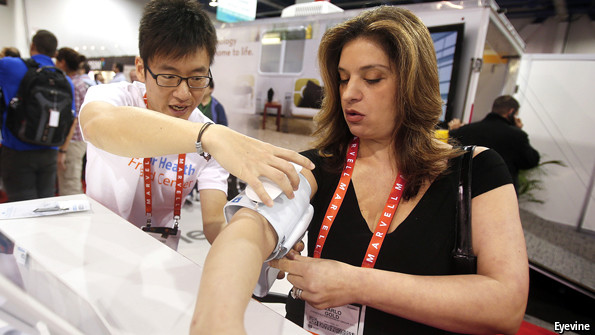
WHEN Kenneth Treleani was told last summer that he was suffering from high blood pressure, his doctor prescribed medicine to tackle the condition. He also made another recommendation: that Mr Treleani invest in a wireless wrist monitor that takes his blood pressure at various times during the day and sends the data wirelessly to an app on his smartphone, which dispatches the readings to his physician. Mr Treleani says the device (pictured), made by a startup called iHealth, has already saved him several visits to the doctor’s surgery.

Portable blood-pressure monitors have been around for a while. But the idea of linking a tiny, wearable one to a smartphone and a software app is an example of how entrepreneurs are harnessing wireless technology to create innovative services. By letting doctors and carers monitor patients remotely, and by making it simpler to collect vast amounts of data on the effectiveness of treatments, the mobile-health industry, or m-health as it has become known, aims to drive down costs while improving results for patients.

Many experiments are already under way in emerging markets, where new mobile devices and apps are helping relieve pressure on poorly financed and ill-equipped clinics and hospitals. But the biggest prize is America, which splashes out a breathtaking $2.8 trillion each year on a health-care system riddled with inefficiencies. The prospect of revolutionising the way care is delivered there is inspiring entrepreneurs. Mercom Capital Group, a consulting firm, reckons that of the $2.2 billion venture capitalists put into health-care startups last year, mostly in America, $564m went to m-health businesses.

The m-health market can be broken down into two broad categories. First, there are the apps and appliances used to monitor the wearer’s physical fitness. Firms such as Nike, Fitbit and Jawbone make wristbands and other wearable gadgets full of sensors that let people record their performance, and their calorie-burning, as they pound the pavement or sweat in the gym.

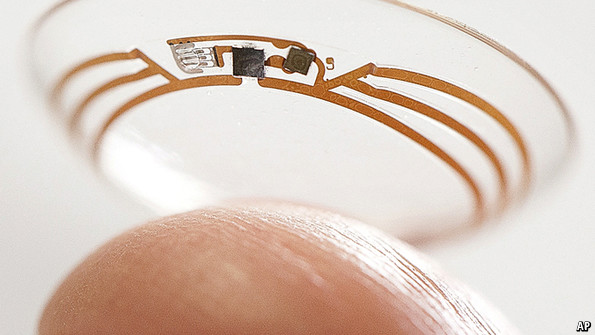
Second, other apps and devices link patients with a medical condition to the health-care system. Last month Google said it was working on a contact lens containing a tiny wireless chip and sensors that would measure and transmit the glucose levels in a diabetic patient’s tears. In December Apple was granted an American patent on a means to incorporate a heartbeat sensor into its devices.

Keeping an eye on glucose levels

The fitness apps may help people to keep up their training regimes, and in time make the population healthier. But in the shorter term they will not have much effect on the health-care system. Nor may they make many investors rich. IMS Health, a research firm, says that of the 33,000-plus health-related apps on Google Play’s app store (the figure for Apple’s iTunes is over 43,000), just five of them—of which two are calorie-counters—account for 15% of all downloads.

A growing posse of entrepreneurs think the big money is to be made in the second category, of apps and devices that seek to transform the way health care is delivered. Large companies spy an opportunity here too. Qualcomm, which sells wireless technology and services, has set up an m-health division, Qualcomm Life, and built a technology platform to make it easy for m-health companies to combine data about things such as the medicines people take and the results of tests they run on themselves, so their doctors can get a more complete picture of their health.

Among those firms with products already for sale, AliveCor makes a $199 gadget that attaches to a smartphone and lets patients take an electrocardiogram by placing two fingers on metal plates. It also sells a veterinary version for taking pets’ ECGs. The data are displayed in an app on the phone and can be reviewed (for a fee) by a cardiologist. CellScope, another startup, makes an otoscope—a device for looking inside the ear—that can be attached to an iPhone and an app that can send the images it takes to a physician.

Last year Medtronic, a huge medical-devices company, splashed out $200m to buy Cardiocom, which combines telehealth services with wireless home gadgets, including scales for heart patients for whom sudden weight gain may be a dangerous symptom. In October Verizon, a mobile-telecoms operator, launched a platform to transmit data from home devices, such as glucose monitors, to the firm’s secure “cloud” of servers.

As Don Jones of Qualcomm Life puts is, just as a car’s electronics tell a driver about its condition, so m-health devices and apps “give people dashboards, gauges and alarm signals” that make it easier for them and their doctors to track what is happening with their bodies. This may alert them to the need for action well before the patient’s condition deteriorates to the extent that he needs hospital treatment. Given that in America the average cost of a night’s stay in hospital is almost $4,300, there is scope for significant savings.

Another obvious way to use the technology to avert health crises is by checking that patients are taking their medicines. Propeller Health sells a device that fits on top of asthma inhalers, to monitor their use. Proteus Digital Health, which raised $63m last year, is testing an ingestible sensor that is taken at the same time as prescribed medication. The device, which relies on stomach fluids to complete a circuit to power it, transmits information to a smartphone so doctors and carers can track when a patient takes pills.

Again, the goal is to save money while improving health. The average annual cost of, say, treating sufferers from high blood pressure who fail to take their medicines is nearly $4,000 more than the cost of treating those who pop their pills reliably.

If such products live up to their promise, a side-effect may be that there is less need for medical technicians—an example of a wave of technology-related job losses that some economists expect. The development of machine intelligence, another hot area for investment (see article), may eventually mean there is less need for doctors or specialists to analyse test results.

One snag is that techies’ enthusiasm for such innovation is colliding with the health-care industry’s conservatism. Doctors in America have been paid for delivering more care, so products that might lead to fewer billable patient visits are viewed with suspicion. This is changing gradually as insurers switch towards rewarding hospitals for providing a better quality of care instead of simply paying them for the quantity delivered. But there is a long way to go in making the medical profession take an interest in cost-saving: a study last month in Health Affairs, a journal, found that few American surgeons had any idea of the cost of the devices, such as replacement hip joints, they implant in patients.

Encouraging iPochondria

Insurers may have cause to worry that, instead of reducing doctors’ workloads, the spread of m-health devices and apps may only encourage hypochondria: surgeries may be flooded with the “worried well”, fussing over every slightly anomalous reading. That may keep the medical profession nicely busy, but will not curb the ever-rising cost of health care.

So, to win over doctors, hospital managers and insurers, m-health firms will need to gather evidence to support their claims of cost-cutting and improved patient outcomes. Such evidence is still surprisingly scarce, says Robert Kaplan of the National Institutes of Health, a government agency. Stephen Kraus of Bessemer Venture Partners, which has examined hundreds of m-health startups, says many firms are blithely assuming that all you have to do is “appify” health care and the world will change.

Makers of more sophisticated m-health products, aimed at doctors, clinics and hospitals rather than patients, will have to build a sales force like that of a pharmaceuticals company, says Bob Kocher of Venrock, another venture-capital firm. That will take time and lots of money.

Some m-health products may have to win approval from America’s Food and Drug Administration. Most firms were pleased by a plan the FDA published last year that said it would regulate only those m-health products that do the work of a traditional medical device—an ECG, say, but not a pedometer. But applying for approval is still burdensome. And the FDA has not finished drawing up its rules: m-health firms are waiting for a framework on the use of information technology in health care from the FDA and two other agencies. Despite such obstacles, optimists such as Peter Tippett of Verizon see health care undergoing the mobile transformation that banking and other industries have already been through.

Andrew Thompson, Proteus’s boss, hopes that the sensors and software his firm is developing will form the dominant “platform” for m-health in the way that Facebook dominates social networking and lets other firms build apps that run on it. But it is likely to face stiff opposition. Mr Kocher thinks giants like Google and Apple may seek to build m-health platforms too.

Apple filed its patent for a “seamlessly embedded heart-rate monitor” after looking for ways to replace passwords with biometric methods—in this case, an ECG—to authenticate users. It may think carefully before entering a business as heavily regulated as medical devices. But it has made no secret of its interest in selling wearable gadgets packed with sensors; and if consumers prove as keen on m-health as investors currently are, it will surely want to satisfy them.

Firms that aspire to make serious money in m-health will need plenty of patience and deep pockets. But they may be able to rely on an army of technophile patients who lobby their doctors to incorporate the new devices and apps in their treatment programmes. Mr Treleani is one of them: “I’d be suspicious of medical practices that aren’t moving forward with these new technologies,” he says.


Introducing the HICCup Initiative


1hr webinar

PDF Slides: HICCup_012814

Rethinking Health: Introducing “HICCup” – A New Opportunity for Investing in the Health of Communities

Dear Paul Nicolarakis,

Sorry we missed you! Our records indicate that you registered for this webinar, but were unable to attend.We invite you to listen to the recording and download the slides at any time by clicking on the link to the right of this message.

Thank you again and we look forward to your participation in future QC Learning Community webinars!

Meeting Description:
What’s the return on the $3 trillion that we spend each year in the U.S. on health care? If we treated health care as an investment, a smart portfolio manager would invest a better part of this money into community health and prevention that could reduce the need for high-cost care in the first place.That’s the thinking behind HICCup (Health Initiative Coordinating Council), a new non-profit initiative with a mission to preserve and restore health at the community level. Founded by Esther Dyson, an active angel investor in health companies and launching in 2014, HICCup will work collaboratively to identify up to five small communities across the U.S. that will compete to win the “HICCup Prize” for the greatest cost-effective improvement in health (not health care) over five years. Together, HICCup will work with communities to create community marketplaces that refocus competition, business models and investment on better health with financial returns.

Join us to hear from Esther Dyson and Rick Brush of HICCup to learn more about this opportunity and share your ideas for Maine communities that are ready to create investable markets for the “production of health.”

Details


Date: Tue, Jan 28, 2014
Time: 12:00 PM EST
Duration: 1 hour
Host(s): Quality Counts Learning Community
Downloadable Files
HICCup_012814.pdf


Recordings

•  HICCup Initiative
 Presenter Information
Esther Dyson
Esther Dyson, founder of HICCup and chairman of EDventure Holdings, is an active angel investor, best-selling author, board member and advisor concentrating on emerging markets and technologies, new space and health. She sits on the boards of 23andMe and Voxiva (txt4baby), and is an investor in Crohnology, Eligible API, Keas, Omada Health, Sleepio, StartUp Health and Valkee, among others. Her sisters include a nurse who lives in Pownal, Maine, and a vet, a cardiologist and a radiologist.

Rick Brush
Rick Brush, executive director of HICCup and founder of Collective Health, is a former corporate strategist in health and financial services, including nearly a decade at the health insurer Cigna. He’s now focused on creating markets for health-impact investing. Collective Health’s project to reduce childhood asthma emergencies in Fresno, California, is laying the groundwork for the first Health Impact Bond in the U.S.

Menadue on Medicare on its 40th anniversary

A terrific insider account of the extremely organic conception and birthing of Medicare (nee Medibank)….

John Menadue – 30th anniversary of Medicare

John Menadue. 30th anniversary of Medicare

Feb 1 is the 30th anniversary of Medicare. But the story of Medicare really goes back 40 years to the passing of the Medibank legislation by the Whitlam Government in a joint session of the Parliament on 7 August, 1974. 

Medibank started on schedule on 1 July 1975 when health insurance cards were issued to the Australian population.  

But the Fraser Government attempted to wind back Whitlam’s Medibank. The Fraser Government introduced legislation for Medibank Mark 2 that included a 2.5% levy and gave the public an option of taking out private insurance instead of paying the levy. It established Medibank Pte.

On 1 Feb 1984, the Hawke Government re-established the basic design of Whitlam’s Medibank. There were financial changes and the name changed from Medibank to Medicare which we have today. 

Medibank/Medicare was always a public insurance scheme. It has never delivered health services. It financed the existing health ‘system’. Unfortunately in the days since the establishment of Medibank/Medicare the health “system” has not been seriously reformed to reflect the experience and the needs of today. The vested interests in the health system that tried so desperately to derail Medibank/Medicare over a long period are still in play today, holding back essential reform. 

I wrote the article which is reproduced below in July 2000. It was published in the Medical Journal of Australia. It sets out the long and difficult struggle to launch Medicare.


Down a different path in Melbourne: how Medibank was conceived (John Menadue)

On a bleak midwinter night, the germ of an idea crystallised into a grand plan.

It was hard-going developing policies in Opposition, particularly for a reform party out of power during the long Menzies ascendancy. The task was made harder in Australia, with our written Constitution interpreted for many years by a conservative High Court.

A historic meeting

Health policy was no exception, but a turning point came on the night of 6 June 1967, at the home of Dr Moss Cass in Melbourne. Cass was among the most farsighted and perceptive thinkers on health policy that I have met. Cass was then in charge of a trade union health clinic in Melbourne and later became a Minister, but not Health Minister, in the Whitlam governments.

As Gough Whitlam’s Chief of Staff in an office of only three people in the mid-1960s, I had been building up groups of people who could advise him on a range of issues, such as education, science, housing, transport and health. These groups were the building blocks that Whitlam used to rewrite almost the whole of the ALP (Australian Labor Party) platform. That work came to fruition in the ALP’s election victory of 1972. The groups were made up of professionals, academics and other reform-minded people who freely gave their skill and time. Few were members of the ALP.

Professor Sol Encel was my chief collaborator in building these groups. He was Reader in Political Science at the Australian National University at the time and later became Professor of Sociology at the University of New South Wales. Encel suggested Cass as an adviser on health policy. Cass had written an influential Fabian Society pamphlet on health policy and advocated a national health system founded on public hospitals and health centres staffed by salaried doctors.

In 1967, the ALP’s election prospects seemed as bleak as the midwinter night when Whitlam and I rang Cass’s front door bell. Many years later, Whitlam asked me what time of the year the meeting was held. I recalled it was midwinter because Cass had lit a log fire to try to cheer us up. The evening turned out to be a historic turning point, although no-one recognised it at the time.  If we had realised how important it was, we would at least have had a photographer present!

Cass had also invited Dr Rod Andrew, Foundation Dean, Faculty of Medicine at Monash University, who had been a public advocate of more salaried staff in hospitals. Also pre­sent was Dr Jim Lawson, Superintendent of the Footscray Hospital, who was described by Cass as having a view that there were too many hospital beds, and that they should be used more efficiently and with greater emphasis on care in the community. Dr Harry Jenkins, the ALP spokesman on health in the Victorian State Parliament, was also present. However, the key attendees. were two young researchers from the Institute of Applied Economic Research at Melbourne University, John Deeble and Dick Scotton. Deeble had previously been Deputy General Manager of the Peter MacCallum Clinic in Melbourne.  Scotton had   been economist at the Commercial Banking Company in Sydney and doing ground-breaking research at Melbourne University on the pharmaceutical industry, hospital costs and compulsory and voluntary health insurance.

A scheme of universal health insurance

From that 6 June 1967 meeting, Deeble and Scotton developed a universal and compulsory health insurance scheme to be funded by a tax levy. It was clear that the Liberal-Country Party Coalition Government’s voluntary health insurance scheme, supported by taxpayers’ funds, was wasteful and inequitable and that an alternative was needed.

In May 1968, Deeble and Scotton distributed their paper, A scheme of universal insurance (unpublished paper, Institute of Applied Economic Research, May 1968). Whitlam used this academic treatise as a major input in his own policy development. In July that year, 13 months after the meeting at Cass’s house and almost five years before he became Prime Minister, Whitlam outlined The alternative national health program (called “Medibank”, and later “Medicare”), which was  to become so much part of Australian national life. The Deeble and Scotton ideas became a practical and political program. Once again, rigorous policy development and a compelling Whitlam speech became party policy.

In retrospect, the June 1967 meeting took health down a path that neither Whitlam nor I expected. We were looking in another direction. Medibank was about financing access to “the health system”, not about how the health system could better deliver services to the community. It is noteworthy that, 25 years after the obvious success of Medibank, with increased demands on the health system in a consumer society, we are being forced to again consider how we can better deliver health services. Access to “the health system” is no longer sufficient; the system itself needs attention.

In most of the seven years I spent with Whitlam, we were not working on a compulsory health insurance scheme, but focusing on how to develop and strengthen a public hospital system with regional clinics and services. Because of the constitutional and political barriers to nationalisation of the medical profession, the only feasible route seemed to be via increased Federal Government funding for expanded State public hospital systems that could compete with private hospitals and private doctors.

The overseas experience

Many of us in the ALP at the time were attracted to the National Health Service (NHS) which the British Labour Party had introduced in the 1940s. But such a scheme in Australia was constitutionally impossible. It was also politically hazardous, with doctors in many countries suspicious of and rigorously opposed to the British NHS at the time, although it has stood the test of time much better than its many critics.

With Cass’s assistance, we read the literature on different healthcare schemes around the world.  What  caught  our attention were the many surveys and analyses which showed that fee-driven, private medicine resulted in excessive treatment, high costs and orientation away from preventive care. These health schemes were overwhelmingly producer- rather than consumer-driven and were inherently unstable, with suppliers of the services substantially managing the demand. I recall particularly articles in the New England Journal of Medicine about the development of health maintenance organisations in the United States in response to escalating private health costs.

A national hospital system

In 1961, long before Deeble and Scotton came along and Medibank was conceived, Whitlam had described his path for health reform in his Curtin Lecture: “…the best way to achieve a proper national health service is to establish a national hospital system.” He added:

“…the proper approach is for the Commonwealth to make additional grants to the States on condition that they regionalise their hospital services and establish salaried and sessional medical and ancillary staff in hospitals.”

These ideas were further developed and articulated in a speech which he gave to the citizens of Rochester, Victoria, in 1964. They were clearly nonplussed when, at their rural hospital, he told them that “it is more important to nationalise hospitals than to nationalise the medical profession”. What was he talking about? This was Whitlam’s way of circumventing the constitutional obstacles, although it seemed very remote from the problems facing Rochester. While Federal Parliament could “make laws with respect to … pharmaceuticals, sickness and hospital benefits”, it could not “authorise any form of civil conscription”. Nationalisation of the medical profession, as in the United Kingdom, was out, but a national health service based on “Section 96″ federal grants to the States for hospitals with regional health services and employing salaried staff was seen as a way forward. There would be choice for doctors and patients. (Under Section 96 of the Australian Constitution, “the [Commonwealth] Parliament may grant financial assistance to any State on such terms and conditions as the Parliament thinks fit”.)

Elected in 1972, the Whitlam Government introduced a five-year program of capital assistance for hospitals. Under Section 96 of the Constitution, these were “special purpose grants”. The Fraser* Coalition Government did not renew the program, nor did the Labor governments of Hawke or Keating.

However, after June 1967, major health reform was to go down the Medibank compulsory insurance route rather than the funding of hospitals and related services. Medibank would prove simpler to explain and implement. It was also a more likely political winner.

Voluntary versus compulsory health insurance

While developing reforms based on hospitals, Whitlam had been persistently criticising the shortcomings of voluntary health insurance. He had asked many questions on notice in Federal Parliament since the early 1960s about the high cost, high reserves and limited coverage of private health funds. We were of the view that, on a per capita basis, the total cost of the Australian health system exceeded by a large margin the cost of the NHS in the United Kingdom, but we were finding it hard to prove. We could identify the Government’s health costs, but the additional costs to individuals, either directly or through their health funds, were hard to pin down. We suspected that the higher costs in Australia were due to the inefficiencies of the health funds and the perverse financial incentives inherent in fee-for-service, which encouraged over servicing and overprescribing.

So when Whitlam met Deeble and Scotton to discuss their new approach to health insurance, he was very receptive, although I recall that the 6 June meeting was slow to begin, with Whitlam’s eyelids drooping a few times. But his interest sparked up dramatically when Deeble and Scotton explained that in their view a compulsory and universal scheme would be cheaper than existing arrangements. There· was thus the exciting prospect ahead of a health scheme that was both universal and also politically defensible as to its cost.

Whitlam’s critique of voluntary health insurance, supported by the work of Deeble and Scotton, was confirmed by Justice Nimmo in his 1969 report. (The Coalition Government had established the Nimmo inquiry into health insurance to try to pre-empt the findings of a Senate committee which was reviewing health insurance.)

The campaign against Medibank

The long drawn out battle for the Medibank reforms was unrelenting in both the 1969 and the 1972 elections. John Cade, General Manager of the Medical Benefits Funds of Australia, said in August 1968, one month after Whitlam outlined his “Alternative National Health Program”, that “Karl Marx’s theories have never been wanted by Australians in the past and they are needed even less today …If you want to pervert the truth and have it believed, tell a whopper and tell it often!”

It wasn’t a particularly well argued or dispassionate analysis of Whitlam’s proposals, but Cade’s comments give some idea of the hype and passion of the anti-Medibank campaign. Health funds spent contributors’ money, including mine, to fight Medibank.

The Australian Medical Association (AMA) and the more militant General Practitioners’ Society in Australia conducted a shrill and long campaign against Medibank. An AMA “freedom fund” was established. Television, radio and newspaper advertising, supported by a public relations campaign, was waged relentlessly, year after year. The AMA sent letters and publicity kits to all doctors. They were designed to keep up the “noise level”. Even a former Miss Australia was called to the battlefront following petitions in Federal Parliament and “calls to action” by doctors. Without any apparent sense of irony, the campaign against Medibank was described by the AMA as protecting the “doctor and patient relationship”.

The two Medibank Bills were three times rejected by the Senate after the 1972 election and were only finally passed after a double dissolution of Federal Parliament and the joint sitting of Parliament in July 1974. The Medibank Bills were two of the six Bills on which a double dissolution had been secured in April 1974. But, even then, the Coalition Opposition, supported by doctors, would not concede. The implementation of Medibank was delayed further by the Senate in late 1974 when it rejected three Bills to impose a 1.35% levy on taxable incomes. As a result it was decided to finance the scheme initially from general revenue, and the funding was provided in Bill Hayden’s first Budget in August 1975. At that time I was Secretary of the Department of Prime Minister and Cabinet.

The future

It had been a long and bitter campaign from that midwinter night in Melbourne in 1967 to spring in Canberra in 1975. No government will now seriously tamper with the compulsory and universal health insurance scheme. The area of concern and debate for the future will not be so much about funding of Medicare, but rather about how we improve the delivery of health services.

JP Morgan Health Conference wrap

  • It’s a different world today, one where new laws and new digital technologies are upending the way health care is delivered.
  • The Affordable Care Act has led to this shift, and has created a business model that didn’t even really exist five years ago.

http://blogs.wsj.com/venturecapital/2014/01/16/google-ventures-says-jp-morgan-health-conference-changing-with-the-times/

January 16, 2014, 4:39 PM
Google Ventures Says JP Morgan Health Conference Changing With the Times
For more than three decades, the JP Morgan Healthcare Conference in San Francisco has been the almost-exclusive domain of pharmaceutical companies, the place where the Mercks and Pfizers of the world meet biotechnology startups who help them fill their pipelines.


But it’s a different world today, one where new laws and new digital technologies are upending the way health care is delivered.

Attendance at the conference has changed to reflect the new reality, as health-insurance companies, software developers, purveyors of big-data analytics and a range of other information technologies have begun to fill out the roster, on the presenters’ stages and in the nearby hotels where the deal-making happens.

“I’ve been coming to this for five years,” said Krishna Yeshwant, a general partner at Google Ventures, which backs a range of health- and health-information startups. “When I started it was all pharma, and all the talk was about disease targets.

“The Affordable Care Act has led to this shift, and has created a business model that didn’t even really exist five years ago. There is all this talk now about analytics, about digital health, health-care delivery. I have [portfolio company CEOs doing information-technology] who ask me, ‘Should I be going to JP Morgan?,’ and I say ‘Yes, you have to be here.’ A few years ago I might have said no.”

This year’s conference not only saw a fireside talk from Acting National Coordinator of Health I.T. Jacob Reider, but presentations from electronic health-record providers like Practice Fusion Inc. and athenahealth Inc.

The conference also featured a standing-room-only panel discussion with startup digital-health companies like medical-information network ShareCare Inc., “digital medicines” company Proteus Digital Health Inc. and big-data analytics company Kyruus Inc., joined by health IT investors Qualcomm Ventures and Thrive Capital. It was the first year digital health had gotten such prominent billing at the conference. JP Morgan organizers declined to comment about trends in conference attendance in recent years.

One provision of federal health reforms ties hospitals’ reimbursement for treatment more closely to patient outcomes than to the volume of patients treated.

Feeling more scrutiny, health-care providers now have an immediate need for the types of software and big-data products that can help them track treatment efficacy and patient progress over large populations of people, Dr. Yeshwant said.

“These kinds of products always made good sense,” he said, “but there was no real financial incentive. Now there is. If you’re not doing this, you’re going to disappear.”

More of a gradual change than an overnight transition, the “outcome-based medicine” provision of health-care reform has drawn a number of new players to the JP Morgan conference, including all of the country’s top health insurance companies and a range of IT providers who want to do business with them and with hospitals, Dr. Yeshwant said.

“Many of these people come because they want to be near the conversation,” he said. “Things are not changing abruptly, but these changes are very big. A lot of people feel the need to be near all of it.”

Google Ventures is backing a number of health information-technology companies, including genomic analysis company Foundation Medicine Inc., big data company DNANexus Inc. and consumer-genetics company 23andMe Inc.

Write to Timothy Hay at timothy.hay@wsj.com.

Deborah Rhodes: A test that finds 3x more breast tumors, and why it’s not available to you

  • Not sure about this one – better diagnosis, no pecuniary interest, no business model vs GE and the entire RSNA cabal, very emotional
  • It is a good story of why good, disruptive ideas hit the wall

http://www.ted.com/talks/deborah_rhodes.html

Deborah Rhodes: A test that finds 3x more breast tumors, and why it’s not available to you

Working with a team of physicists, Dr. Deborah Rhodes developed a new tool for tumor detection that’s 3 times as effective as traditional mammograms for women with dense breast tissue. The life-saving implications are stunning. So why haven’t we heard of it? Rhodes shares the story behind the tool’s creation, and the web of politics and economics that keep it from mainstream use.

Deborah Rhodes is an expert at managing breast-cancer risk. The director of the Mayo Clinic’s Executive Health Program is now testing a gamma camera that can see tumors that get missed by mammography.