 \
\
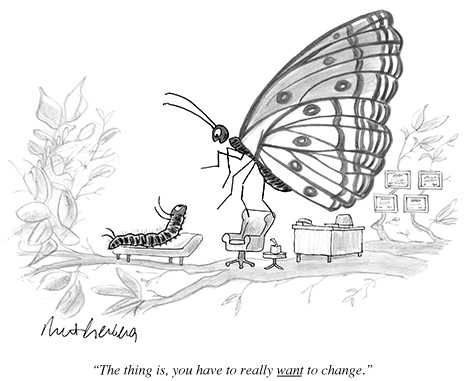
The thing is, you have to really want to change
\
The thing is, you have to really want to change
everyone’s talking about capital overtaking labour, but isn’t it as much about capital replacing capital?
that said, am guessing there are more jobs everywhere now than in previous times
Andrew Solomon says this is what we should strive for…
Thanks to MCT for the ticket
| Award-winning writer Andrew Solomon begins Sydney Writers’ Festival’s thinking season with the Opening Address. He shares his own experience and reflects on the stories parents have shared with him about their children facing various challenges. No matter the difficulties, there is power in meeting people on their own terms. Join us to celebrate the start of the Festival, a week of writing, thinking and ideas. | ||
|

Cogent analysis of Obamacare and impacts on spending…
http://www.newrepublic.com/article/117452/rising-health-care-costs-what-it-means-economy-obamacare
Last week’s news about Obamacare enrollment was great. But health care policy wonks have something else on their mind now: the cost of health care. It’s starting to rise more quickly than before. That could be a problem.
For the last four years or so, national health care expenditures—that is, all the money that Americans spend on medical services and supplies—has been growing at historically low rates. It’s gone up every year, as it almost always does, but only by 3 or 4 percent. That’s just a little bit more than inflation. Typically health care spending has risen more quickly. Sometimes, in the 1980s and again in the early 2000s, it’s risen much more quickly. Keep in mind that when national health care spending rises much more quickly than the economy is growing, you feel the impact—as relatively higher insurance premiums, higher out-of-pocket costs, and higher taxes to support government insurance programs. You may not have noticed it, but the recent slowdown has been good for your finances.

Now the respite may be ending. You can see it in the latest monthly reports from the Altarum Institute, an Ann Arbor-based think-tank that monitors national health care spending. These reports, based on government data, are the equivalent of an early warning system for medical costs. They are one of the first places a spending spike would show up. According to Altarum, expenditures started to rise more quickly in the middle of 2013. Since then, the rate has gone up even more. Reports of rising costs have already gotten the attention of savvy health care observers in the media, like Philip Klein and Sarah Kliff. The question now is how long the trend will continue, how quickly spending will accelerate, what should be done about it—and, of course, what it means for Obamacare.
First economists have to figure out whether the recent reports are accurate. They may not be. The key evidence of accelerating health costs comes from monthly government statistics, particularly those produced by the Bureau of Economic Analysis. There’s a reasonable chance, three or four months from now, BEA will announce that costs haven’t been rising so quickly—in much the same way government sometimes revises unemployment statistics, upon learning there were more jobs than the initial data suggested. If that happens, analysts like those at Altarum will have to redraw that graph above and the outlook might look more encouraging.
In fact, exactly one year ago Monday, an op-ed in the Washington Postpredicted that health care spending would start rising about now. The op-ed was from Drew Altman and Larry Levitt of the Kaiser Foundation, based on work they and their colleagues had done with the analysts at Altarum. Historically, they noted, health care spending followed economic growth, albeit with a time lag. So pretty soon after the economy picked up again, people would start spending more money on health care—until it was rising at about 7 percent rather than 4 percent. Sure enough, according to the latest Altarum analysis, annual growth in health care spending as of February was 6.7 percent. That would be the highest rate since late 2007, just before the recession started.
But the recession wasn’t the only reason health care spending stopped rising so quickly, which means there’s reason to think the long-term trajectory on medical spending really has come down—at least a little. The whole health care industry is in the midst of some pretty significant transformations right now. One of them is a change in the design of health plans, which are transferring more and more out-of-pocket costs onto individuals. That change has tended to slow down health care spending for the same reason that the recession did: It makes people more cost-conscious, because every bill is another direct hit on their wallets. Conservatives and economists tend to think this is a good thing, because it gives people “more skin in the game.” Liberals and public health experts tend to think this is a bad thing, because it gives people incentive not to get medical care they might need. Either way, it’s been happening.
Read More: Obamacare’s Very, Very Good DayAnother change is one taking place in the places where people get medical care, particularly hospitals. It’s a vast re-engineering project, one that attempts simultaneously to make systems run more smoothly and to pay closer attention to the issues that make people sick (or, at least, prevent them from getting better). One sign of this progress is a dramatic drop in hospital “readmissions” across the country—that is, patients going back to the hospital shortly after discharge, for the same reason they were admitted previously. (See the graph below.) This is no accident. It’s a product of “transitional care” programs that hospitals like Mount Sinai in New York started a few years ago. Basically, the hospitals identify which patients are at high risk for readmission, educate them while they are still in hospital, and then provide follow-up outpatient care once the patients have left.

How real are these changes? And how widespread? Nobody is sure. But one encouraging sign is the trajectory of spending within the Medicare program. Seniors’ consumption of health care doesn’t track the economy so closely, since their fixed incomes vary less and Medicare (with supplemental policies) provides such comprehensive insurance. Sure enough, Medicare’s cost trajectory fell a few years ago—and it has stayed low even as the economy has recovered. As Peter Orszag, the economist and former Obama Administration official, noted recently at Bloomberg View, “Even though copayments and deductibles in Medicare are usually small, Medicare beneficiaries, too, seem to be having fewer elective procedures and unnecessary doctor visits. This year, for example, Medicare has seen a reduction in the number of costly hip, knee and other major joint replacements, which are sometimes more a choice than a necessity.”
One reason for this progress is the Affordable Care Act. The law’s critics predicted that it would make health care more expensive. And there’s one sense in which that’s certainly true. Because of Obamacare, more people will have insurance and more people who already had insurance will have more comprehensive coverage. All else equal, that means people are going to get more medical care, at least initially. That’s particularly true for people with medical problems that, for years, they deferred treating because they lacked the ability to pay their bills.
But Obamacare also has provisions that push costs in the other direction. There are cuts to what Medicare pays doctors, hospitals, and insurers who provide alternative private coverage. There are financial incentives that reward providers for becoming more efficient: Pretty much everybody agrees that hospitals wouldn’t be working so hard to reduce readmissions if Medicare didn’t penalize them for each patient readmitted. And then there is the “Cadillac tax”—which gradually reduces the financial advantages of very pricey health insurance. The tax doesn’t start for a few years but, already, employers are talking about readjusting their insurance plans to avoid hitting the threshold that would trigger the tax.
So what does that mean for the future? Over the last few weeks I’ve consulted a number of respected experts—including those at Altarum and the Kaiser Foundation, as well as leading economists like Amitabh Chandra and David Cutler. I’ve also consulted reports from the Congressional Budget Office. Their predictions vary, particularly when it comes to the effects of Obamacare. Chandra, for example, thinks the law has done very little to restructure medical care—he calls hopes for its success at cost control “aspirational.” Cutler, by contrast, thinks the law is having an effect already and is likely to have an even bigger one in the future. (The White House, naturally, has adopted the optimistic view as its own.) But pretty much all of these authorities agree on the general shape of things to come. Health care spending will acclerate for a little while, partly because of Obamacare’s coverage expansion but mostly because of the economic recovery. Then it will subside. It will, in other words, be like a wave: Spending will go up, crest, and then return to a lower level.
The good news is that, once the wave is done, year-to-year increases in health care spending should be significantly lower than the historical average. Economists like to talk about “excess growth”—that’s the difference between how quickly health care costs are rising and how fast the economy, measured as Gross Domestic Product, is growing. Over the last 50 years, excess growth has been about 2.6 percent. But the average in the last 20 years has been down to 1.6 percent, thanks to structural changes, some of which date back to the 1990s when insurers first started using managed care. There’s every reason to think that, once the economy fully recovers and Obamacare’s expansion is in place, health care spending will be back to rising at something like the level it was before.

The Kaiser-Altarum projection, for example, assumes excess growth will revert right back to 1.6 percent. (See graph above.) But that would still require some combination of signficantly higher taxes, higher deficits, or higher health insurance premiums in the future. Knocking even a tenth of a percentage point off of that would make a difference. Knocking a few tenths of a percentage point would make a big difference. Is that possible? Sure. But it would mean, first and foremost, standing by the Affordable Care Act’s cost cutting provisions. And the evidence on that front so far has been mixed.
Cuts to hospitals are taking place, for example. But the insurance industry recently won a reprieve on cuts for its Medicare plans. This is why conservative economists think Obamacare is likely to drive up government health spending—and, eventually, everybody’s health spending—no matter what the projections say. They are convinced Congress will never let the tough, cost-cutting provisions take effect, since those parts of the law inevitably take money out of the pockets of powerful special interests. This isn’t a crazy argument. Medicare’s official actuary has warned, repeatedly, that proposed Medicare cuts may be too harsh for the political system to sustain.
One challenge, then, is showing the mettle it takes to stand by those cuts. But it will take more than that to significantly reduce spending on medical care. The health care industry would have to find new ways to be more efficient—and consumers would have to become more intelligent shoppers—ideally in ways that don’t compromise the quality of care. The Affordable Care Act can be a catalyst for these changes: Among other things, it created a new “Center for Medicare and Medicaid Innovation” for introducing new ways of paying for treatments and supplies. But it’s not so hard to imagine such efforts failing to take hold—and leaving future generations with a huge bill.
One final note: It’s not always the case that spending more on health care is a bad thing. New or more treatments might alleviate suffering, reduce disability, or extend life—all of which have value. Providing insurance to more people, so that they are more secure financially, also has value. The reason to worry about high health care spending is that the extra money America spends doesn’t actually seem to buy America better health care. But, over the long run, the real goal of health care reforms should be a combination of restraining costs and improving quality.
Sometime this spring, Sylvia Burwell will have confirmation hearings to be Secretary of Health and Human Services. Republicans are sure to use those hearings as a chance to highlight everything they think is wrong with Obamacare. That’s fine. The purpose of confirmation hearings, after all, is to establish some democratic accountability. But it would be great if senators from both parties used the moment to ask her about what’s happening with health care costs and what, if anything, the government plans to do about it. As Cutler said a year ago, in an interview with the Harvard Gazette. “We have a lot of control over this, through policies in the Affordable Care Act and Medicare and Medicaid. It’s not easy—no change is ever easy—but if we continue to do the right things, like stressing efficiency and helping people choose less expensive alternatives, then we can make sure this trend continues.”
Interesting FB link from Bay Warburton…
http://publicchristianity.org/opinion/dangerous-christianity
Despite what O’Malley actually wrote in the article, which was mostly fair, subeditors went to some lengths to make the Premier’s year in British Columbia sound alarming. The headline, “Mike Baird’s Dangerously Virtuous Education” was followed by a sub-heading that claimed Regent College is renowned for its hard line Christian views. That idea is amusing to anyone who knows the College, as in Christian circles, critics are more likely to find it overly progressive.
The irony of the article, evident to those who actually read it, is that the views articulated by the professors formative in Baird’s education sound less dangerous to the unsuspecting secular public and more to the forces that stand to oppress them. Professor Iain Provan’s speech at the Regent Convocation Ceremony was quoted at length, urging the graduates to live lives of risk and action. “Be dangerous to those who worship money and material possessions – the idols of mammon. Lay bare the utopianism at the heart of modern economic ideology. Deride the universal expectation of more … be dangerous to all who, in the pursuit of [false] gods, damage other people, and damage God’s good creation. Be dangerous to the powerful who want to use and oppress the weak, and to the rich who want to use and oppress the poor.” Plenty of Herald readers would surely say Amen to that.
Christianity ought to be ‘dangerous’ in that it will conflict with the things within our society that stand in the way of human flourishing. Rather than a threat to freedom, the Christian vision, rightly understood, entails the pursuit of healthy communities and relationships, justice for the poor and mercy for the vulnerable. It is concerned with forgiveness and reconciliation, the environment, and, ultimately, peace. These are social and political aspects of life that can’t remain private, and do conflict with powerful interests. Any politician motivated by such a vision will seek, primarily, to serve the common good. If a seminary in Vancouver has had that kind of influence on NSW politics, that is something, not to fear, but to celebrate.
silly, pathetic behaviour…
http://www.abc.net.au/news/2014-05-13/annual-specialist-referrals-wasting-millions-say-gps/5447822
PDF: 223489955-The-response-From-Medicare
Specialist doctors could be raking in millions of dollars from Medicare by forcing chronically ill patients back to their GP for a fresh referral each year so they can then charge twice the fee.
An ABC investigation has found evidence of widespread concern in the health industry about the billing practices of some specialists, particularly dermatologists, ophthalmologists and cardiologists.
The Royal Australasian College of Physicians, which represents most specialists in Australia, declined to comment and said the issue of referrals was a matter for Medicare.
The Federal Government would not comment on whether specialist doctors are breaching regulations but there is a general concern in the health industry that the practice of routinely seeking a new referral every 12 months is a waste of money.
Some GPs have spoken out about the issue because they believe it is a misuse of patients’ time and appointments.
Central to their concerns is the practice of specialists refusing to accept ongoing or “indefinite” referrals. Some specialists only accept “standard” referrals, which expire after 12 months.
Initial attendance (Item 104):
Minimum charge by specialist: $85.55
You get back from Medicare*: $72.75
Subsequent attendance (Item 105):
Minimum charge by specialist: $43.00
You get back from Medicare*: $36.55
* Out of hospital
Initial attendance (surgery or hospital)
Minimum charge: $150.90
You get back from Medicare: $128.30
Subsequent attendance
Minimum charge: $75.50
You get back from Medicare: $64.20
Initial attendance (review and management plan)
Minimum charge: $263.90
You get back from Medicare: $224.35
Subsequent attendance
Minimum charge: $132.10
You get back from Medicare: $112.30
It means when a patient returns after 12 months with a new referral, the specialist can bill for another initial consultation, which is double the price of a subsequent consultation.
Ultimately, the taxpayer is billed three times: the double consultation and the visit back to the GP for the new referral.
In 2012-13, specialists charged Medicare almost $600 million for initial and subsequent visits, so specialists could potentially be reaping millions.
Medicare paid $347 million in initial consultations and $241 million on subsequent visits for the 2012-13 period.
GPs say the specialists are only supposed to ask for fresh referrals when a condition changes.
It has angered them at a time when the Government is considering slugging patients a co-payment to see the GP.
The ABC understands it has been a contentious issue between GPs and specialists for many years since guidelines changed to allow the writing of indefinite referrals.
Melbourne GP Owen Harris is part of a busy practice in St Kilda. He gets annoyed when he has written a patient an ongoing referral only to see them back at his desk 12 months later requesting a fresh one.
He says it wastes an appointment other patients could use.
“I think some specialists are being a bit greedy here and billing Medicare rather than following the requirements,” he said.
“It’s a waste of patients’ time, the GP’s time, and certainly Medicare’s money.”
Dr Harris emphasised it was not all specialists but said the practice was widespread, and particularly prevalent at busy city clinics where doctor turnover is high.
“Medicare is a difficult and complex system,” he said.
“Patients can’t possibly understand all the complexities. If they’re told by the clinic you must bring a new referral then they’re simply following that advice without knowing whether or not that’s true.”
Patients can’t possibly understand all the complexities … if they’re told by the clinic you must bring a new referral then they’re simply following that advice without knowing whether or not that’s true.
GP Dr Owen Harris
His concerns have been backed by the Royal Australian College of General Practitioners, who said they were aware of the issue and it was one that needed to be examined.
President Dr Liz Marles says it is common for a melanoma patient to return each year for a referral to a dermatologist for a skin check.
“This is an area that could certainly be explored in terms of increasing efficiency for the patient, the GP and the specialist to make sure we’re getting value for money,” she said.
Dr Marles says some GPs favour 12-month referrals so they can keep track of patients and hear back from specialists.
However she says specialists should be keeping GPs in the loop regardless of referrals.
The Australian Healthcare and Hospitals Association is also concerned given discussions about co-payments.
Chief executive Alison Verhoeven says it is one of the many anomalies in the health system costing money.
“This is an issue of governance,” she said. “It would be helpful if there were better guidelines.”
Melbourne man Peter Barton has an eye condition that requires timely treatment when it recurs intermittently.
His specialist has asked that he return to the practice each time it recurs.
“I just don’t understand that at a time when I need to see the specialist, where they want me to see them I’ve got to do this side trip to the GP first,” he said.
“It would be an hour-and-a-half round trip to the GP, on top of the time away at the actual specialist, it almost doubles the time for me to get my eye sorted. It’s frustrating.”
Dr Harris says the Medicare rules are clear and that specialists are breaking them.
“There’s no reason for that to be happening and it isn’t something that should continue,” he said.
But a senior health industry source has told the ABC the laws and guidelines around the referral billing practices are actually quite vague.
“It all depends on the specific interpretation of very general rules,” they said.
“The spirit of the thing is a single course of treatment.”
A spokeswoman for the Department of Human Services did not comment on whether specialists were in breach of rules by refusing to accept indefinite referrals but said they monitor doctors over Medicare billing rates.
“A single course of treatment involves an initial attendance by a specialist and the continuing management [of that condition] until the patient is referred back to the referring practitioner,” she said.
“The issuing of a new referral does not necessarily mean a new course of treatment.”

And I’d choose you;
in a hundred lifetimes,
in a hundred worlds,
in any version of reality, i’d find you and I’d choose you
http://theconversation.com/neuron-study-helps-explain-why-we-forget-26367

Memories from early childhood are notoriously elusive but why can’t we recall our most formative experiences? New research suggests it could be a case of the old making way for the new – neurons, that is.
A study, published today in Science, has found that neurogenesis – the generation of new neurons – regulates forgetting in adulthood and infancy and could significantly contribute to the phenomenon of “infantile amnesia”.
Throughout life, new neurons are continually generated in the dentate gyrus, part of the brain’s hippocampus. This is one of only two areas in the mammalian brain that consistently generates neurons after infancy, aiding the formation of new memories of places and events.
These new neurons compete for established neuronal connections, altering pre-existing ones. By squeezing their way into these networks, new neurons disrupt old memories, leading to their degradation and thus contributing to forgetting.
Neurogenesis is particularly rampant in humans during infancy but declines dramatically with age. So researchers hypothesised that this increased disruption to hippocampal memories during childhood renders them inaccessible in adulthood.
To investigate the correlation between neurogenesis and forgetting, a team from the University of Toronto conducted a series of tests on mice, guinea pigs and a type of small rodent called degus.
First, a group of infant and adult mice were trained to fear a certain environment through the use of mild electric foot shocks.
Some of the adult mice were then provided access to running wheels, an activity that has been shown to boost neurogenesis. When returned to the initial environment, the adult mice who used the running wheels had largely forgotten their fear of the electric shocks, while those without the wheels maintained an association between the space and fear.
From the group of infant mice a number were given drugs to slow the rate of neurogenesis to see if decreasing the generation of new neurons mitigated the forgetting normally observed in infant mice. In accordance with the researchers’ hypothesis, the ability of these animals to retain memories improved in comparison to their untreated counterparts.
The study was then moved to rodents whose infancy period distinctly differs from mice – and humans – guinea pigs and degus. These rodents have a shorter postnatal hippocampal neurogenesis because they are more neurologically mature at birth. That means they have extended memory retention as infants so those animals were given drugs to artificially increase neurogenesis – which resulted in forgetting.
Psychologist Dr Amy Reichelt, from the University of New South Wales, said it was good the study used infant guinea pigs and degus.
“These animals are born in a ‘precocious’ way – they are basically miniature adults – able to run about independently, as opposed to mice, rats and humans who are vulnerable and dependent at birth,” she said.
“In young animals where neurogenesis is at a high level, memory circuits are constantly changing, so this supports that certain memories are ‘pruned’ out and thus forgotten – supporting the notion of infantile amnesia.”
Previous studies have examined the relationship between hippocampal neurogenesis and memory, with a focus on its importance in the consolidation of memories in adult animals. But they have not considered how neurogenesis can also jeopardise memory retention.
Behavioural psychologist Dr Jee Hyun Kim, Head of the Developmental Psychobiology Lab at Melbourne’s Florey Institute of Neuroscience and Mental Health, said: “It has long been speculated that the ‘immaturity’ of the hippocampus may be responsible for infantile amnesia. Back in the days ‘immaturity’ was interpreted as dysfunctional, or low in function.
“However, recent studies speculated that immaturity can also occur in the form of hyper functionality. This study shows that the extreme plastic nature of our brains early in life can be the reason why we forget quickly episodic memories happening early in life.”
Infantile amnesia is not restricted to hippocampus-dependent memories in humans and animals. Dr Kim said it was likely that neurogenesis formed only a part of the story.
“I wouldn’t be surprised if we find undiscovered neurogenesis in other parts of the brain,” she said.
But does this research hint at ways of improving memory retention in the future?
“It would not be feasible to discourage neurogenesis and reduce forgetting of existing memories,” Dr Kim said, “as adult neurogenesis has a well-established link to depression (low neurogenesis means high depression)”.
Surprisingly, it’s the other side of the coin that promises more potential opportunities. Harnessing neurogenesis to destabilise pre-existent memories could have its own benefits. Dr Kim said depressed or anxious people may want to forget and focus on creating better memories and/or thought patterns.
This can be especially constructive for children who experience trauma in early life, Dr Reichelt said.
“Increasing neurogenesis could be a useful therapy to treat or prevent the onset of post-traumatic stress disorder,” she said.


