All posts by blackfriar

NPR on health care price transparency

  • Very cool, very powerful
  • I+PLUS can do it already (excluding PHIs that aren’t on board)
  • Think we should go for it
  • Could potentially take it to the US

Audio: 

http://www.npr.org/blogs/health/2014/02/12/276001379/elusive-goal-a-transparent-price-list-for-health-care

Elusive Goal: A Transparent Price List For Health Care

by ERIC WHITNEY  3:36 AM

Some states are trying to make health care prices available to the public by collecting receipts from those who pay the bills: Medicare, Medicaid and private insurers. Some states’ efforts to make these prices available are in jeopardy.

Coffee is important to many of us, but let’s say your coffee maker breaks. Finding a new one is as easy as typing “shop coffee maker” into your browser. Voila — you’ve got models, prices and customer reviews at your fingertips. But say you need something less fun than a coffee maker — like a colonoscopy. Shopping for one of those is a lot harder. Actual prices for the procedure are almost impossible to find, and Bob Kershner says there’s huge variation in cost from one clinic to the next. “You see the range is from $2,800 down to just about $400,” he says, pointing to a computer screen displaying some colonoscopy prices in Denver. Kershner works for a nonprofit called CIVHC, which is starting to make health care prices publicly available in Colorado. His boss, Edie Sonn, says knowing prices can change the whole health care ball game. “Knowledge is power,” she says. “None of us have had much information about how much health care services actually cost, and how much we’re getting for our money.” A database that includes all health claims in a particular state, she says, “gives you that information, so you can become an empowered consumer.” Colorado is one of eleven states that are starting to make public a lot of health care prices. It’s taken years. An “all payer claims database” is the first step in Colorado. It’s basically a giant shoebox that aims to collect a copy of every receipt for a health care service in a given state. Since doctors and hospitals generally don’t tell people how much services cost beforehand, the best way to figure out the price is to get receipts from the parties that pay the bills: insurance companies, Medicaid and Medicare, mostly. The more such information is made public, Sonn says, the more people will “vote with their feet” and migrate away from high-cost providers. However, turning this information about price from eye-crossing rows in a spreadsheet into consumer-friendly formats is hard. Colorado’s effort has taken years. Laws had to be passed to get insurance companies to send in their claims data (the receipts for what they’re paying), and sorting through all the information is a lot tougher than organizing a pile of paper receipts in a shoebox. “Claims data is dirty,” says Sonn. “It’s really dirty. It takes a lot of scrubbing to make sense of it. It’s complicated, time consuming and expensive.” Colorado has had funding to do that from private grants, but those are drying up. In order to keep on making basic price information accessible to the public for free, the state wants to sell more complicated, custom data reports to businesses within the health industry. There is a growing market for those sorts of reports, says Dr. David Ehrenberger, the chief medical officer for Avista Adventist hospital, outside Denver. He would like to see reports that show not just how much his competitors are charging, but also whether their patients have more or fewer complications. That would give him better negotiating power with big insurance companies. “The insurance industry still has a dramatic advantage over, particularly, smaller physician groups and smaller health care organizations. There’s not a level playing field there,” Ehrenberger says. That’s because big insurance companies pay bills at hospitals all over the state, so they have a big picture view of how much everybody charges for procedures, and of details such as complication rates. Individual hospitals only know their own prices. It’s as if only customers could get a list of prices for different coffee makers, but Cuisinart and Mr. Coffee couldn’t, so they wouldn’t know if they were asking too much or too little for their coffee makers. The better view Ehrenberger can get of the entire marketplace for health care services, the better he can set prices. “What we want to do is be able to have the data that shows, unequivocally, that we can provide a better quality product — and [at] a cost they can afford,” he says. But there’s a glitch. In order to get the kinds of reports Ehrenberger and other health care providers want, they have to include price information from all payers, and one of the biggest is Medicare — it pays about a fifth of all health care bills in Colorado. At the moment, Edie Sonn explains, they cannot use that Medicare data in any of the custom reports they want to sell. “Current federal law restricts what we can do with that Medicare data,” she says. “The only thing you can use their data for is public reporting.” Sonn’s organization and others like it have found support on Capitol Hill to let them sell Medicare data. It turns out that Democrats and Republicans agree that price transparency is key to controlling costs. A measure that would make that change is now part of a bigger Medicare bill (find it in section 107) working its way through Congress. If it passes, Colorado will be one step closer to making shopping for health care as easy as shopping for a coffee maker. This story is part of a partnership between NPR and Kaiser Health News.
Andrew Ng: How to build your very own Skynet

Andrew Ng on Deep Machine Learning via Large Scale Brain Simulation

https://www.youtube.com/watch?v=5elcmFNRCWk

The key determinants of learning accuracy are accessing as much data as possible and being able to process.

Partnered with the Google speech team.

Deep learning works well in two different settings:

1. Learning from labeled data > speech recognition, streetview images

2. Learning from unlabeled data >


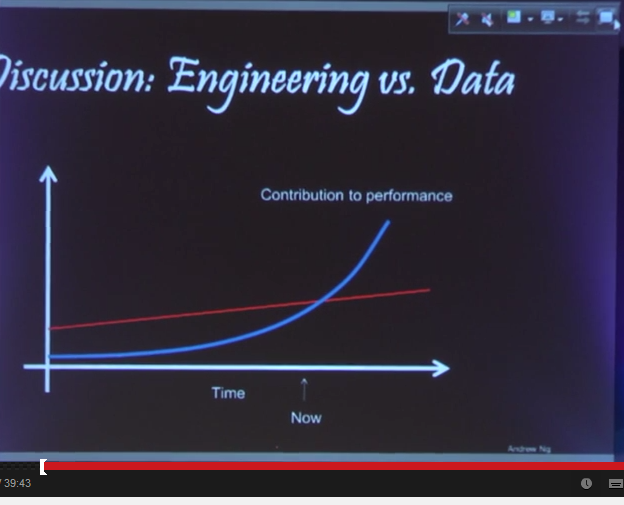
AndrewNg_LearningPerformance


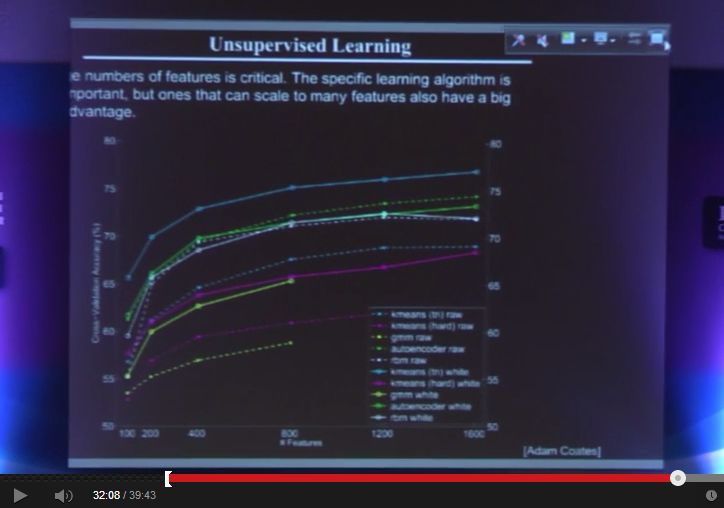
AndrewNg_HumanVsMachineLearning


Up to now, humans have been driving performance due mainly to a lack of data and processing. With both of these now becoming available in abundance, machine learning will soon overtake human learning to become the dominant driver of performance.

Sky net.

“There is no freedom in addiction”

Michael Bloomberg was laughed at for suggesting that New York City businesses limit soda serving sizes. It was never a perfect plan, but his public shaming shows how closely we equate food with ‘freedom.’ The problem is, there is no freedom in addiction. As the Nature Neurosciencestudy showed above, rats and humans alike will overeat (or eat less healthy food options) even if they know better.

Hence the magic bullet at the center of McDonald’s letter: a precise combination of fat, sugar and salt that keeps us craving more. As NY Timesreporter and author of Salt Sugar Fat: How the Food Giants Hooked UsMichael Moss said in an interview

These are the pillars of processed foods, the three ingredients without which there would be no processed foods. Salt, sugar and fat drive consumption by adding flavor and allure. But surprisingly, they also mask bitter flavors that develop in the manufacturing process. They enable these foods to sit in warehouses or on the grocery shelf for months. And, most critically to the industry’s financial success, they are very inexpensive.

PN: The fallacy in the rump of this discussion is that cigarettes are not that more harmful than a big mac. I’m just as likely to die from smoking a single cigarette in front of you, as I am if I were to eat a big mac in front of you. The problems arise when you smoke/eat these products every day of your life.

http://bigthink.com/21st-century-spirituality/should-big-food-pay-for-our-rising-obesity-costs

Should Big Food Pay For Our Rising Obesity Costs?

FEBRUARY 25, 2014, 4:29 PM
Bt-big-food

Paul McDonald didn’t expect his letter to go public. The Valorem Law Group partner had queried sixteen states, asking leaders to consider investigating Big Food’s potential role in paying for a percentage of the health system’s skyrocketing obesity costs. The Chamber of Commerce got wind of this letter and made it public, setting off a national debate over food marketing, ingredient manipulation and personal responsibility.

McDonald’s premise is simple enough: if large food companies are purposefully creating addictive foods to ensure consumer loyalty, adding to the rising obesity levels in this country, they should be responsible for covering costs associated with treatment. The backlash was immediate and biting.

Comparisons to the Big Tobacco companies came first to mind. In the 1998 Tobacco Masters Settlement Agreement, major players in the tobacco industry agreed to pay $246 billion to offset health risks and diseases associated with its product. Critics of McDonald’s idea believe there is no link between tobacco and food.

Advertising

On the face of it, this would appear true: you don’t need to smoke, but eating is a necessity. Smoking is a choice, and therefore if you choose to smoke, you pay the consequences. Eating falls into an entirely different category.

Yet the neural mechanisms might be similar. A 2010 study in Nature Neuroscience found that rats consumed well past their limits when offered high-calorie foods such as bacon, sausage and cake, speculating that humans, when faced with an equivalent scenario, also choose to overeat.

Harvard University Professor of Medicine, Emeritus David Blumenthal’s study, Neurobiology of Food Addiction, found a similar link between food and drug abuse. In the summary he writes

Work presented in this review strongly supports the notion that food addiction is a real phenomenon…although food and drugs of abuse act on the same central networks, food consumption is also regulated by peripheral signaling systems, which adds to the complexity of understanding how the body regulates eating, and of treating pathological eating habits.

The argument against food addiction is a tough one, waged by industry insiders who want to keep 60,000 products on American shelves. The real question, however, is: are food companies purposefully producing addictive foods that change our neurobiology? If so, should they be held economically accountable?

American obesity costs are currently $147 billion per year. The CDC estimates that 35.7% of adults and 17% of children ages 2-19 are obese—a number that has risen dramatically over the last two decades. A joint report between Trust for America’s Health and the Robert Wood Johnson Foundation estimates that 44% of American adults will be obese by 2030. The report predicts that will add between $48-66 billion to our costs, some of which is paid for by taxpayers.

Yet food is such an emotional topic. For example, when informing someone that I’m vegan, they immediately let me know why they could never do such a thing (I didn’t ask) or that it’s ‘wrong’ for them, and sometimes by extension, me (last week’s annual blood work shows me in perfect shape).

Michael Bloomberg was laughed at for suggesting that New York City businesses limit soda serving sizes. It was never a perfect plan, but his public shaming shows how closely we equate food with ‘freedom.’ The problem is, there is no freedom in addiction. As the Nature Neurosciencestudy showed above, rats and humans alike will overeat (or eat less healthy food options) even if they know better.

Hence the magic bullet at the center of McDonald’s letter: a precise combination of fat, sugar and salt that keeps us craving more. As NY Timesreporter and author of Salt Sugar Fat: How the Food Giants Hooked UsMichael Moss said in an interview

These are the pillars of processed foods, the three ingredients without which there would be no processed foods. Salt, sugar and fat drive consumption by adding flavor and allure. But surprisingly, they also mask bitter flavors that develop in the manufacturing process. They enable these foods to sit in warehouses or on the grocery shelf for months. And, most critically to the industry’s financial success, they are very inexpensive.

Inexpensive to companies, not to consumers. Paul McDonald is striking an important nerve in how we manufacture, distribute and consume food in our country. There will be a lot of resistance and debate from both industry and citizens. But if we don’t begin this conversation now, our national and mental health is only going to continue to decline.

Image: Aliwak/shutterstock.com

Activity guidelines shun sitting…

Oh yes. Could really have seen the Tele lap these guidelines up… especially the standing agenda item piece. Terrific.


http://www.abc.net.au/health/features/stories/2014/02/24/3947295.htm

Why the exercise guidelines take a stand on sitting

by Claudine Ryan

For the first time our physical activity guidelines are not only telling us to get more exercise, they’re also telling us to stand up for our health.

sitting_300x150GIULIO SAGGIN, FILE PHOTO: ABC NEWS

Australia’s exercise guidelines have recently been overhauled, and they’re going to come as a rude shock to many of us. Not only are we being told we need to do a lot more physical activity, but we’re also being urged to get out of our chairs – even if we do the right amount of exercise.

The new guidelines are now officially known as Australia’s Physical Activity and Sedentary Behaviour Guidelines, and they focus not just on the exercise but on the amount of time we spend being sedentary.

Listen

ABC Health & Wellbeing producer Claudine Ryan spoke to Julia Christensen from ABC Local Radio in Darwin about the new guidelines, and why we all need to to ‘sit less’.

11 mins 42 sec | 2.6 mb | Download mp3 audio

Sedentary behaviour is the term used to describe physically inactive tasks that don’t require a lot of energy, basically sitting or lying down. Activities are often measures in METs (Metabolic Equivalent of Task),sedentary activities are in between 1 and 1.5 METs, walking at a moderate pace ranges from 3 to 3.5 and jogging is about 7.

In recent years, a growing body of research has linked sedentary behaviour to obesity, type 2 diabetes, heart disease, some cancers and premature death. It’s considered such a risk that one US expert has gone so far as to suggest sitting for most of the day may be as dangerous to your health as smoking.

Experts say we’re sedentary on average for seven to 10 hours a day (and this doesn’t include our time spent sleeping). Even if you are meeting, or exceeding, the recommended 60 minutes a day of moderate intensity physical activity, you can still be considered sedentary. (This group of people is sometimes referred to as ‘active couch potatoes’.)

While researchers are still trying to understand exactly why sedentary behaviour has such a negative effect on our health, it appears to be related to how our bodies process fats and sugars. There are enzymes involved in this process that are released when certain muscles contract during standing. When you sit for prolonged periods the production and activity of these enzymes appears to slow down.

The guidelines don’t make any specific recommendations about how long you should sit for, instead they say we should “minimise the amount of time spent in prolonged sitting” and to “break up long periods of sitting as often as possible”.

However, some experts recommend breaking up any period of sitting that lasts longer than 20 to 30 minutes. You do this by simply standing up for a couple of minutes or taking a short walk. (It’s also worth noting, that neither the guidelines, nor those working in this field, are suggesting that you need to spend your entire day standing.)

Here are some ways to cut back on the amount of sitting you do:

At work:

  • Try to encourage standing or walking meetings. If this doesn’t work, see if you can get your colleagues to include a standing break, or ‘standing agenda’ item.
  • Stand up when using the phone, or when reading emails, documents or reports.
  • Set up printers, rubbish bins, drawers, and other things you may need during your work day, away from your desk so you need to get out of your chair more often.
  • Try walking to your colleagues to talk to them instead of using email if possible.
  • Set yourself a reminder on your computer to stand up regularly.
  • Make it a habit to drink more water throughout the day. You’ll have to move to get your regular glasses of water and their effect on your bladder will mean you’ll take more regular trips to the toilet.
  • Break for lunch, even if it’s just a ten-minute walk.
  • Walk or ride to work.
  • Get off public transport or park your car a little further from your work and walk some of the way.

At home:

  • Stand up and walk around when using your phone.
  • When watching TV, stand and do household chores, such as folding clothes and ironing.
  • Put your remote control away so you are forced to get up to use manual controls.
  • Embrace household chores.
  • Stand when catching up on news via the newspaper, phone or tablet.
  • Walk or ride when you need to do things that are closer than a certain distance to your home.

Published 24/02/2014

Samsung Gear Fit Launch at Mobile World Congress

Very cool device. Doesn’t have an altimeter. Does have a heart rate monitor. Probably needs a Samsung phone.

http://www.afr.com/p/technology/digitallife/samsung_gear_fit_wins_hearts_and_sKscE6g5LdRMHnlSeVAw6K

Samsung Gear Fit wins hearts and minds

Samsung Gear Fit wins hearts and minds

JOHN DAVIDSON

The Galaxy S5 phone might have been Samsung’s biggest announcement at Mobile World Congress, but it was a much smaller device that made the biggest impression: Samsung’s Gear Fit.

The fitness band, designed primarily to be worn on the wrist, easily has the brightest, most colourful screen ever to be included in such a device – for what it’s worth, Samsung says the screen is the world’s first 1.84-inch curved Super AMOLED display – and it does far more than your typical fitness bands do, too.

The Gear Fit counts your steps and monitors your sleep like most of its competitors, but it also has a heart rate sensor built into it (another first), allowing it to be used as a sort of impersonal personal trainer, vibrating whenever your pulse rate drops below some threshold you have set for yourself, to warn you to speed up or try harder. And it has a stopwatch and a timer, which many of its competitors lack.

More than that, it uses Bluetooth to attach back to your smartphone quite like a smartwatch, allowing it to show you an almost complete range of notifications from the phone. You can’t accept or make a call with the device, the way you can with Samsung’s Gear 2 and Gear 2 Neo smartwatches, but you can reject calls, view incoming emails, texts and social media feeds, and control what music is playing back on the phone. You can even look at your calendar, all without ever pulling out your phone.

While it doesn’t run Tizen, the new Samsung operating system that runs the Gear 2 and Gear 2 Neo, the Gear Fit does have an operating system capable of running apps, meaning that new features could be added to the device over time.

In short, the new fitness band does many of the things the smartwatches do, but it does it in a much more appealing, much easier to wear package. The device can even be popped out of its rubber band, allowing it to be added, say, to a clip that attaches to your clothing, or to a choker so you can wear it around your neck, though of course the heart rate sensor may not work when it’s worn like that.

The only thing really wrong with the Gear Fit is that, for the moment at least, the screen is incapable of modifying its orientation to account for how it’s being worn. When you wear it on the top of your wrist, for instance, the icons and text in the user interface face the wrong direction, and can be hard to read without twisting your arm in a most unnatural fashion. You have to wear it with the screen on the underside of your wrist if you want to read it easily. But the designer of the user interface, who is here at Mobile World Congress, said she was “looking into” getting the UI to re-orient itself depending on which way the device is facing, in much the same way a tablet goes from landscape mode to portrait mode depending on how it’s being held.

Pricing has yet to be announced, but it should be significantly cheaper than the Gear 2 and Gear 2 Neo, too. Unless you want to make calls and take photos with your wearable computer, the Gear Fit looks like a better alternative.

On Medical Student Burnout…

Lydgate discovers that he has become a mouthpiece for benighted views he initially abhorred, arguing that “I must do as other men do and think what will please the world and bring in money.” Everyone needs to make compromises, but such compromises should not come at the cost of abandoning core aspirations. Quite the reverse, the primary goal should be to allow such aspirations to develop and express themselves in the challenging world of contemporary medicine.

http://www.theatlantic.com/health/archive/2014/02/for-the-young-doctor-about-to-burn-out/284005/

For the Young Doctor About to Burn Out

Professional burnout is the sum total of hundreds and thousands of tiny betrayals of purpose, each one so minute that it hardly attracts notice.

Tertius Lydgate from Middlemarch by George Eliot (The Jenson Society, NY)

Our health depends in part on health professionals, and there is mounting evidence that many young physicians are not thriving. A recent report in the journal Academic Medicine revealed that, compared to age-matched fellow college graduates, medical students report significantly higher rates of burnout.

Specifically, they are suffering from high rates of emotional exhaustion, depersonalization, and a diminished sense of personal accomplishment. College students choose careers in medicine because they care, because people matter to them, and because they want to make a difference. What is happening to the nearly 80,000 U.S. medical students to produce such high rates of burnout?

It is tempting to invoke the usual suspects: too many hours of study, too little contact with patients, and overwhelming anxiety concerning grades and test scores. Such stressors are compounded by exploding rates of change in medical science and technology and the general cloud of socioeconomic uncertainty hanging over the profession of medicine.

Yet the real roots of the problem go far deeper, and it is only by plumbing their full depth that we can hope to formulate an accurate diagnosis and prescribe an effective therapy. On closer inspection, burnout turns out to be a symptom of a more fundamental disorder that calls for curative—not merely symptomatic—therapy.

Nothing is more needed than nourishment for the imagination. Medical educators, learners, and those who care about the future of medicine need to understand not only the changes taking place in medicine’s external landscape but the internal transformations taking place in minds and hearts. Humanly speaking, are we enriching or impoverishing students? What alterations are we asking them, explicitly or implicitly, to make in the ways they act, think, and feel? In what ways are we bringing out the best elements in their character—courage, compassion, and wisdom—as opposed to merely exacerbating their worst impulses—envy, fear, and destructive competitiveness?

To a minority of students who care very little about such matters, such questions are likely to seem of little moment. Such students see clearly what they want to achieve—to gain admission to medical school, to graduate, to obtain a residency training position, and to take up the practice of medicine—and they do not trouble themselves about the ways in which their education is reshaping their humanity. When such students show up in class, they simply want to know what will be on the exam, and no matter how intricate or abstruse the material might be, they learn it sufficiently well to pass—and in many cases, ace—the tests.

But there are other students for whom medical school is not simply a proving ground, a gauntlet to be run, or a ticket to a well-paying and secure career. When they see a patient treated poorly, encounter a fellow student who is struggling with confusion and discouragement, or deep in a maze of tests and grades find themselves beginning to lose sight of the goals that brought them into medicine in the first place, they do not merely knuckle down and redouble their efforts. Instead they take such matters into their hearts, muse over them, and find themselves questioning whether medicine is what they really want to do with their lives.

Where can we turn to understand what goes on in the minds and hearts of highly intelligent, genuinely compassionate young adults who find themselves in a state of moral distress about the path they have chosen in life? Who or what can help them find the words to describe what they are going through, to know that they are not alone, and to locate a light at the end of the tunnel that can give them the hope and courage necessary to carry on? To understand and help such students, we need to find and apply the best resources available. One of the best guides on the matter I have ever encountered also happens to be one of the greatest novels in the English language.

The novel in question is Middlemarch. Written by Mary Ann Evans (1819-1880) who, in order to be taken seriously felt compelled to write under the pen name George Eliot, Middlemarch concerns the affairs of a fictitious British Midlands town of the same name. The title evokes not only a kind of provincial mediocrity but also a deep authorial concern with what happens to people training for the professions, echoing the opening of Dante’sDivine Comedy, “In the middle of life’s journey … ”

One of its principal characters is an idealistic if somewhat unreflective young physician, Dr. Tertius Lydgate, a character whose story provides deeper insights into burnout than any social science study I have encountered.

Lydgate is a handsome, well-born young physician with high aspirations as both a medical scientist and a servant of the needy. He comes to Middlemarch intending to found a charity hospital and to write a scientific treatise on typhus, one of the great scourges of the poor. Yet there is a problem. Over time, he abandons his ideals. He allows prevailing attitudes toward success to supplant his deeper sense of calling. He ends up investigating not typhus but gout, a rich man’s disease. Though outwardly successful, he comes to see himself as a failure. In short, he burns out because he loses his way. To paraphrase the novel, Middlemarch not only swallowed Lydgate whole. It assimilated him very comfortably.

Such changes can and do occur among contemporary medical students. Studies have documented both declining empathy and rising cynicism over the course of medical education. What happens? Having enrolled in medical school with a goal of helping people, students soon find financial considerations—including their own exploding debt—dominating their career plans.

With a growing avalanche of new knowledge and skills bearing down on them, they feel increasingly overwhelmed by what they do not know. They soon discover that, instead of expanding their capacity to make a difference in the lives of others, the rigors of medical school have constricted their field of view to their own survival.

Burnout at its deepest level is not the result of some train wreck of examinations, long call shifts, or poor clinical evaluations. It is the sum total of hundreds and thousands of tiny betrayals of purpose, each one so minute that it hardly attracts notice. When a great ship steams across the ocean, even tiny ripples can accumulate over time, precipitating a dramatic shift in course. There are many Tertius Lydgates, male and female, inhabiting the lecture halls, laboratories, and clinics of today’s medical schools. Like latter-day Lydgates, many of them eventually find themselves expressing amazement and disgust at how far they have veered from their primary purpose.

Lydgate discovers that he has become a mouthpiece for benighted views he initially abhorred, arguing that “I must do as other men do and think what will please the world and bring in money.” Everyone needs to make compromises, but such compromises should not come at the cost of abandoning core aspirations. Quite the reverse, the primary goal should be to allow such aspirations to develop and express themselves in the challenging world of contemporary medicine. Books like Middlemarch are no panacea, but they offer precisely the imaginative nourishment so often missing from contemporary medical education, a powerful antidote to the insidious forces that produce burnout.

PRESENTED BY

RICHARD GUNDERMAN, MD, PhD, is a correspondent for The Atlantic. He is a professor of radiology, pediatrics, medical education, philosophy, liberal arts, and philanthropy, and vice-chair of the Radiology Department, at Indiana University. Gunderman’s most recent book is X-Ray Vision.

Too cool… Tetris is good for you???

  • Of the 119 people that participated, 80 reported craving something: 58 people wanted food or drink of some kind, 10 wanted caffeine, and 12 wanted nicotine.
  • Their mean craving levels were “reasonably high,” the researchers write. Playing Tetris reduced their cravings by about 24 percent.
  • The relationship between playing the game and craving reduction remained statistically significant, even when the researchers accounted for a general lessening of the craving over time, or removed the people who were only slightly craving something.


  • Potential confounder: doing nothing for three minutes could have resulted in an increase in cravings!????

http://www.theatlantic.com/health/archive/2014/02/playing-tetris-can-reduce-urges-to-eat-smoke-drink/284056/

Playing Tetris Can Reduce Urges to Eat, Smoke, Drink

Three minutes of the game reduced cravings by 24 percent in a recent study.
Richard Drew/AP

The never-ending falling blocks of Tetris have caused innumerable people untold amounts of frustration. YouTube star Hank Green even has a song memorializing the evil of “The Man Who Throws The Tetris Piece.” But a new study published in Appetite shows that the unwinnable game may be good for something other than wasting hours, days, lives—reducing cravings.

The Plymouth University researchers—graduate student Jessica Skorka-Brown and professors Jackie Andrade and Jon May—tested Elaborated Intrusion Theory, which says that cravings rely heavily on visual imagery. They write that this is the first test of that theory using naturally-occurring cravings. To capture the 119 participants’ natural cravings (rather than artificially inducing them in the lab by having them evaluate chocolates or something),  asked them when they came in for the experiment if they were currently craving something, and to rate their craving from 1 to 100. Participants completed the Craving Experience Questionnaire, which measured the “strength, imagery, vividness, and intrusiveness of their current craving.”

Then participants sat down in front of a computer, which either loaded Tetris for them to play, or looked like it was going to load Tetris but never actually did. They either played Tetris, or didn’t, for three minutes and then answered the same questions about their craving, describing what happened to the craving while they were playing the game (or, you know, sitting there).

(YouTube)

Of the 119 people that participated, 80 reported craving something: 58 people wanted food or drink of some kind, 10 wanted caffeine, and 12 wanted nicotine. Their mean craving levels were “reasonably high,” the researchers write. Playing Tetris reduced their cravings by about 24 percent. The relationship between playing the game and craving reduction remained statistically significant, even when the researchers accounted for a general lessening of the craving over time, or removed the people who were only slightly craving something.

Obviously a 24 percent reduction doesn’t mean the craving is gone, but neither is that nothing. “Tetris reduced the vividness and frequency of craving imagery, as well as craving intensity,” the study reads. Tetris is a very visual task, which the researchers posit may be why it seems to impede the strength of craving imagery.

Strange as it may seem, Tetris could actually be a helpful tool for those trying to quit smoking, or just avoid indulging in an unhealthy snack. Because despite its frustrations, Tetris is one of the most popular video games ever—people like playing it. And if three minutes of arranging colored blocks could help curb a craving, it might be worth logging onto FreeTetris.org the next time you feel one hit.

Better blooded vegans

  • Vegans have lowest blood pressure
  • Meat increases your blood pressure
  • Brocolli has 1g protein per spear
  • Vegan animals can be strong too
  • Interview with Neal Barnard – avid vegan
  • Nice pot shots from Katz

http://www.theatlantic.com/health/archive/2014/02/vegetarians-and-their-superior-blood/284036/

Vegetarians and Their Superior Blood

A plant-based diet can lower your blood pressure, according to research released today in a major medical journal. Should we really stop eating meat before starting medication?
Frozen oranges in California, December 2013 (Gary Kazanjian/AP)

“Let me be clear about this. A low carbohydrate diet is quackery,” Dr. Neal Barnard told me over the phone. “It is popular, bad science, it’s a mistake, it’s a fad. At some point we have to stand back and look at evidence.”

Note to self: Don’t ask Dr. Neal Barnard about limiting your carb intake.

“You look at the people across the world who are the thinnest, the healthiest, and live the longest; they are not following anything remotely like a low-carb diet,” he said. “Look at Japan. Japan has the longest-lived people. What is the dietary staple in Japan? They’re eating huge amounts of rice.”

Based on the fact that Barnard is the author of 15 books extolling the life-prolonging virtues of plant-based diets, I should have seen that coming. Apparently I’m one of few people in health media not familiar with his work, and his very clear perspective. I heard about Barnard because today he and his colleagues published a meta-analysis in the prestigious Journal of the American Medical Association: Internal Medicine that confirmed a very promising health benefit of being a vegetarian: an enviably lower blood pressure than your omnivorous friends.

The publicist for an organization called the Physician’s Committee on Responsible Medicine emailed me to ask if I’d like to talk with Barnard about the research, and I always do want to talk about food research, so I did. High blood pressure shortens lives and contributes to heart disease, kidney failure, dementia, and all sorts of bad things, so any reasonable dietary way to treat or prevent it is worth considering. We’ve known for years that vegetarianism and low blood pressure are bedfellows, but the reason for it hasn’t been clear.

“We looked at every published study, so it’s really undeniably true,” Barnard said at the outset of our conversation, in a manner that anticipated a denial I wasn’t prepared to offer. “People who follow vegetarian diets, they’ve got substantially lower blood pressures. [The effect] is about half as strong as taking a medication.”

In this case substantially means that when you look at all of the controlled research trials comparing any kind of vegetarian diet to an omnivorous diet, the average difference in systolic blood pressure (the top number in the standard “120 over 80” jive) is about five millimeters of mercury. In diastolic blood pressure decrease (the bottom number) the difference is two. Not nothing, but not earth-shattering.

There have been a number of blood pressure studies on vegetarian diets in recent years, most famously the U.S. National Institutes of Health’s 2006 DASH (Dietary Approaches to Stop Hypertension) studies. DASH was inspired by observations that “individuals who consume a vegetarian diet have markedly lower blood pressures than do non-vegetarians.” It ended up recommending a diet high in fruits and vegetables, nuts, and beans; though it did not tell us to go all-out vegetarian.

“What’s new here is that we were able to get a really good figure for an average blood pressure lowering effect,” Barnard said. “Meta-analysis is the best kind of science we do. Rather than just picking one study or another to look at, you go after every study that has been published that weighs in on this question.”

In addition to the seven controlled trials (where you bring in people and change their diets, then compare them with a control group eating everything), the researchers also reviewed 32 different observational studies. Those are less scientifically valid than controlled studies, but they showed even larger decreases in blood pressure between vegetarian and omnivorous diets (6.9 systolic, 4.7 diastolic).

“It’s not uncommon for us to see patients at our research center who come in and they’re taking four drugs for their blood pressure, and it’s still too high. So if a diet change can effectively lower blood pressure, or better still can prevent blood pressure problems, that’s great because it costs nothing, and all the side effects are ones that you want, like losing weight and lowering cholesterol.”

The research center to which Barnard refers is that of Physicians Committee for Responsible Medicine (PCRM). Barnard is president. Founded in 1985, PCRM describes itself as an “independent nonprofit research and advocacy organization.” The advocacy is for ethical human and animal experimentation. According to its website, PCRM “promote(s) alternatives to animal research and animal testing. We have worked to put a stop to gruesome experiments, such as the military’s cat-shooting studies, DEA narcotics experiments, and monkey self-mutilation projects.”

Unloading vegetables from a boat on a foggy January morning in Bangladesh (A.M. Ahad/AP)

“Neal is a good guy and does good work,” Dr. David Katz, Director of Yale University’s Prevention Research Center, told me, “but the name of the organization is entirely misleading. It is not about responsible medical practice. It is entirely and exclusively about promoting vegan eating. A laudable cause to be sure, but I prefer truth in advertising.”

The PCRM research group has another academic article published this week that found that a meat-based diet increases one’s risk of type-two diabetes and should be considered a risk factor. Barnard’s anti-meat orientation became pretty clear as I talked more with him about today’s study.

“One way of thinking about it is that a vegetarian diet lowers blood pressure,” he said, “But I like to switch it around: A meat-based diet raises blood pressure. We now know that, like cigarettes, if a person is eating meat, that raises their risk of health problems.”

Barnard’s blood-pressure study did not distinguish one type of vegetarianism from another. I asked what he thought of eggs and milk, at this point expecting that they wouldn’t be a good idea.

“A semi-vegetarian diet does help some. We might suspect that a vegan pattern is going to be the best simply because studies have shown that vegans are the thinnest,” he said. “People who add cheese and eggs tend to be a little heavier, although they’re always thinner than the meat eaters. We have suspected that when people go vegan their blood pressures will be a little bit lower, but so far the data don’t really show that.”

Weight gain aside, because that is a different variable, why do vegetarians have lower blood pressure? “Many people will say it’s because a plant-based diet is rich in potassium,” Barnard said. “That seems to lower blood pressure. However, I think there’s a more important factor: viscosity, how thick your blood is.”

Eating saturated fat has been linked to viscous blood and risk for high blood pressure, according to the World Health Organization, as compared to polyunsaturated fats. Barnard paints an image of bacon grease in a pan that cools and solidifies into a waxy solid. “Animal fat in your bloodstream has the same effect,” he says. “If you’re eating animal fat, your blood is actually thicker and has a hard time circulating. So the heart has to push harder to get the blood to flow. If you’re not eating meat, your blood viscosity drops and your blood pressure drops. We think that’s the more important reason.”

Unprompted and seemingly apropos of nothing, we move into one of my favorite topics, Thanksgiving.

“You know how on Thanksgiving everyone kind of dozes off? People say it’s the tryptophan in the turkey, but it’s not. It’s all the gravy and the grease that’s entered their bloodstream. It reduces the amount of oxygen that’s getting to their brain and they just fall asleep.”

“That’s terrifying.”

“And what else could be affected by blood flow? One thing might be athletic performance. Take the fastest animals, take a stallion, they don’t eat meat or cheese, so their blood is not viscous at all. Their blood flows well. As you know a lot of the top endurance athletes are vegan. Scott Jurek is the most amazing ultra-distance runner in the world. That’s why Jurek says a plant-based diet is the only diet he’ll ever follow. Serena Williams is going vegan, too. A lot of  endurance athletes are doing it. If you consider tennis an endurance sport.”

“I do,” I said. “It is.” Venus and Serena Williams have been outspoken in their raw veganism for years. “Where should we be getting the protein to rebuild our muscles after a 100-mile run,” I asked, “if there’s no meat on the table?”

“Well, the same place that a stallion or a bull or an elephant or a giraffe or a gorilla or any other vegan animal gets it. The most powerful animals eat plant-based diets. If you’re a human, you can eat grains, beans, and even green leafy vegetables. Broccoli doesn’t want to brag, but it’s about one-third protein.”

I can’t speak for broccoli, but I do think the broccoli-growers association could consider that as a slogan. (Though, if you Google “Broccoli doesn’t want to brag,” it turns out Barnard said the same thing during an appearance on The Dr. Oz Show, so maybe he already owns it.) Broccoli does have one gram of protein per five-inch spear. That means 56 broccoli spears would get an adult man to the CDC‘s recommended daily protein allowance. For an ultra-marathoner it would be two or three times that.

“As for the findings [in this meta-analysis],” Katz told me, “they are valid, and show yet again that we could be eating far better than we do. The potentially misleading message is that veganism (or, more generally, vegetarianism) is the only way to eat to lower blood pressure.”

The DASH diet studies showed that including dairy was more effective for lowering blood pressure than a strictly plant-based diet.

“That isn’t an argument for dairy,” Katz continued, “there are considerations other than blood pressure, of course. But it highlights the tendency for nutrition researchers with any given agenda to emphasize that portion of a larger truth in which they are personally invested. For what it’s worth, Mediterranean diet studies also show blood pressure reduction.”

Vegetarian diet lowers blood pressure… derrrrr!

  • Japanese meta-analysis in JAMA Int Med shows lowered blood pressure on vegetables by 5mmHg
  • similar to low sodium diet, loss of 5kg, half the effect of meds

http://www.foodnavigator-usa.com/R-D/Vegetarian-diet-could-slash-blood-pressure-Meta-analysis/

Vegetarian diet could slash blood pressure: Meta-analysis

Post a comment25-Feb-2014

Consuming a vegetarian diet may be associated with lower blood pressure, and as such could be used to reduce blood pressure and heart disease risk, say researchers.

The meta-analysis of seven clinical trials and 32 studies in which participants consumed a vegetarian diet, finds consumption of a vegetarian diet is associated with lower blood pressure (BP).

Led by Dr Yoko Yokoyama from the National Cerebral and Cardiovascular Center, Japan, the team behind the analysis pooled measurements on net differences in BP associated with eating a vegetarian diet from 311 clinical trial patients and more than 21,000 participants in observational studies.

Writing in the journal JAMA Internal Medicine, Yokoyama and his team said that their results suggest such diets could be a useful nonpharmacologic means for reducing blood pressure.

“The meta-analysis indicates an overall difference in systolic BP of −4.8 mm Hg in controlled trials and −6.9 mm Hg in observational studies,” revealed the research team.

“These effect sizes are similar to those observed with commonly recommended lifestyle modifications, such as adoption of a low-sodium diet or a weight reduction of 5 kg, and are approximately half the magnitude of those observed with pharmaceutical therapy, such as administration of angiotensin-converting enzyme inhibitors to individuals with hypertension,”they added.

Yokoyama and colleagues commented that further studies are now required to clarify which types of vegetarian diets are most strongly associated with lower blood pressure, adding that research into the implementation of such diets, either as public health initiatives aiming at prevention of hypertension or in clinical settings, “would also be of great potential value.”

Source: JAMA Internal Medicine
Published online ahead of print, doi: 10.1001/jamainternmed.2013.14547 
“Vegetarian Diets and Blood Pressure: A Meta-analysis”
Authors: Yoko Yokoyama, Kunihiro Nishimura, et al

Wellthcare

Lissanthea put me on to this project.

Sounds highly aligned to my own ambitions, similarly requiring more focus…

http://www.wellthcare.com/

Wellthcare is an exploration

It’s an attempt to find new ways to value and create health

Health care contributes only 20% to our health and yet it dominates the health discourse;
80% of our health comes from our genes, behaviours, social factors and the environment

Wellthcare is about the 80% 
It’s about finding new sources of health-related value
It’s about creating health

At Wellthcare we believe that much of this value resides in our networks and communities

We call this value Wellth

Recent Log posts 

Pernicious moralising: when public health fails
22 Feb 2014
Wellthcare receives its first grant 
6 Feb 2014
It’s time to prioritise health creation – not just care and prevention 
30 Jan 2014
How a talking pet can keep us healthy
15 Jan 2014
Angelina Jolie, the end of standard, confused value, and not enough failure: why 2013 mattered
30 Dec 2013

Despatches from the Wellthcare Explorers 

Despatches are detailed descriptions of the debates being had between the Wellthcare Explorers as they further discuss health creation. 

Is there a role for an ‘event’? (PDF)
Published February 28th 2014

Building Resilience: Understanding People’s Context and Assets (PDF)
Published December 11th 2013

Fragmenting Communities and the Wantified Self (PDF)
Published October 22nd 2013

Discovering Wellth (PDF)
Published September 26th 2013

Exploration timeline 

Wellthcare is being explored by its Pioneer, Pritpal S Tamber, and an eclectic group of thinkers and doers called the Wellthcare Explorers.

February 2014

  • The fourth debate between the Wellthcare Explorers on the aims of an international meeting on health creation (Despatch pending)

January 2014 

  • Grant from Guy’s and St Thomas’ Charity received to ascertain whether it is possible to hold an international meeting on health creation (see announcement)
  • Wellthcare Manifesto drafted (publication pending)

December 2013

  • Wellth definition changed to: ‘new, health-related value, defined by what people want to do, supported by their nano-networks and communities’

November 2013 

  • Third debate between Explorers followed by Despatch

October 2013

  • The idea of the ‘Wantified Self’ described
  • Second debate between Explorers followed by Despatch
  • Wellth definition changed to: ‘new, health-related value, defined by what people want to do, supported by their nano-networks’

September 2013 

  • First debate between Explorers followed by Despatch

June 2013

  • Website launched
  • Wellth defined as ‘reclaimed currencies of health, delivered through new technologies, nurtured and protected by intimate communities’

May 2013

Feb 2013

  • Work starts on Wellthcare