Category Archives: healthy habits

Health Care Value

There’s a lot of good buried in this post, but it’s all starting to sounds like the development of a perfect map… not that inspiring.

The data is already there. At a national level, it can be used to inform a national increase in health funding… functioning like a CPI.

——-

Michael Porter defines value as “health outcomes achieved per dollar spent.” … An efficient business gets the most output possible, given current technology, from every dollar spent.

Porter and colleagues adapt microeconomics to health care through their definition of output: patient-centered health outcomes. These are results that individual patients desire: survival, speedy and uncomplicated recovery, and maintenance of well-being over the long term. These are also things that clinicians, payers, and purchasers should seek for their patients, employees, and customers.

The value movement’s definition of outcomes treats the patient as a whole person, insists that measures of outcome transcend disease-specific indicators to account for all of the patient’s conditions, and include data collected over time and space to produce comprehensive measures of patient well-being. Value proponents further insist that inputs be measured comprehensively to include all the costs of producing desired outcomes.

Widely adopted, the concept of value would provide a north star toward which health care providers could navigate.  Its emphasis on the whole patient and comprehensively measured costs would encourage teamwork among clinicians and coordination of care across specialties, clinical units, and health care organizations. The focus on patient-centered outcomes would support increased effort to measure patient-reported outcomes of care, such as their level of function and perceived health status over time.

[…] the lack of data systems to support outcome measurement.  Producing the holistic assessments needed requires the aggregation over time and space of data from multiple clinicians and health care organizations, as well as patients themselves. The health care system’s electronic data systems are just now entering the modern age.

To turn the promise of value measurement into the reality of better care at lower cost, a few short-term actions seem prudent. First, the nation needs a plan to turn the concept of value into practical indicators. Since government, the private sector, consumers and voters all have a vital stake in health system improvement, they should all participate in a process of perfecting and implementing value measures, preferably under the leadership of a respected, disinterested institution. The Institute of Medicine comes to mind, but others could be imagined.  This process should produce an evolving set of measures that will be imperfect initially but improve over time.

Second, both government and the private sector need to invest in the science and electronic data systems that support value measurement. Investments in systems should focus on speeding the refinement of standards for defining and transporting critical data elements that must be shared by patients, providers, and insurers to create patient-centered outcome measures.


http://blogs.hbr.org/2013/09/getting-real-about-health-care-value/

via

http://www.commonwealthfund.org/Blog/2013/Sep/Should-Value-Be-the-New-Mantra-in-Health-Care.aspx?omnicid=20

Getting Real About Health Care Value

by David Blumenthal and Kristof Stremikis  |   12:15 PM September 17, 2013

Words can spearhead social transformation.  Let’s hope that’s true for “value” in health care. Where other mantras – such as quality or managed care – have failed to galvanize the system’s diverse stakeholders, value may have a chance.

What seems special about the term is that, seemingly simple, it is actually complex and subtle. Under its umbrella, a wide range of interested parties can find the things they hold most dear, from improved patient outcomes to coordination of care to efficiency to patient-centeredness. And it is intuitively appealing. As Thomas Lee noted in the New England Journal of Medicine, “no one can oppose this goal and expect long-term success.”

The question, of course, is whether the term will help spur the fundamental changes that our health care sector so desperately needs. In this regard, a closer examination of the value concept confirms its appeal but also exposes the daunting challenges facing health system reformers.

Michael Porter has defined value as “health outcomes achieved per dollar spent.” Any survivor of introductory microeconomics will hear echoes in this phrase of one basic measure of economic efficiency: output per unit of input. An efficient business gets the most output possible, given current technology, from every dollar spent.

Porter and colleagues adapt microeconomics to health care through their definition of output: patient-centered health outcomes. These are results that individual patients desire: survival, speedy and uncomplicated recovery, and maintenance of well-being over the long term. These are also things that clinicians, payers, and purchasers should seek for their patients, employees, and customers. The value movement’s definition of outcomes treats the patient as a whole person, insists that measures of outcome transcend disease-specific indicators to account for all of the patient’s conditions, and include data collected over time and space to produce comprehensive measures of patient well-being. Value proponents further insist that inputs be measured comprehensively to include all the costs of producing desired outcomes.

Widely adopted, the concept of value would provide a north star toward which health care providers could navigate.  Its emphasis on the whole patient and comprehensively measured costs would encourage teamwork among clinicians and coordination of care across specialties, clinical units, and health care organizations. The focus on patient-centered outcomes would support increased effort to measure patient-reported outcomes of care, such as their level of function and perceived health status over time.

Promising as it is, the emphasis on value also raises illuminating and challenging questions. The first is: why all the fuss with defining it? In most markets consumers define value by purchasing and using things. In the 1990s, personal computers had considerable value. We know that because consumers bought lots of them. Now, with the arrival of tablets, personal computers seem to be losing value.  And so it goes for untold numbers of goods and services in our market-oriented economy. Eminent professors don’t wrack their brains defining the intrinsic value of electric shavers, overcoats, or roast beef.

We need to define the value of health care, however, for a simple but profound reason explained in 1963 by Nobel-prize-winning economist Kenneth Arrow. Arrow showed that health care markets don’t work as others do, because consumers lack the information to make good purchasing decisions. Health care is simply too complex for most people to understand. And health care decisions can be enormously consequential, with irreversible effects that make them qualitatively different from bad purchases in other markets. Americans are therefore reluctant to let the principle of caveat emptor prevail. One reason to define value carefully and systematically is to enable consumers to understand what they are getting, an essential condition for functioning health care markets.

The compelling need for a good definition of health care value highlights another fundamental challenge. We have not yet developed scientifically sound or accepted approaches to defining or measuring either patient-centered outcomes of care, or – surprisingly – the costs of producing those outcomes. The scientific hurdles to defining patient-centered outcomes are numerous. Outcomes can be subtle and multidimensional, involving not only physiological and functional results, but also patients’ perceptions and valuations of their care and health status.  The ability of health care organizations to measure costs is primitive at best and doesn’t meet the standards used in many other advanced industries. Equally challenging is the lack of data systems to support outcome measurement.  Producing the holistic assessments needed requires the aggregation over time and space of data from multiple clinicians and health care organizations, as well as patients themselves. The health care system’s electronic data systems are just now entering the modern age.

Given the value of measuring value, and the current obstacles to doing so, still another urgent question arises: what should we do now? Despite recent moderation in health care costs, our health care system is burning through the nation’s cash at an extraordinary rate and producing results that, by almost every currently available measure, are disappointing.

To turn the promise of value measurement into the reality of better care at lower cost, a few short-term actions seem prudent. First, the nation needs a plan to turn the concept of value into practical indicators. Since government, the private sector, consumers and voters all have a vital stake in health system improvement, they should all participate in a process of perfecting and implementing value measures, preferably under the leadership of a respected, disinterested institution. The Institute of Medicine comes to mind, but others could be imagined.  This process should produce an evolving set of measures that will be imperfect initially but improve over time.

Second, both government and the private sector need to invest in the science and electronic data systems that support value measurement. Investments in systems should focus on speeding the refinement of standards for defining and transporting critical data elements that must be shared by patients, providers, and insurers to create patient-centered outcome measures.

Third, in consultation with consumers and providers, governments need to develop privacy and security policies that will assure consumers that their health care data will be protected when shared for the purpose of value measurement.

Last, and perhaps most important, the trend toward paying providers on the basis of the best available value measurements needs to continue. These payment policies motivate providers to use value measures to their fullest extent for the purpose of improving processes of care and meeting patients’ needs and expectation.

To some observers putting value at the forefront of health care reform may seem obvious and non-controversial.  As Lee notes, who can be against it?  To use an American cliché, it seems a little like motherhood and apple pie: comfortable and widely endorsed. But the value movement could be much more than that.  When value does become a well-accepted principle, we’ll be much closer to making health care better for everyone.

Follow the Leading Health Care Innovation insight center on Twitter @HBRhealth. E-mail us athealtheditors@hbr.org, and sign up to receive updates here.

Location-based prevention services

OK, so here’s the idea:

Our physical environment is loaded with cues capable of triggering healthy and unhealthy behaviours…

  • walk past any take-away, and you might succumb to the call of a chicko-roll (or bottle of water)
  • approach the supermarket, and you might feel the urge to purchase a tub of ice cream (or bag of oranges)
  • do you take the escalator (or the stairs)

Rather than leaving it to fate, why not use a location-triggered message to steer away from temptation, and towards a healthy future.

The danger areas can be configured individually, crowd-sourced or pre-loaded, as can the messages.

Health-Wealth effect…

Still, there is copious evidence around the world that obesity is a peculiar condition for poor people in rich countries. Less-developed countries have lower obesity, but in richer countries, there tends to be an inverse relationship between waistlines and bank accounts. It’s what researchers have called the “health-wealth” effect: Wealthier people tend to be healthier people. In the U.S., rich white women and poor black men have the lowest obesity rates (followed by rich white guys). America’s highest obesity rates by far are among poor minority women. A 2008 U.S. Department of Agriculture’s review of the effect of food stamps found obesity didn’t rise among children or men but did increase slightly among women.


http://www.theatlantic.com/business/archive/2014/01/where-does-obesity-come-from/283060/

Where Does Obesity Come From?

We think poverty makes people obese and that obesity makes people poor. It’s harder to understand exactly why.
Reuters

A new article by John Cawley in NBER Reporter“The Economics of Obesity,”poses an interesting question right at the top. Why study obesity like aneconomic problem, anyway?

There are two broad answers. The first is simply methodological. Understanding the causes and consequences of obesity is hard because scientists like randomized experiments—e.g.: give one group drug X, give another group a placebo, and observe the difference. But this is almost impossible to do with weight. It’s unethical to randomly make participants obese just to watch what happens to them. So, it’s useful to study compare data and try to find out how income and obesity are actually related. Essentially: To study weight like an economist.

The second answer is that obesity is an economic problem, plain and simple. Obese Americans costs the U.S. $190 billion in annual medical costs attributable to their weight—or 20 percent of national health-care spending, according to Cawley’s research. That’s a shockingly high figure, and it implies that unpacking the relationship between income and obesity could save America even more money and anxiety than many researchers estimate.

The trouble is that, when it comes to obesity, practically nothing is clear-cut, starting with the word, itself.

Obesity is broadly defined by a body-mass index—a.k.a.: BMI, a ratio of height to weight—over 30. But not all weight is the same. There are variations of fat and muscularity that can make perfectly healthy, muscular men and woman technically obese. If you switch measures to body-fat percentage, the black-white obesity gap among women falls by half. If you switch to skin-fold thickness, scientists can predict obesity decades before your BMI crosses the 30 threshold.

Equally murky is whether being poor leads to obesity. Cawley’s own research didn’t quite find causality (there is “little evidence that income affects weight,” he writes).

Still, there is copious evidence around the world that obesity is a peculiar condition for poor people in rich countries. Less-developed countries have lower obesity, but in richer countries, there tends to be an inverse relationship between waistlines and bank accounts. It’s what researchers have called the “health-wealth” effect: Wealthier people tend to be healthier people. In the U.S., rich white women and poor black men have the lowest obesity rates (followed by rich white guys). America’s highest obesity rates by far are among poor minority women. A 2008 U.S. Department of Agriculture’s review of the effect of food stamps found obesity didn’t rise among children or men but did increase slightly among women.

So poverty might make some people obese, but obesity definitely makes many people poorer, through two broad channels: (a) it reduces take-home pay, particularly for women; and (b) it’s related to health conditions that reduce discretionary income, too.

If there is there is a close relationship between weight and poverty, it is strongest among women, from the peak of the 1 percent to below the poverty line. At the top, corporate boards appear severely biased against larger women in a way they don’t discriminate against larger men. Cawley’s research found that obesity lowers wages for all workers but particularly for white women. Women who are two standard deviations from normal weight (64 pounds for the typical woman) earn 9 percent less, he writes. Obese women are half as likely to attend college20 percent less likely to get married, and seven times more likely to experience illness, depression, or death from being overweight.

As Dan Engber wrote, unpacking the direction of causality here amounts to untying a Gordian Knot of interwoven effects:

Sickness, poverty, and obesity are spun together in a dense web of reciprocal causality. Anyone who’s fat is more likely to be poor and sick. Anyone who’s poor is more likely to be fat and sick.  And anyone who’s sick is more likely to be poor and fat.

Just about every easy solution to fighting obesity comes with an asterisk or a frightening medical warning. An extra hour-per-week of physical activity for fifth graders reduced obesity by 5 percent, according to Cawley’s research, but he couldn’t find a similar effect for children of other ages. In another experiment, Cawley introduced a workplace wellness program where colleagues deposited money and stood to receive payments for their weight loss. More than two-thirds of the participants had dropped out within a year, and the results showed practically no positive effect. In fact, the third of those still making deposits at year-end had lost, on average, just two pounds more than the control group. There are pharmaceutical solutions to weight-loss, but they, too, are more full of hope than success: “There is very little, if any, evidence suggesting that [weight-loss] products are effective, and some have potentially fatal side effects,” Cawley sums up.

The fact that obesity resists easy fixes—combined with the fact that it’s associated so strongly with low-income women—suggests that policymakers should perhaps look for solutions to its underlying causes and circumstances, like upscaling food deserts and redistributing income to alleviate poverty, which correlates so highly with obesity both in the U.S. and abroad. The very condition of poverty tends to focus the mind on immediate goals, which makes long-term planning (e.g.: diets) all but impossible.

But then again, one of the confounding aspects of the relationship between low wages and high obesity rates is that researchers like Cawley can’t show quite how one leads to the other. His conclusion is a reminder that for all the words and money spent deconstructing the origins of obesity, we’re still a long way from understanding which factors directly contribute to it—and, therefore, which factors to focus on to fight it. “It may never be possible to affirm with any degree of certainty the percentage of the rise in obesity attributable to specific factors.”

Katz smashes it again… it’s the culture, stupid.

“Bariatric surgery is effective and should be available to those who need it. I have referred patients for such surgery over the years. But our culture will be defined by what we learn and share. We could learn and share the skill set for losing weight and finding health, and make that our cultural norm.”

…but how do we operationalise culture change…. it is massive task, but it needs to happen. Purpose perhaps?

http://www.linkedin.com/today/post/article/20140121144506-23027997-obesity-and-oblivion-or-what-i-ve-learned-under-general-anesthesia

Director, Yale University Prevention Research Center

Obesity and Oblivion- or- What I’ve Learned Under General Anesthesia

David L. Katz, MD, MPH

January 21, 2014  

I am going to tell you what I’ve learned under general anesthesia, but I ask you to bear with me kindly and wait a few paragraphs for that revelation.

I am a rambunctious guy, pretty much always have been. I have always loved active recreation and was one of those kids who had to be reeled in for dinner from outside play with a winch and a cable. As an adult, I placate the restlessness of my native animal vitality with about 90 minutes of exercise every day. In addition, I hike whenever I can, and pretty much share my dogs’ attitude about it: the more miles, the better. I studied the martial arts for years. I am a lifelong, avid alpine skier, and an ardent equestrian– privileged to share that latter brand of rambunctiousness with my beautiful horse, Troubadour, who seems to enjoy running and jumping as much as I do, and is far better at it.

This is all part of family tradition. Women in the family are generally quite active, and some have their share of perennial restlessness. But the guys are a case apart. My son’s rambunctiousness is, quite literally, famous of songstory, and program. The ABC for Fitness™ program Gabriel directly inspired is now reaching hundreds of thousands of kids around the country and world, and paying forward the benefits of daily exercise in schools. Gabe helped me appreciate the importance of asserting that the proper remedy for rambunctiousness in our kids is recess, not Ritalin.

And then there’s my father, whose restlessness is the granddaddy of all, and the stuff of legend, or at least family lore. We celebrated his 74 birthday last summer with a hilly, 56-mile bike ride.

By and large, the effects of this rambunctiousness are extremely positive. My animal vitality is spared the constraints of leash or cage, and rewards me reciprocally with energy, stamina, and productivity. But everything has a price. My particular brand of rambunctiousness has involved pushing limits, and limits have a tendency of pushing back. The result is several concussions (I am now a consistent helmet wearer), too many stitches to count, roughly 20 broken bones, and general anesthesia to restore the mangled anatomy of some joint or other not fewer than a half dozen times.

Which leads, at last, to what I’ve learned under general anesthesia: Nothing. Nada. Zip.

Nobody learns anything under general anesthesia. General anesthesia involves unconsciousness; oblivion.

And on that basis, I consider it a societal travesty that hyperendemic obesity and the metabolic mayhem that often follows in its wake are treated ever more frequently, in ever younger people, under general anesthesia. Our answer to obesity is, it seems, oblivion.

True, bariatric surgery is effective. But it is also expensive, and subject to all of the potential complications of surgery. We don’t really know how long the benefits last, particularly for the children and adolescents who are candidates in growing multitudes. We do know that lasting benefit requires ancillary lifestyle change, and that there is often some, and sometimes a lot, of weight regain despite the rewiring of the gastrointestinal tract.

And we know as well that we are relying on scalpels in the hands of others to do what forks in our own hands (and feet in our own shoes) could do better, at dramatically lower cost and risk, if our society committed to empowering their more salutary useWe have evidence to suggest that schools and aptitudes acquired there could do for weight what scalpels applied under anesthesia do. But in my experience, they could do so much more. As a medical advisor at Mindstream Academy, a boarding school producing weight loss to rival bariatric surgery, I have been far more impressed with what the kids find than what they lose, impressive though the latter may be. They find pride and proficiency; confidence and competence; skillpower and self-esteem. They learn, in other words- as nobody ever does under general anesthesia.

Our society’s tendency to “over-medicalize” has been chronicled by others. The consequences extend to expecting from our clinics what only our culture can deliver. Among the most vivid illustrations of this is the lifelong work of my friend, Dean Ornish. Dr. Ornish was involved in groundbreaking work that showed the capacity for a lifestyle overhaul to rival the effects of coronary bypass surgery. With evidence in hand that feet and forks (and a short list of other priorities attended to) could do for coronaries what scalpels could do, Dr. Ornish set out to make his lifestyle program a reimbursable alternative to surgery. He succeeded, earning Medicare reimbursement after – wait for it- 17 years! I don’t know that Dean has the patience of a saint, but he apparently does have the patience of a cicada.

It took 17 years to gain reimbursement for lifestyle as a cost-effective treatment of coronary artery disease, whereas surgery was reimbursed from the get-go. That’s how we roll, and then wring our hands about the high costs of health care.

With that in mind, I ask my fellow parents reading this column; I ask the grandparents, godparents, aunts and uncles to contemplate this: How many of our sons and daughters, nieces, nephews, and grandchildren will have passed through the O.R. doors if it takes us two decades to establish lifestyle intervention as a culturally sanctioned alternative to bariatric surgery? However many that is, I can tell you exactly what they will all learn while under general anesthesia: Nothing. Nada. Zip.

Knowledge and experience are the foundational elements of culture itself. Culture derives from the capacity of our species to learn, and pay forward our learnings to our contemporaries and our children. Among the impressive manifestations of effective school-based approaches to adolescent obesity is the capacity, and proclivity of the kids to pay their newly acquired skillpower forward. When last I visited Mindstream Academy, one of the young girls there, who had lost some 80 lbs, was most proud to tell me about her father back at home who, courtesy of her long-distance coaching, had lost about 40. There is nothing to pay forward following the oblivion of general anesthesia.

Bariatric surgery is effective and should be available to those who need it. I have referred patients for such surgery over the years. But our culture will be defined by what we learn and share. We could learn and share the skill set for losing weight and finding health, and make that our cultural norm. That remains unlikely so long as we put our money preferentially where our medicalizations are. The AMA has proclaimed obesity a disease, but that’s just symptomatic of our culture tendencies. It is more a disease of the body politic than of the often healthy bodies that succumb to it in a culture that propagates its causes.

The healthiest, happiest, leanest, longest-lived populations on the planet do not attribute such blessings to the proficiency of their surgeons or the frequency of their clinical encounters. They attribute them to the priorities and prevailing norms of their culture.

Nobody learns anything under general anesthesia. General anesthesia is oblivion. If we keep prioritizing the medical over the cultural, oblivion over enlightenment, my friend Dean Ornish will remain a lonely pioneer. And the cicadas, when next they emerge, will see nothing new. They will have cause to roll their protuberant eyes at us and trill out: same as it ever was.

It doesn’t have to be that way. We could choose oblivion a bit less often, and stay conscious instead. Conscious, we would have a chance to think outside the box of surgical gloves- and perhaps thereby perceive a new world of opportunity.

-fin

Dr. Katz was recently named one of the most influential people in Health and Fitness (#13) byGreatist.com. His new book, DISEASE PROOF, is available in bookstores nationwide and at:

Dr. David L. Katz; www.davidkatzmd.com
www.turnthetidefoundation.org

http://www.facebook.com/pages/Dr-David-L-Katz/114690721876253
http://twitter.com/DrDavidKatz
http://www.linkedin.com/pub/david-l-katz-md-mph/7/866/479/

DH getting serious on healthy food policy

  •  getting rid of guilt lanes at supermarket checkouts
  • removal of confectionery and soft drinks from gondola ends
  • voluntary code to limit marketing (incl. use of cartoon characters) of HFSS to children
  • Lidl trials of juices and fresh fruit in checkouts attracted 20% higher footfall
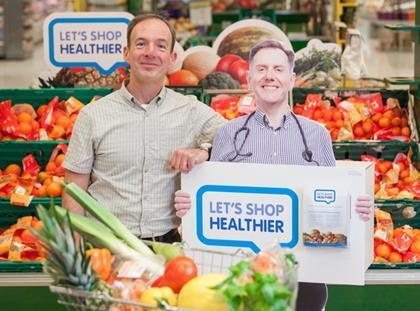
  • a new pilot scheme in a Morrisons store in Salford, using cardboardboard cut-outs of local GPs in the fresh produce aisles delivered a 20% rise in the sales of fresh fruit and a 30% uplift for frozen fruit.

Tip: http://www.foodpolitics.com/2014/01/how-to-get-people-to-buy-healthier-food-cardboard-cutouts/

Source: http://www.thegrocer.co.uk/topics/dh-wants-new-deal-to-tackle-unhealthy-food-promotions/353654.article

DH wants new Responsibility Deal measures to tackle unhealthy food promotions

Health cutout

Cardboard cut-outs of local GPs convinced Salford shoppers to buy 20% more fresh fruit

The government has given retailers and suppliers a “short window of time” to agree a voluntary clampdown on the promotion of foods high in fat, salt or sugar as it prepares to launch a new strategy to fight childhood obesity in the spring.

The DH claims supermarkets and suppliers can supply the final piece in the jigsaw in its Responsibility Deal if they support a raft of proposals, including getting rid of “guilt lanes” at checkouts and the removal of sweets and sugary fizzy drinks from gondola ends. It is also planning a new voluntary code to limit the marketing of HFSS products to children. Talks before Christmas between health secretary Jeremy Hunt, health minister Jane Ellison and CEOs of suppliers and all the major supermarkets focused on protecting children from obesity and Ellison said she was “hopeful” they would result in a “package of measures”. Dr Susan Jebb, chair of the Responsibility Deal food network, who was central to the talks, said: “We’ve challenged them to think what they might do from a long and wide-ranging list of ideas. We’re giving the industry a short window of time to come back with a response.” She said pressure was growing on the government to regulate if companies failed to respond to the calls. With pressure on the DH reaching fever pitch in the wake of this week’s alarmist reports, it wants a commitment to guarantee a minimum level of price and loyalty promotions for healthier options, the banning of cartoon characters on packaging of HFSS foods and restrictions on online promotions. This week, discounter Lidl promised to roll out its ‘Healthy Checkouts’ concept – an initiative first trialled last year – replacing unhealthy items with fresh fruit and juices at tills, claiming the trial stores attracted a 20% higher footfall. “I think it’s a bold move,” said Jebb. “What I find very encouraging is that they’ve done it in response to what their customers want and I think it sends a powerful message to other retailers.” “This is a huge opportunity for the industry to show that a voluntary strategy is the way to deal with the obesity crisis,” she added. “We’re tackling satfats, calories and salt, and the thing that would wrap it all up is something around promotions.” Meanwhile it was revealed this week that a new pilot scheme in aMorrisons store in Salford, using cardboardboard cut-outs of local GPs in the fresh produce aisles delivered a 20% rise in the sales of fresh fruit and a 30% uplift for frozen fruit.

2014 AMA Health Priorities

Steve Hambleton
– population health
– reduce unwarranted clinical variation

Chris Baggoley
– dementia

Lesley Russell
– value-based payment


The five most pressing health priorities in 2014

21/01/2014

Trying to identify just five top priorities in an area as complex and ethically fraught as health care is a tough challenge, but that was the task Australian Medicine set for seven of the nation’s leading health advocates and thinkers, including AMA President Dr Steve Hambleton, the nation’s Chief Medical Officer Professor Chris Baggoley, health policy expert Dr Lesley Russell and World Medical Association Council chair Dr Mukesh Haikerwal. Here they provide their thought-provoking and insightful responses.

AMA President Dr Steve Hambleton

1.  Make population health a cross-portfolio priority for all levels of government
Population health is not just about treating illness. It’s also about keeping people well, and all portfolios (Agriculture, Defence, Education, Employment, Environment, Finance, Foreign Affairs and Trade, Health, Immigration and Border Protection, Industry, Infrastructure and Regional Development, Social Services, Treasury etc) need to do their part to fight the threat of non-communicable diseases which stem from tobacco, alcohol, over-nutrition and under- exercise.

2. Continue the investment in closing the life expectancy gap between Aboriginal and Torres Strait Islander peoples and all Australians
All governments need to keep up the investment, but not just in the health portfolio. There is stark evidence that investing in the social determinants of health and a good education, starting at birth, are major predictors of health outcomes.

3. Fix e-health and the PCEHR
We must be able to talk to each other in the same language -general practice, hospitals (public and private), public outpatients, private specialists, aged and community care. Too often the right message just does not get through. Let’s get the (e) rail gauge right and use it.

4. Reduce unwarranted clinical variation
The fastest way to save health dollars and achieve better outcomes is to (as Professor Lord Ari Darzi advised at the 2012 AMA National Conference) “close the gap between what we know and what we do”.  We know we are doing a good job and are very cost effective. If we embrace the move of learned colleges toward clinical audit and self-reflection we can make best practice even better.

5. Invest in research
The human papillomavirus vaccine will save millions of lives. Research delivered and refined the place of statins, also saving millions of lives. We need new ways of treating infections, perhaps more antibiotics or better ways to use the ones we already have.

Professor Chris Baggoley, Australian Government Chief Medical Officer

It is not easy to nominate five priority areas for action, given that there are so many deserving areas that require our ongoing attention. Of course, in my role there are a number of areas where my direct involvement is needed to help made a difference.
Understanding that this list excludes other equally deserving priority areas, my list is:
1. Antimicrobial Resistance, where concerns we are facing a post antibiotic era are widely shared across the globe. Australia is taking a leading role: we have adopted a One Health approach, a safety and quality approach (via the National Standards), and we are increasing our surveillance of resistant microbes and antimicrobial usage.

2. Emerging Infectious Diseases. The appearance of avian influenza H7N9 in China in 2013, and the Middle East Respiratory Syndrome Coronavirus in 2012-13, has redoubled the focus of all areas of the health system to prepare to manage emerging infectious diseases, and this must remain a focus for 2014.

3. Immunisation coverage. Public interest in the benefits of high levels of childhood immunisation was a particular feature of 2013, especially following the National Health Performance Authority report breaking coverage down to Medicare Local and postcode areas. Vaccine-preventable diseases should be prevented, and our attention to this aspect of health care in all areas must remain a priority.

4. Dementia. While the first three areas are part of my daily work, this is not the case for dementia. Nonetheless, the case for research into the causes and prevention of dementia is apparent to all of us.

5. Improving the nation’s mental health. Much work is underway to improve our mental health. Improved community and professional understanding and reduction in stigma will assist sufferers of mental health illness to seek help, and assist their recovery.

Dr Lesley Russell, Visiting Fellow, Australian Primary Health Care Research Institute, Australian National University

National

1. Addressing health disparities

Prime among these is the need to Close the Gap on health disparities for Indigenous Australians, but we should not forget the disparities suffered by people with mental illness, people with disabilities, the homeless, and those who are isolated, both geographically and socially. These gaps will only be closed by a broader focus on the social determinants of health through a whole-of-government approach.

2. Changing the way we pay for healthcare services

It’s time to move away from fee-for-service to a financing system that is (1) focused on value rather than volume; (2) rewards improved health outcomes and cognitive services as much as procedures; (3) encourages effective teamwork and collaboration; and (4) recognises time dedicated to education, mentoring, research, essential paperwork and communication.

3. Reworking the healthcare workforce

If we are to address the health and healthcare needs of the 21st century in a country as large and diverse as Australia, then we need an appropriate workforce and a system that enables every healthcare profession to work to full scope of practice. That means widening who can prescribe and who can work independently. The new workforce must include more Aboriginal and Community Health Workers to assist with outreach, education, care coordination and cultural sensitivity.

International

4. Antibiotic resistance

The growing threat of multiple resistance requires a major international effort involving the agriculture, food and health sectors and an increased focus on research to deliver solutions and new antibiotics.

5. Climate change

Everyone’s way of life and even national security is under threat from climate change. Developed nations like Australia must show leadership in tackling both the causes and the impacts. In the absence of government action, communities must step in to lead the way.

Professor Stephen Leeder, Professor of Public Health and Community Medicine, University of Sydney

1. National data collection and evaluation – the collection of national hospital safety and quality data is critical to monitoring the use of drugs and controlling the rise of drug-resistant infections. Information is also needed to track progress in preventive health, such as in addressing obesity. Repeated surveys, done by the same people using the same survey instruments, are needed to judge our progress.

2. We need to tell the story of what we are achieving in health care for the tens of billions we invest in it. The community who pays deserves to hear. Health Ministers need to enunciate what the goal of providing health care is, backed by stories that illustrate what is achieved every day in caring for people. These stories are needed to keep compassion alive in our democracy.  “Look where my Medicare tax dollar goes!” would be a great thing to boast about, and would enable ordinary taxpayers to see that their tax contributes to something of immense social value.

3. Fixing IT. We are 20 years behind best practice. We can see what it looks like in the US. It requires a huge investment, but the pay-off in quality is immense.

Martin Laverty, Chief Executive Officer, Catholic Health Australia

1. Causes of ill health need to constantly inform both health policy and practiceTwo-thirds of Australians are overweight, 16 per cent of Australians smoke, and 13 per cent drink at levels of risk. Implementing Senate recommendations on social determinants of health would revive efforts to prevent Australians, particularly the most disadvantaged, from suffering avoidable chronic illness.

2. Coordination of health services around a person’s unique needs must become more of a priority, to improve patient outcomes and reduce waisted expenditure. Ideally, any person with an ongoing health complaint would have a health plan worked out and appropriately managed to focus on right treatment in the right place, ongoing medication management, avoidance of duplicated service, and prevention of further disease.

3. Health workforce constraints and industrial barriers still haven’t been resolved to ensure Australia will have enough medical, nursing, and allied health staff to meet Australia’s growing and ageing population. Role redesign of who does what in the health system remains essential, but as a nation we’re no closer to being able to solve workforce constraints because of entrenched industrial perspectives.

4. Consumer choice underpins the new National Disability Insurance Scheme, and is being introduced into home care for the aged. Better choice in health and aged care also needs attention, so that competition and contestability can drive improvements in financial and clinical outcomes.

5. End of life care needs the entire community’s attention. Health professionals and health consumers need to give new consideration to talking about, determining, and then implementing future care plans. Pastoral care for those in the final stages of life, indeed for any person dealing with significant illness, needs elevation as a priority for health and aged care providers.

Dr Mukesh Haikerwal, Chair of Council, World Medical Association, former AMA President

With a new federal administration in place, a fiscal Armageddon heralded and the health settings for Australia being less favourable, the usual troupe of kite-fliers have been showing their wares in the ‘silly season’. What I think we need is to secure the fundamentals and enhance and support sensible collaborative work practices.

1. Support more care out of hospital – don’t penalise quality holistic care in general practice.

Embed the notion of general practice as the bedrock, not only of primary health care and all out of hospital care, but also for health care delivery across the nation. The costs of the same care out of hospital, when appropriate, are a fraction of the cost in hospital.

2. Enhance hospitals and support the care provided there, and stop perverse penalties.

Support the existing hospital infrastructure that is struggling with the burden of increased demand and expectation from patients and from governments, which absurdly see them penalised for trying their hardest to cope with this. There needs to be a move from blame to re-setting costs and targets based on realistic care need evaluations, allowing for inevitable variation.

3. Embolden and formalise clinical leadership in health in a meaningful way.

Use clinical Senates – groups of cognisant, focussed individuals suggesting and supporting innovation in health care delivery. Enhance their work by trialling and evaluating changing concepts before whole-of-system adjustments, so that unforeseen consequences are outed and adjusted for in real situations with real doctors treating real patients.

4. Use e-health and telehealth logically in clinically safe and acceptable forms over and above the PCEHR, especially secure messaging delivery and web-based videoconferencing.  

Use innovative technologies in health (e-health and telemedicine) for clinical purposes, with clinical needs and drivers at the forefront. We do have potential technology to support and enhance (but not replace) trusted, proven good clinical methods. This is over and above, but could include, the PCEHR. Secure email to connect information is the key element.

5. Innovate with translational research in real clinical situations, proving concepts before rolling them out.

In care settings, sequential work across disciplines and health care establishments, with clinical participants nutting out how to best to innovate. Use just one set of agreed best practice guidelines that promote translational research that have been promulgated to, and agreed by, relevant medical groups. Make sure the economics and medicine are understood: it may cost more to implement in the beginning, but it will save on costs down the track.

Dr Brian Morton, Chair, AMA Council of General Practice

1. End of life care – There is an expectation that modern medical technology and care will extend life, but at what cost to the quality of life? The preparation of an Advanced Care Directive when competent will bridge this gap.

2. Lifestyle health issues – The genesis of many health issues are related to poor lifestyle choices which then require medical solutions. We need brave governments to implement public health interventions to de-medicalise preventive management.

3. Obesity – a whole-of-community response is required to manage the obesity “epidemic”, including responsible marketing and labelling of foods, appropriate food helping sizes, ready access to exercise programs, dietetic advice and legislative recognition that obesity is a risk factor for multiple chronic diseases.

4. Prostate cancer – A rational evidence-based and consensus approach is needed regarding screening and management.

5. Alcohol – A multifactorial societal approach is fundamental to alcohol management.

Eternal youth for just $43K per day – or just exercise and eat well????

This is funny, only because for the super rich, this seems like a feasible way forward… instead of eating well and exercising. A really interesting insight into how broken our thinking on health truly is.

https://ama.com.au/ausmed/eternal-youth-may-be-yours-just-43000-day

Eternal youth may be yours, for just $43,000 a day

21/01/2014

Like a bad fairy tale, scientists believe they have developed a way to stop people getting older, but at a cost that puts it out of the reach of all but the super-rich.

A team of researchers at the University of New South Wales, working in collaboration with geneticists at Harvard Medical School, claim to have unlocked the secret to eternal youth, and to have developed a compound they say not only halts the ageing process, but can turn back the years.

The catch is, the treatment is prohibitively expensive, with estimates it would cost the average 86 kilogram man $43,000 a day, and the average 71 kilo woman $35,500 a day.

The compound was developed based on an understanding of how and why human cells age.

A series of molecular events enable communication inside cells between the mitochondria – the energy source for cells, enabling them to carry out key biological functions – and the nucleus. The researchers found that when there is a communication breakdown between the mitochondria and the nucleus of the cell, the ageing process accelerates.

As humans age, levels of the chemical NAD (which initiates communication between the mitochondria and the nucleus), decline. Until now, the only way to arrest this process has been through calorie-restricted diets and intensive exercise.

But the researchers, led by University of New South Wales and Harvard University molecular biologist Professor David Sinclair, have developed a compound – nicotinamide mononucleotide – that, when injected, transforms into NAD, repairing broken communication networks and rapidly restoring communication and mitochondria function.

In effect, it mimics the results achieved by eating well and exercising.

“The ageing process we discovered is like a married couple. When they are young, they communicate well but, over time, living in close quarters for many years, communication breaks down,” Professor Sinclair said. “And just like a couple, restoring communication solved the problem.”

In the study, the researchers used mice considered equivalent to a 60-year-old human and found that, within a week of receiving the compound, the mice resembled a 20-year-old in some aspects including the degree of muscle wastage, insulin resistance and inflammation.

Professor Sinclair said that, if the results stand, then ageing may be a reversible condition if it is caught early.

“It may be in the future that your age in years isn’t going to matter as much as your biological age,” Professor Sinclair said.

“What we’ve shown here is that you can turn back your biological age or, at least, we think we have found a way to do that.”

The problem is, the compound is prohibitively expensive, at least at the moment.

It costs $1000 per gram to produce, and in tests so far it has been applied at a rate equivalent to 500 milligrams for every kilogram of body weight, each day.

Professor Sinclair admitted the cost was major consideration, and said the team was looking at was to produce the compound more cheaply.

As part of their research, the scientists investigated HIF-1, an intrusive molecule that foils communication but also has a role in cancer.

It has been known for some time that HIF-1 is switched on in many cancers, but the researchers found it also switches on during ageing.

“We become cancer-like in our ageing process,” Professor Sinclair said. “Nobody has linked cancer and ageing like this before, and it may explain why the greatest risk of cancer is age.”

Researchers are now looking at longer-term outcomes the NAD-producing compound has on mice, and suggest human trials may begin as early as next year.

They are exploring whether, in addition to halting ageing, the compound can be used to safely treat a range of rare mitochondrial diseases and other conditions, such as cancer, type 1 and type 2 diabetes, muscular dystrophy, other muscle-wasting conditions and inflammatory diseases.

The research was published in the journal Cell.

Kirsty Waterford

Diabetes and the brain

  • Good summary on the state of understanding the strengthening relationship between glucose metabolism and dementia
  • Type 2 diabetes is a very strong risk factor for dementia – Alzheimer’s disease is sometimes referred to as “Type 3 diabetes”
  • It also results in brain atrophy
  • Metabolic syndrome is also implicated in dementia
  • High insulin in the body means lower insulin in the brain due to a reduction in BBB insulin receptors, and insulin helps clear toxic beta-amyloid from the brain
  • The key to lowering blood sugar and insulin is lose excess weight and exercise more
  • a diet high in high GI carbs and saturated fat is associated with higher unbound beta-amyloid fragments in their CSF. Subjects on lower GI carbs and low saturated fat had less

http://www.nutritionaction.com/daily/diabetes-and-diet-cat/the-effect-of-diabetes-on-the-brain/

The Effect of Diabetes on the Brain

Can high blood sugar lead to brain atrophy?

 • January 16, 2014
“Type 2 diabetes is a very strong risk factor for dementia,” says Jae Hee Kang, assistant professor of medicine at Harvard Medical School and the Brigham and Women’s Hospital in Boston. “Some people call Alzheimer’s disease type 3 diabetes.”

(In type 1 diabetes, blood sugar soars because the body makes no insulin, the hormone that acts like a key to allow sugar into cells. In the more common type 2 diabetes, blood sugar soars because insulin no longer works properly—that is, people are insulin resistant.)

Act now to download your FREE copy of Diabetes and Diet: Decoding Diabeteswithout cost or obligation.

“There’s no question that diabetes damages small blood vessels,” says David Knopman, professor of neurology at the Mayo Clinic in Minnesota.

It may also shrink parts of the brain. A recent study found more brain atrophy in 350 people with diabetes than in 363 people without the disease.

It’s not just those with diabetes who are at risk. People who have what doctors call “metabolic syndrome” also have a higher risk of cognitive decline. That’s roughly one out of three U.S. adults.

Their blood sugar levels are higher than normal, but not high enough to be diabetes. That gives them an increased risk of dementia.

And they may have high blood insulin levels because obesity—especially an oversized waist—has made them insulin resistant. (When insulin doesn’t work well, the pancreas responds by pumping out more.)

That may also spell trouble for the brain. Men with high blood insulin levels declined more on cognitive tests over three years than those with lower levels.

Why would high levels of insulin in the blood matter?

“High insulin in the body means lower insulin in the brain,” says Angela Hanson, a physician and senior fellow at the University of Washington School of Medicine.

That’s because, over time, high levels of insulin in the blood may shrink the number of receptors for insulin in the blood-brain barrier, allowing less to enter the brain, says Hanson. And insulin may help keep the brain healthy.

“Insulin helps clear toxic beta-amyloid out of the brain,” Hanson explains. “So if you put someone on a diet that increases brain insulin, you might have less of the toxic amyloid around.”

The key to lowering sugar and insulin in the blood—and presumably raising insulin in the brain—is to lose excess weight and exercise more.

But one pilot study suggests that it’s not just how much, but what you eat that matters.

Hanson and her colleagues assigned 20 older adults without mild cognitive impairment and 27 older adults with MCI to eat one of two diets. The LOW diet was low in saturated fat, and its carbs had a low glycemic index—that is, they didn’t cause a bump in blood sugar. The HIGH diet was high in saturated fat, and its carbs had a high glycemic index.

The HIGH diet was unusually high in saturated fat and sugar, but it wasn’t off the charts. “If you look at a fast-food combo meal, it’s got a sugary soda and a high-fat burger,” notes Hanson.

After four weeks, people who got the HIGH diet had higher levels of unbound beta-amyloid fragments in their cerebrospinal fluid (which bathes the brain and spinal cord), while people who ate the LOW diet had lower levels.

“The theory is that the beta-amyloid that’s not bound to fats or other lipids is free, and it’s free to wreak havoc, if you will,” says Hanson. “We believe it’s a more toxic form of beta-amyloid because it’s less likely to be cleared. But that’s hard to test in humans.”

The results seemed to fit with a finding from a similar, earlier study: the LOW diet raised insulin levels in cerebrospinal fluid (and presumably the brain), while the HIGH diet lowered insulin levels.

“A Western diet or obesity or other things that cause high blood insulin may decrease brain insulin,” says Hanson. “If you make someone less insulin resistant with weight loss or a diet, they may have more brain insulin.”

Until more studies are done, it’s too early to know if a diet lower in saturated fat and sugars can protect the brain. But the research is encouraging.

“The most striking finding from these studies was that you could change the brain chemistry of people who have mild cognitive impairment,” says Hanson.

“When I’m in my clinic, I can tell patients with MCI that if they eat a healthier diet and exercise, things might get better. That’s the message that keeps me going.”

Sources: J. Am. Geriatr. Soc. 56: 1028, 2008; Exp. Gerontol. 47: 858, 2012; Diab. Care 36: 4036, 2013; JAMA 292: 2237, 2004; N. Engl. J. Med. 369: 540, 2013; Eur. J. Pharmacol. 719: 170, 2013; Neuroepidemiol. 34: 200, 2010; JAMA Neurol. 70: 967, 972, 2013; Arch. Neurol. 68: 743, 2011.

Tobacco, Firearms and Food

“But the job of government is not to encourage profitable businesses at the cost of public health; it’s to regulate them so that the public is served. Who is this country for, anyway?”

http://www.nytimes.com/2014/01/15/opinion/bittman-tobacco-firearms-and-food.html

The Opinion Pages
Tobacco, Firearms and Food

Mark Bittman Jan 14, 2014

Let’s say your beliefs include the notion that hard work will bring good things to you, that the golden rule is a nice idea though it may occasionally have limits, and that it’s more or less every person for him or herself. Your overall guiding force is not altruism, but you’re not immoral; you’re a good citizen, and you don’t break any major laws. This could describe many of us; most, maybe.

Now suppose you’re in the business of producing, marketing or selling tobacco or firearms — products known to sometimes kill others. You need not be a corporate executive or a criminal arms dealer; you might be a retailer of cigarettes, a person who sells them along with magazines, a marketer, a gun shop owner. In any case, your conscience is clear: you’re selling regulated legal products and, as long as you’re obeying the regulations, you’re doing nothing illegal. (“Wrong” is a judgment call.)

You sleep well, believing that the government would further regulate your product if it were necessary. And if regulations were to change, you’d change with them. But to act otherwise — to hold back your energy from production or sales just because of moral or social pressure — would be foolish, and put you at a competitive disadvantage.

For many years after knowing about the lethal nature of tobacco, our government did little or nothing to limit its consumption. That’s changed gradually in the last 50 years, and more dramatically since 1998, because of successful lawsuits and because the Food and Drug Administration often tries to pursue its mission. (For a variety of reasons not worth going into, firearms are more challenging to regulate. Let’s leave it at that for now.)

O.K., so suppose we pass legislation that discourages you from producing or selling tobacco or firearms while at the same time actively encouraging you — supporting you — to change to producing apples or cotton or washing machines or screwdrivers; as long as you could see a way to increase profit, you’d probably look at the new opportunity. After all, it’s not as if you wantto produce agents of death. You want to make the best living you can selling stuff that’s legal and that people want. Markets change, and flexibility is important, and the government can and does affect your business, even if it’s by inaction.

Now let’s apply this same way of thinking to the major food categories — and for the purposes of this discussion there are only three — and what it’s like to be a farmer or producer, or a manufacturer, processor, distributor, retailer of this stuff. Again, you’re agnostic about what you sell, but you’re profit-conscious. And the government can and does affect your business; it can help your business (“you didn’t build it yourself”) or hurt it, as it should if your business is harming others.

Let’s call the first food group industrially produced animal products. Producing and selling as much as possible is the way to go here, since the penalties for damage your product does to human and animal health and to the environment (including climate) are virtually nonexistent. You can treat the animals as you like and damn the consequences, from salmonella contamination to antibiotic resistance to water contamination to, of course, cruelty. There are even incentives, in the form of subsidized prices for animal feed.

The next group is most easily labeled junk food; you might call it “hyperprocessed.” This comprises aisles and aisles of “edibles” sold in supermarkets and restaurants, and is often “food” that’s unrecognizable as such, ranging from soda and other sugar-sweetened beverages to things like chicken nuggets and Pringles and tens of thousands of other examples. These are mostly made from commodity crops, especially corn, soybeans and wheat. Federal subsidies abound in many forms here, from direct payments (in theory, these are ending, to be replaced by a bizarre form of crop insurance) to the ethanol mandate to virtually unregulated land use that permits toxic overapplication of fertilizers and other chemicals. There is also that same failure to recognize the public health and environmental costs of what is probably the least healthy diet a wealthy nation could devise. You could even say that the Supplemental Nutrition Assistance Program (SNAP, usually called food stamps) acts as a subsidy to junk food, since nothing limits using food stamps for food that promotes disease. It’s worth noting that for the past century the bulk of university research, much of it paid for with tax dollars, has gone into figuring out how to increase the yield of the crops and processes that turn out this junk that sickens.

Then, in the third group, there’s everything else, from fruits and vegetables — absurdly called “specialty crops” by the Department of Agriculture — to animals raised in sustainable and even humane ways. But here, disincentives abound: farmers may be encouraged to allow some land to go fallow, but not to be planted in specialty crops, and research money, subsidies, insurance, market promotion and access to credit are directed toward industrial food production, distribution and sales. These inefficiencies make most of this real food, which is health-promoting and closer to environmentally neutral, appear to be more expensive. (Only “appear,” though. If you account for the costs of environmental and public health damage, industrially produced junk food and animal products actually cost more.)

One could imagine a government that encourages more life-giving (and less disease-causing) agriculture just as one can acknowledge that sanity prevails when government steeply taxes tobacco and encourages its farmers to move on to something else. (I’m not saying, by the way, that tobacco farmers have been treated fairly; much more could have been done — and still could be done — to help them transition to other profitable crops.)

Of course this is disruptive; change the status quo, and someone is hurt. But the public health disaster created by our commodity-pushing agricultural policies is only getting worse, and calls for the same kind of action in industrial agriculture that we’ve seen in tobacco and, to a lesser extent, in guns. That kind of action will happen only when we have political representatives who care about food, health and the environment.

We can pressure corporations all we want, and what we’ll get, mostly, is healthier junk food. Really, though, as long as sugar is profitable and 100 percent unrestricted (and subsidized and protected!), marketers will try to get 2-year-olds hooked on soda and Gatorade.

But the job of government is not to encourage profitable businesses at the cost of public health; it’s to regulate them so that the public is served. Who is this country for, anyway?

The Quantified Diet Project

  • These guys are using some new approach to test the efficacy of popular diets – something that’s casual, natural, low-key, low-touch but statistically powered up – again, aligned with Riot’s ambitions
  • I’ve signed up and been allocated the mindfulness eating diet
  • Will see how we go… what could possibly go wrong?

https://lift.do/quantified-diet

The Quantified Diet Project

Make a healthier you. Contribute to a healthier world.

The Quantified Diet Project aims for two things:

#1. Help one million people make a healthy diet change leading to: weight loss, overall health, and/or more energy. We’re providing 10 popular diets with expert advice.

#2. Perform the largest-ever measurement of popular diets. What works? How do popular diets compare? How can we all be more successful? We’re working with UC Berkeley on the science and the analysis.


The official launch is January 1st, but you can start contributing to our science right now by filling out this survey.


How it works

You’ll follow one of the following diets for four weeks:

  1. Slow-Carb Diet®: Meat, legumes/beans, and veggies; abstain from white foods like sugar, pasta, bread, cheese; epic “cheat day” once per week. Advised by Tim Ferriss, author of The 4-Hour Body.
  2. Paleo: eat like a caveman, mostly veggies, meats, nuts. Advised byPaleohacks and Nerd Fitness.
  3. Vegetarian: vegetables, but no meat. Cheese and eggs are optional. Advised by No Meat Athlete.
  4. Whole foods: eat only recognizable foods and avoid processed ones. Advised by Summer Tomato.
  5. Gluten-free: no wheat, rye, barley or wheat-based foods. Advised by Tania Mercer.
  6. No sweets: a simple diet change that affects your insulin swings. Advised by Sarah Stanley.
  7. DASH: USDA’s current recomendation.
  8. Calorie counting: the old standard.
  9. Sleep more: the science says this should work. Advised by: Swan Sleep Solutions.
  10. Mindful eating: learn mindfulness to recognize when you’re full. Advised by ZenHabits.

During the diet, you’ll use the Lift app to receive daily prompts and to track your progress.

When you need help, you’ll have access to our hand-picked experts and to tips from the rest of the community.

Science aside, the first goal is for you to make a healthy diet change. This is our specialty.

Also, there will be prizes available at important milestones.


The Science

In order to do this in a scientific way we’re working with nutritionists and statisticians from UC Berkeley.

During the sign-up process, you’ll have the option to be given a diet that we’ve selected for you. The scientific process calls this part of the experiment randomization. The intent is to remove bias—perhaps fans of the4-Hour Body diet are inherently more motivated than fans of the USDA.

I was skeptical about people accepting our diet recommendation for them, but early joiners have voted 3 to 4 to participate in the randomized trial. (There will also be an opt-out of the randomization step, for those 1 in 4 people who want complete control.)

After we get you going on your new diet, we’ll measure via Lift and occasional surveys:

  • Are some diets easier than others? The scientific term is adherence.
  • Weight change. Of course, this is a goal for many of us.
  • Happiness via mood, energy and enjoyment.
  • Demographic factors.
  • Success tips for each diet. In our single-diet trial of the 4-Hour Body last year, we were able to verify the effects of simple meal planning, eggs for breakfast, cold showers, cheat days, and alcohol consumption.

Of course, we’re going to be careful to respect your privacy. All data will be aggregated and anonymized. That’s really important to us.


You know what else is important? Your feedback. Email me or comment right here. I’m tony@lift.do.