Category Archives: healthy habits

Big data in healthcare

A decent sweep through the available technologies and techniques with practical examples of their applications.

Big data in healthcare

Big data in healthcare

big data in healthcare industrySome healthcare practitioners smirk when you tell them that you used some alternative medication such as homeopathy or naturopathy to cure some illness. However, in the longer run it sometimes really is a much better solution, even if it takes longer, because it encourages and enables the body to fight the disease naturally, and in the process build up the necessary long term defence mechanisms. Likewise, some IT practitioners question it when you don’t use the “mainstream” technologies…  So, in this post, I cover the “alternative” big data technologies. I explore the different types of big data datatypes and the NoSQL databases that cater for them. I illustrate the types of applications and analyses that they are suitable for using healthcare examples.


Big data in healthcare

Healthcare organisations have become very interested in big data, no doubt fired on by the hype around Hadoop and the ongoing promises that big data really adds big value.

However, big data really means different things to different people. For example, for a clinical researcher it is unstructured text on a prescription, for a radiologist it is the image of an x-ray, for an insurer it may be the network of geographical coordinates of the hospitals they have agreements with, and for a doctor it may refer to the fine print on the schedule of some newly released drug. For the CMO of a large hospital group, it may even constitute the commentary that patients are tweeting or posting on Facebook about their experiences in the group’s various hospitals. So, big data is a very generic term for a wide variety of data, including unstructured text, audio, images, geospatial data and other complex data formats, which previously were not analysed or even processed.

There is no doubt about that big data can add value in the healthcare field. In fact, it can add a lot of value. Partially because of the different types of big data that is available in healthcare. However, for big data to contribute significant value, we need to be able to apply analytics to it in order to derive new and meaningful insights. And in order to apply those analytics, the big data must be in a processable and analysable format.

Hadoop

Enter yellow elephant, stage left. Hadoop, in particular, is touted as the ultimate big data storage platform, with very efficient parallelised processing through the MapReduce distributed “divide and conquer” programming model. However, in many cases, it is very cumbersome to try and store a particular healthcare dataset in Hadoop and try and get to analytical insights using MapReduce. So even though Hadoop is an efficient storage medium for very large data sets, it is not necessarily the most useful storage structure to use when applying complex analytical algorithms to healthcare data. Quick cameo appearance. Exit yellow elephant, stage right.

There are other “alternative” storage technologies available for big data as well – namely the so-called NoSQL (not only SQL) databases. These specialised databases each support a specialised data structure, and are used to store and analyse data that fits that particular data structure. For specific applications, these data structures are therefore more appropriate to store, process and extract insights from data that suit that storage structure.

Unstructured text

A very large portion of big data is unstructured text, and this definitely applies to healthcare too. Even audio eventually becomes transformed to unstructured text. The NoSQL document databases are very good for storing, processing and analysing documents consisting of unstructured text of varying complexity, typically contained in XML, JSON or even Microsoft Word or Adobe format files. Examples of the document databases are Apache CouchDB and MongoDb. The document databases are good for storing and analysing prescriptions, drug schedules, patient records, and the contracts written up between healthcare insurers and providers.

On textual data you perform lexical analytics such as word frequency distributions, co-occurrence (to find the number of occurrences of particular words in a sentence, paragraph or even a document), find sentences or paragraphs with particular words within a given distance apart, and other text analytics operations such as link and association analysis. The overarching goal is, essentially, to turn unstructured text into structured data, by applying natural language processing (NLP) and analytical methods.

For example, if a co-occurrence analysis found that BRCA1 and breast cancer regularly occurred in the same sentence, it might assume a relationship between breast cancer and the BRCA1 gene. Nowadays co-occurrence in text is often used as a simple baseline when evaluating more sophisticated systems.

Rule-based analyses make use of some a priori information, such as language structure, language rules, specific knowledge about how biologically relevant facts are stated in the biomedical literature, the kinds of relationships or variant forms that they can have with one another, or subsets or combinations of these. Of course the accuracy of a rule-based system depends on the quality of the rules that it operates on.

Statistical or machine-learning–based systems operate by building classifications, from labelling part of speech to choosing syntactic parse trees to classifying full sentences or documents. These are very useful to turn unstructured text into an analysable dataset. However, these systems normally require a substantial amount of already labelled training data. This is often time-consuming to create or expensive to acquire.

However, it’s important to keep in mind that much of the textual data requires disambiguation before you can process, make sense of, and apply analytics to it. The existence of ambiguity, such as multiple relationships between language and meanings or categories makes it very difficult to accurately interpret and analyse textual data. Acronym / slang / shorthand resolution, interpretation, standardisation, homographic resolution, taxonomy ontologies, textual proximity, cluster analysis and various other inferences and translations all form part of textual disambiguation. Establishing and capturing context is also crucial for unstructured text analytics – the same text can have radically different meanings and interpretations, depending on the context where it is used.

As an example of the ambiguities found in healthcare, “fat” is the official symbol of Entrez Gene entry 2195 and an alternate symbol for Entrez Gene entry 948. The distinction is not trivial – the first is associated with tumour suppression and with bipolar disorder, while the second is associated with insulin resistance and quite a few other unrelated phenotypes. If you get the interpretation wrong, you can miss or erroneously extract the wrong information.

Graph structures

An interesting class of big data is graph structures, where entities are related to each other in complex relationships like trees, networks or graphs. This type of data is typically neither large, nor unstructured, but graph structures of undetermined depth are very complex to store in relational or key-value pair structures, and even more complex to process using standard SQL. For this reason this type of data can be stored in a graph-oriented NoSQL database such as Neo4J, InfoGrid, InfiniteGraph, uRiKa, OrientDB or FlockDB.

Examples of graph structures include the networks of people that know each other, as you find on LinkedIn or Facebook. In healthcare a similar example is the network of providers linked to a group of practices or a hospital group. Referral patterns can be analysed to determine how specific doctors and hospitals team together to deliver improved healthcare outcomes. Graph-based analyses of referral patterns can also point out fraudulent behaviour, such as whether a particular doctor is a conservative or a liberal prescriber, and whether he refers patients to a hospital that charges more than double than the one just across the street.

Another useful graph-based analysis is the spread of a highly contagious disease through groups of people who were in contact with each other. An infectious disease clinic, for instance, should strive to have higher infection caseloads across such a network, but with lower actual infection rates.

A more deep-dive application of graph-based analytics is to study network models of genetic inheritance.

Geospatial data

Like other graph-structured data, geospatial data itself is pretty structured – coordinates can simply be represented as pairs of coordinates. However, when analysing and optimising ambulance routes of different lengths, for example, the data is best stored and processed using a graph structures.

Geospatial analyses are also useful for hospital and practice location planning. For example, Epworth HealthCare group teamed up with geospatial group MapData Services to conduct an extensive analysis of demographic and medical services across Victoria. The analysis involved sourcing a range of data including Australian Bureau of Statistics figures around population growth and demographics, details of currently available health services, and the geographical distribution of particular types of conditions. The outcome was that the ideal location and services mix for a new $447m private teaching hospital should be in the much smaller city of Geelong, instead of in the much larger but services-rich city of Melbourne.

Sensor data

Sensor data often are also normally quite structured, with an aspect being measured, a measurement value and a unit of measure. The complexity comes in that for each patient or each blood sample test you often have a variable record structure with widely different aspects being measured and recorded. Some sources of sensor data also produce large volumes of data at high rates. Sensor data are often best stored in key-value databases, such as Riak, DynamoDB, Redis Voldemort, and sure, Hadoop.

Biosensors are now used to enable better and more efficient patient care across a wide range of healthcare operations, including telemedicine, telehealth, and mobile health. Typical analyses compare related sets of measurements for cause and effect, reaction predictions, antagonistic interactions, dependencies and correlations.

For example, biometric data, which includes data such as diet, sleep, weight, exercise, and blood sugar levels, can be collected from mobile apps and sensors. Outcome-oriented analytics applied to this biometric data, when combined with other healthcare data, can help patients with controllable conditions improve their health by providing them with insights on their behaviours that can lead to increases or decreases in the occurrences of diseases. Data-wise healthcare organisations can similarly use analytics to understand and measure wellness, apply patient and disease segmentation, and track health setbacks and improvements. Predictive analytics can be used to inform and drive multichannel patient interaction that can help shape lifestyle choices, and so avoid poor health and costly medical care.

Concluding remarks

Although there are merits in storing and processing complex big data, we need to ensure that the type of analytical processing possible on the big data sets lead to valuable enough new insights. The way in which the big data is structured often has an implication on the type of analytics that can be applied to it. Often, too, if the analytics are not properly applied to big data integrated with existing structured data, the results are not as meaningful and valuable as expected.

We need to be cognisant of the fact that there are many storage and analytics technologies available. We need to apply the correct storage structure that matches the data structure and thereby ensure that the correct analytics can be efficiently and correctly applied, which in turn will deliver new and valuable insights.

Reformulation and marketing restrictions to prevent childhood obesity


http://www.foodnavigator.com/Product-Categories/Sweeteners-intense-bulk-polyols/EU-eyes-reformulation-and-marketing-restrictions-to-cut-childhood-obesity/

EU eyes reformulation and marketing restrictions to cut childhood obesity

By Caroline Scott-Thomas+

03-Mar-2014

The plan includes tougher limits on all marketing to children - not just television advertising

The plan includes tougher limits on all marketing to children – not just television advertising

Restricting marketing to children and continuing to cut salt, fats and added sugar in processed foods are among initiatives put forward in a plan to tackle childhood obesity, agreed by EU member states in Greece last week.

The action plan was agreed by the High Level Group on Nutrition and Physical Activity at a conference in Athens, and includes a range of voluntary initiatives intended to promote healthy environments and balanced diets, encourage physical activity, restrict advertising to children, and support ongoing efforts to slash levels of salt, fats and added sugar.

Childhood obesity is on the rise in Europe, the European Commission said, adding that about one in three children aged six to nine was overweight or obese in the region in 2010 versus one in four children in 2008. It said member states spent an estimated 7% of their healthcare budgets on treating weight-related problems.

The new strategy includes encouraging industry to make commitments in areas such as marketing, food reformulation, food distribution, catering and physical activity, with a specific focus on children, young people and the most deprived.

Referring to marketing restrictions in particular, it said limits on advertising to children should extend beyond television advertising to include all marketing, “including in-store environments, promotional actions, internet presence and social media activities”.

Taxation, subsidies and pricing

The plan also refers to making “the healthy option the easier option” – a strategy that could include taxation and subsidies for particular foods, or encouraging manufacturers to price reformulated foods at a lower level than standard versions.

Proposals included “encouraging reformulation of less healthy food options and taking nutritional objectives into consideration when defining taxation, subsidies or social support policies”.

In response to the plan, trade body FoodDrinkEurope said it hoped to continue a partnership approach to tackling childhood obesity in Europe.

“European food and drink manufacturers reaffirm their commitment to fight childhood obesity by means of ongoing and possibly new actions and initiatives targeted at children and parents through the established platforms for action at European and national level,” it said in a statement.

Frying/grilling may be linked to diabetes and dementia


The results are tentative, but if confirmed by other studies, the work could transform hopes for tackling two major diseases that have reached epidemic proportions in the developed world.

http://www.theguardian.com/science/2014/feb/25/fried-grilled-meat-risk-diabetes-dementia-glycotoxins

Fried and grilled meat may raise risk of diabetes and dementia

Study suggests changes in cooking habits might reduce levels of glycotoxins and help prevent diabetes and dementia

, science correspondent

theguardian.com

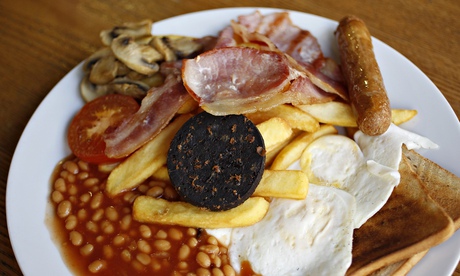
Full English breakfast

Glycotoxins are found in fried or grilled meat, fried eggs and toasted bread. Photograph: Suzanne Plunkett/Reuters

Toxic chemicals found at high concentrations in fried and grilled meats may raise the risk of diabetes and dementia, researchers say.


US scientists found that rodents raised on a Western-style diet rich in compounds called glycotoxins showed early signs of diabetes, along with brain changes and symptoms that are seen in Alzheimer’s disease.


The findings matched what the researchers saw in a small number of older people, where those with higher levels of glycotoxins in their circulation had memory and other cognitive problems, and signs of insulin resistance, which precedes diabetes.


The results are tentative, but if confirmed by other studies, the work could transform hopes for tackling two major diseases that have reached epidemic proportions in the developed world.


The study suggests that changes in cooking practices might lower the risk of both diabetes and dementia, while a greater understanding of the biological mechanisms could lead to drugs that delay their onset.


“The findings are very promising, but the question that needs to be answered is whether cutting down on glycotoxins can prevent or reverse dementia,” said Helen Vlassara, who led the study at the Icahn School of Medicine at Mount Sinai in New York.


Vlassara raised groups of mice on diets that differed in their levels of a type of glycotoxin called advanced glycation end products, or AGEs. Animals that ate a Westernised diet rich in AGEs experienced a build-up of protein called amyloid in their brains, and developed cognitive and movement problems typical of dementia. The same changes were not seen in mice raised on a low-AGEs diet.


The researchers then turned to 93 healthy humans aged over 60. Over nine months of the study, they found that those with higher levels of AGEs in their bloodstream experienced greater levels of cogntive decline and insulin resistance. Details are published in Proceedings of the National Academy of Sciences.


Glycotoxins are widespread in animal products, including meat and dairy produce, and levels increase when food is fried, grilled, pasteurised or smoked, making them abundant in Western diets.


The sheer ubiquity of glycotoxins means dietary changes might not be easy or effective as public health interventions, but Vlassara said that cooking foods differently might help. Levels of glycotoxins rise when food is cooked dry at high temperature, but moisture prevents this.


“People will grill bacon and fry eggs for breakfast, or have a toasted bagel or muffin. But they could boil or poach the eggs, and have fresh bread. With meat, we recommend stewing and boiling, making sauces instead of exposing meat to very high dry heat,” she said.

For some scientists, the most exciting part of the study is the potential explanation of how diabetes and dementia might be linked. Diabetes is one of the few concrete risk factors for dementia, and doubles the risk of a person developing the disease, but how the two are connected has remained a mystery. Vlassara found that rodents and humans on a high glycotoxin diet had low levels of SIRT1 in the body, a protein that is thought to protect the brain from neurodegeneration.

Simon Lovestone, a neuroscientist and leader of the dementia translational research collaboration at Oxford University and King’s College London, said the finding was “fantastically interesting” but added that further studies were needed in people to see if reducing dietary glycotoxins staved off dementia.

Doug Brown, director of research and development at the Alzheimer’s Society, said: “We are often told that burgers or fried chicken are bad for us and this study is not the first to link the chemicals in some cooked foods to Alzheimer’s. However, this research adds to our understanding of how they might work and makes a strong case for further research.

“Diets with low levels of the compounds show promising effects in mice and should be further explored as a way to prevent dementia through changes in diet,” he added. “Of course, we must not forget that the majority of research was conducted in mice and the human element of this study is too small to draw any conclusions.

“Evidence suggests that the best way to reduce your risk of developing dementia is regular exercise, not smoking, and following a healthy diet.”

Derek Hill at University College London said the results were compelling and should encourage more work. “It is notoriously difficult to do experiments on mice that properly mimic Alzheimer’s disease in humans,” he said. “But it is grounds for optimism. This paper adds to the body of evidence suggesting that using preventative strategies might reduce the prevalence of Alzheimer’s disease and other dementias in society. And that could have a very positive impact on us all.”

Tom Dening, professor of dementia research at Nottingham University, said: “Foods high in protein and fat, such as meat, cheese, and egg yolk, are rich in AGEs, and cooking at high temperatures, for example frying and barbecues, increases AGEs. Dietary restriction of AGEs can bring about significant reductions. What isn’t yet clear is how much these effects contribute to Alzheimer’s disease compared to other factors, and we don’t know whether dietary restriction of AGEs would be helpful in prevention.”

In defense of sugar

Interesting, detailed, slick presentation on the biochemistry and epidemiology of fructose on health

He discloses significant industry engagements (coca cola, dr pepper etc.)

Does present the view (shared by Katz) that it shouldn’t be about single nutrients, but diet and activity overall.

This seems to be industry-backed smoke to confuse the discussion.

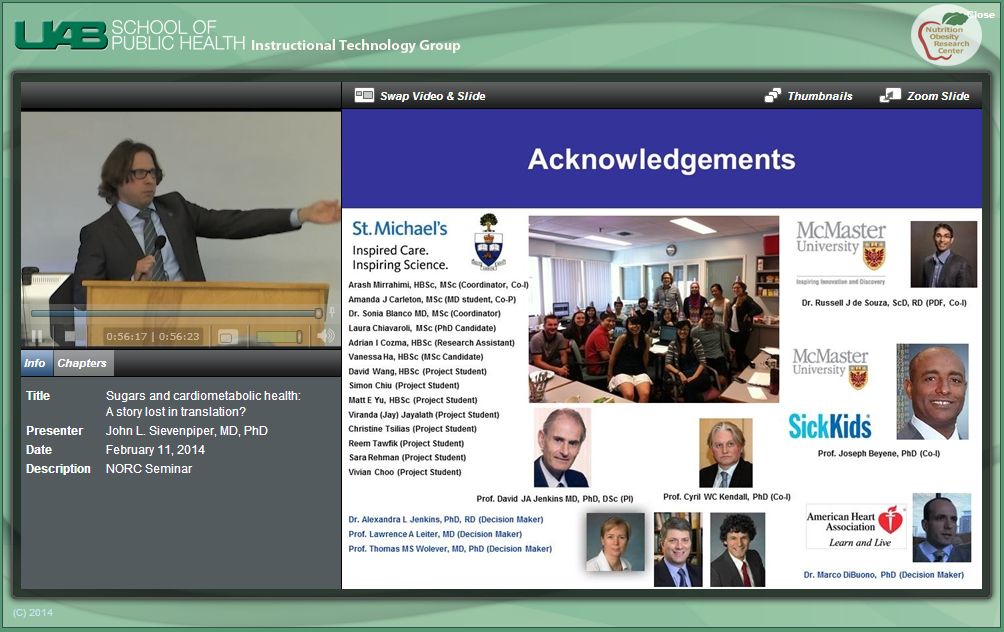
http://media.soph.uab.edu/PresenterPlus/norc-sievenpiper-20140214/main.htm#

Title: Sugars and cardiometabolic health: A story lost in translation?
Presenter: John L. Sievenpiper, MD, PhD
Date: February 11, 2014
Description: NORC Seminar
SugarsOK

Vitality lands in Australia in the form of a life insurance product…

Interesting to see Vitality land in Australia as a life insurance product. Interesting model, perhaps looking to cancel out the moral hazard of life insurance?

Interview with Fran Kelly:

Health expert Dr. Kevin Volpp joins RN Breakfast to discuss how incentives can encourage healthier behaviours and combat Australia’s rising obesity rates.

Program page:
http://www.abc.net.au/radionational/programs/breakfast/how-incentives-can-change-unhealthy-behaviour/5301962

The Conversation:
http://theconversation.com/should-we-pay-people-to-look-after-their-health-24012

https://www.aiavitality.com.au/vmp-au/

As the real life company, AIA Australia introduces AIA Vitality, the science-backed wellness program that works with you to make real change to your health. We keep you motivated by adding up the benefits of every healthy choice you make, however small. So, you can live a healthy life that’s rewarding in every way.

All you have to do is know more about your health, work towards improving it and get rewarded along the way.

“There is no freedom in addiction”

Michael Bloomberg was laughed at for suggesting that New York City businesses limit soda serving sizes. It was never a perfect plan, but his public shaming shows how closely we equate food with ‘freedom.’ The problem is, there is no freedom in addiction. As the Nature Neurosciencestudy showed above, rats and humans alike will overeat (or eat less healthy food options) even if they know better.

Hence the magic bullet at the center of McDonald’s letter: a precise combination of fat, sugar and salt that keeps us craving more. As NY Timesreporter and author of Salt Sugar Fat: How the Food Giants Hooked UsMichael Moss said in an interview

These are the pillars of processed foods, the three ingredients without which there would be no processed foods. Salt, sugar and fat drive consumption by adding flavor and allure. But surprisingly, they also mask bitter flavors that develop in the manufacturing process. They enable these foods to sit in warehouses or on the grocery shelf for months. And, most critically to the industry’s financial success, they are very inexpensive.

PN: The fallacy in the rump of this discussion is that cigarettes are not that more harmful than a big mac. I’m just as likely to die from smoking a single cigarette in front of you, as I am if I were to eat a big mac in front of you. The problems arise when you smoke/eat these products every day of your life.

http://bigthink.com/21st-century-spirituality/should-big-food-pay-for-our-rising-obesity-costs

Should Big Food Pay For Our Rising Obesity Costs?

FEBRUARY 25, 2014, 4:29 PM
Bt-big-food

Paul McDonald didn’t expect his letter to go public. The Valorem Law Group partner had queried sixteen states, asking leaders to consider investigating Big Food’s potential role in paying for a percentage of the health system’s skyrocketing obesity costs. The Chamber of Commerce got wind of this letter and made it public, setting off a national debate over food marketing, ingredient manipulation and personal responsibility.

McDonald’s premise is simple enough: if large food companies are purposefully creating addictive foods to ensure consumer loyalty, adding to the rising obesity levels in this country, they should be responsible for covering costs associated with treatment. The backlash was immediate and biting.

Comparisons to the Big Tobacco companies came first to mind. In the 1998 Tobacco Masters Settlement Agreement, major players in the tobacco industry agreed to pay $246 billion to offset health risks and diseases associated with its product. Critics of McDonald’s idea believe there is no link between tobacco and food.

Advertising

On the face of it, this would appear true: you don’t need to smoke, but eating is a necessity. Smoking is a choice, and therefore if you choose to smoke, you pay the consequences. Eating falls into an entirely different category.

Yet the neural mechanisms might be similar. A 2010 study in Nature Neuroscience found that rats consumed well past their limits when offered high-calorie foods such as bacon, sausage and cake, speculating that humans, when faced with an equivalent scenario, also choose to overeat.

Harvard University Professor of Medicine, Emeritus David Blumenthal’s study, Neurobiology of Food Addiction, found a similar link between food and drug abuse. In the summary he writes

Work presented in this review strongly supports the notion that food addiction is a real phenomenon…although food and drugs of abuse act on the same central networks, food consumption is also regulated by peripheral signaling systems, which adds to the complexity of understanding how the body regulates eating, and of treating pathological eating habits.

The argument against food addiction is a tough one, waged by industry insiders who want to keep 60,000 products on American shelves. The real question, however, is: are food companies purposefully producing addictive foods that change our neurobiology? If so, should they be held economically accountable?

American obesity costs are currently $147 billion per year. The CDC estimates that 35.7% of adults and 17% of children ages 2-19 are obese—a number that has risen dramatically over the last two decades. A joint report between Trust for America’s Health and the Robert Wood Johnson Foundation estimates that 44% of American adults will be obese by 2030. The report predicts that will add between $48-66 billion to our costs, some of which is paid for by taxpayers.

Yet food is such an emotional topic. For example, when informing someone that I’m vegan, they immediately let me know why they could never do such a thing (I didn’t ask) or that it’s ‘wrong’ for them, and sometimes by extension, me (last week’s annual blood work shows me in perfect shape).

Michael Bloomberg was laughed at for suggesting that New York City businesses limit soda serving sizes. It was never a perfect plan, but his public shaming shows how closely we equate food with ‘freedom.’ The problem is, there is no freedom in addiction. As the Nature Neurosciencestudy showed above, rats and humans alike will overeat (or eat less healthy food options) even if they know better.

Hence the magic bullet at the center of McDonald’s letter: a precise combination of fat, sugar and salt that keeps us craving more. As NY Timesreporter and author of Salt Sugar Fat: How the Food Giants Hooked UsMichael Moss said in an interview

These are the pillars of processed foods, the three ingredients without which there would be no processed foods. Salt, sugar and fat drive consumption by adding flavor and allure. But surprisingly, they also mask bitter flavors that develop in the manufacturing process. They enable these foods to sit in warehouses or on the grocery shelf for months. And, most critically to the industry’s financial success, they are very inexpensive.

Inexpensive to companies, not to consumers. Paul McDonald is striking an important nerve in how we manufacture, distribute and consume food in our country. There will be a lot of resistance and debate from both industry and citizens. But if we don’t begin this conversation now, our national and mental health is only going to continue to decline.

Image: Aliwak/shutterstock.com

Activity guidelines shun sitting…

Oh yes. Could really have seen the Tele lap these guidelines up… especially the standing agenda item piece. Terrific.


http://www.abc.net.au/health/features/stories/2014/02/24/3947295.htm

Why the exercise guidelines take a stand on sitting

by Claudine Ryan

For the first time our physical activity guidelines are not only telling us to get more exercise, they’re also telling us to stand up for our health.

sitting_300x150GIULIO SAGGIN, FILE PHOTO: ABC NEWS

Australia’s exercise guidelines have recently been overhauled, and they’re going to come as a rude shock to many of us. Not only are we being told we need to do a lot more physical activity, but we’re also being urged to get out of our chairs – even if we do the right amount of exercise.

The new guidelines are now officially known as Australia’s Physical Activity and Sedentary Behaviour Guidelines, and they focus not just on the exercise but on the amount of time we spend being sedentary.

Listen

ABC Health & Wellbeing producer Claudine Ryan spoke to Julia Christensen from ABC Local Radio in Darwin about the new guidelines, and why we all need to to ‘sit less’.

11 mins 42 sec | 2.6 mb | Download mp3 audio

Sedentary behaviour is the term used to describe physically inactive tasks that don’t require a lot of energy, basically sitting or lying down. Activities are often measures in METs (Metabolic Equivalent of Task),sedentary activities are in between 1 and 1.5 METs, walking at a moderate pace ranges from 3 to 3.5 and jogging is about 7.

In recent years, a growing body of research has linked sedentary behaviour to obesity, type 2 diabetes, heart disease, some cancers and premature death. It’s considered such a risk that one US expert has gone so far as to suggest sitting for most of the day may be as dangerous to your health as smoking.

Experts say we’re sedentary on average for seven to 10 hours a day (and this doesn’t include our time spent sleeping). Even if you are meeting, or exceeding, the recommended 60 minutes a day of moderate intensity physical activity, you can still be considered sedentary. (This group of people is sometimes referred to as ‘active couch potatoes’.)

While researchers are still trying to understand exactly why sedentary behaviour has such a negative effect on our health, it appears to be related to how our bodies process fats and sugars. There are enzymes involved in this process that are released when certain muscles contract during standing. When you sit for prolonged periods the production and activity of these enzymes appears to slow down.

The guidelines don’t make any specific recommendations about how long you should sit for, instead they say we should “minimise the amount of time spent in prolonged sitting” and to “break up long periods of sitting as often as possible”.

However, some experts recommend breaking up any period of sitting that lasts longer than 20 to 30 minutes. You do this by simply standing up for a couple of minutes or taking a short walk. (It’s also worth noting, that neither the guidelines, nor those working in this field, are suggesting that you need to spend your entire day standing.)

Here are some ways to cut back on the amount of sitting you do:

At work:

  • Try to encourage standing or walking meetings. If this doesn’t work, see if you can get your colleagues to include a standing break, or ‘standing agenda’ item.
  • Stand up when using the phone, or when reading emails, documents or reports.
  • Set up printers, rubbish bins, drawers, and other things you may need during your work day, away from your desk so you need to get out of your chair more often.
  • Try walking to your colleagues to talk to them instead of using email if possible.
  • Set yourself a reminder on your computer to stand up regularly.
  • Make it a habit to drink more water throughout the day. You’ll have to move to get your regular glasses of water and their effect on your bladder will mean you’ll take more regular trips to the toilet.
  • Break for lunch, even if it’s just a ten-minute walk.
  • Walk or ride to work.
  • Get off public transport or park your car a little further from your work and walk some of the way.

At home:

  • Stand up and walk around when using your phone.
  • When watching TV, stand and do household chores, such as folding clothes and ironing.
  • Put your remote control away so you are forced to get up to use manual controls.
  • Embrace household chores.
  • Stand when catching up on news via the newspaper, phone or tablet.
  • Walk or ride when you need to do things that are closer than a certain distance to your home.

Published 24/02/2014

Too cool… Tetris is good for you???

  • Of the 119 people that participated, 80 reported craving something: 58 people wanted food or drink of some kind, 10 wanted caffeine, and 12 wanted nicotine.
  • Their mean craving levels were “reasonably high,” the researchers write. Playing Tetris reduced their cravings by about 24 percent.
  • The relationship between playing the game and craving reduction remained statistically significant, even when the researchers accounted for a general lessening of the craving over time, or removed the people who were only slightly craving something.


  • Potential confounder: doing nothing for three minutes could have resulted in an increase in cravings!????

http://www.theatlantic.com/health/archive/2014/02/playing-tetris-can-reduce-urges-to-eat-smoke-drink/284056/

Playing Tetris Can Reduce Urges to Eat, Smoke, Drink

Three minutes of the game reduced cravings by 24 percent in a recent study.
Richard Drew/AP

The never-ending falling blocks of Tetris have caused innumerable people untold amounts of frustration. YouTube star Hank Green even has a song memorializing the evil of “The Man Who Throws The Tetris Piece.” But a new study published in Appetite shows that the unwinnable game may be good for something other than wasting hours, days, lives—reducing cravings.

The Plymouth University researchers—graduate student Jessica Skorka-Brown and professors Jackie Andrade and Jon May—tested Elaborated Intrusion Theory, which says that cravings rely heavily on visual imagery. They write that this is the first test of that theory using naturally-occurring cravings. To capture the 119 participants’ natural cravings (rather than artificially inducing them in the lab by having them evaluate chocolates or something),  asked them when they came in for the experiment if they were currently craving something, and to rate their craving from 1 to 100. Participants completed the Craving Experience Questionnaire, which measured the “strength, imagery, vividness, and intrusiveness of their current craving.”

Then participants sat down in front of a computer, which either loaded Tetris for them to play, or looked like it was going to load Tetris but never actually did. They either played Tetris, or didn’t, for three minutes and then answered the same questions about their craving, describing what happened to the craving while they were playing the game (or, you know, sitting there).

(YouTube)

Of the 119 people that participated, 80 reported craving something: 58 people wanted food or drink of some kind, 10 wanted caffeine, and 12 wanted nicotine. Their mean craving levels were “reasonably high,” the researchers write. Playing Tetris reduced their cravings by about 24 percent. The relationship between playing the game and craving reduction remained statistically significant, even when the researchers accounted for a general lessening of the craving over time, or removed the people who were only slightly craving something.

Obviously a 24 percent reduction doesn’t mean the craving is gone, but neither is that nothing. “Tetris reduced the vividness and frequency of craving imagery, as well as craving intensity,” the study reads. Tetris is a very visual task, which the researchers posit may be why it seems to impede the strength of craving imagery.

Strange as it may seem, Tetris could actually be a helpful tool for those trying to quit smoking, or just avoid indulging in an unhealthy snack. Because despite its frustrations, Tetris is one of the most popular video games ever—people like playing it. And if three minutes of arranging colored blocks could help curb a craving, it might be worth logging onto FreeTetris.org the next time you feel one hit.

Better blooded vegans

  • Vegans have lowest blood pressure
  • Meat increases your blood pressure
  • Brocolli has 1g protein per spear
  • Vegan animals can be strong too
  • Interview with Neal Barnard – avid vegan
  • Nice pot shots from Katz

http://www.theatlantic.com/health/archive/2014/02/vegetarians-and-their-superior-blood/284036/

Vegetarians and Their Superior Blood

A plant-based diet can lower your blood pressure, according to research released today in a major medical journal. Should we really stop eating meat before starting medication?
Frozen oranges in California, December 2013 (Gary Kazanjian/AP)

“Let me be clear about this. A low carbohydrate diet is quackery,” Dr. Neal Barnard told me over the phone. “It is popular, bad science, it’s a mistake, it’s a fad. At some point we have to stand back and look at evidence.”

Note to self: Don’t ask Dr. Neal Barnard about limiting your carb intake.

“You look at the people across the world who are the thinnest, the healthiest, and live the longest; they are not following anything remotely like a low-carb diet,” he said. “Look at Japan. Japan has the longest-lived people. What is the dietary staple in Japan? They’re eating huge amounts of rice.”

Based on the fact that Barnard is the author of 15 books extolling the life-prolonging virtues of plant-based diets, I should have seen that coming. Apparently I’m one of few people in health media not familiar with his work, and his very clear perspective. I heard about Barnard because today he and his colleagues published a meta-analysis in the prestigious Journal of the American Medical Association: Internal Medicine that confirmed a very promising health benefit of being a vegetarian: an enviably lower blood pressure than your omnivorous friends.

The publicist for an organization called the Physician’s Committee on Responsible Medicine emailed me to ask if I’d like to talk with Barnard about the research, and I always do want to talk about food research, so I did. High blood pressure shortens lives and contributes to heart disease, kidney failure, dementia, and all sorts of bad things, so any reasonable dietary way to treat or prevent it is worth considering. We’ve known for years that vegetarianism and low blood pressure are bedfellows, but the reason for it hasn’t been clear.

“We looked at every published study, so it’s really undeniably true,” Barnard said at the outset of our conversation, in a manner that anticipated a denial I wasn’t prepared to offer. “People who follow vegetarian diets, they’ve got substantially lower blood pressures. [The effect] is about half as strong as taking a medication.”

In this case substantially means that when you look at all of the controlled research trials comparing any kind of vegetarian diet to an omnivorous diet, the average difference in systolic blood pressure (the top number in the standard “120 over 80” jive) is about five millimeters of mercury. In diastolic blood pressure decrease (the bottom number) the difference is two. Not nothing, but not earth-shattering.

There have been a number of blood pressure studies on vegetarian diets in recent years, most famously the U.S. National Institutes of Health’s 2006 DASH (Dietary Approaches to Stop Hypertension) studies. DASH was inspired by observations that “individuals who consume a vegetarian diet have markedly lower blood pressures than do non-vegetarians.” It ended up recommending a diet high in fruits and vegetables, nuts, and beans; though it did not tell us to go all-out vegetarian.

“What’s new here is that we were able to get a really good figure for an average blood pressure lowering effect,” Barnard said. “Meta-analysis is the best kind of science we do. Rather than just picking one study or another to look at, you go after every study that has been published that weighs in on this question.”

In addition to the seven controlled trials (where you bring in people and change their diets, then compare them with a control group eating everything), the researchers also reviewed 32 different observational studies. Those are less scientifically valid than controlled studies, but they showed even larger decreases in blood pressure between vegetarian and omnivorous diets (6.9 systolic, 4.7 diastolic).

“It’s not uncommon for us to see patients at our research center who come in and they’re taking four drugs for their blood pressure, and it’s still too high. So if a diet change can effectively lower blood pressure, or better still can prevent blood pressure problems, that’s great because it costs nothing, and all the side effects are ones that you want, like losing weight and lowering cholesterol.”

The research center to which Barnard refers is that of Physicians Committee for Responsible Medicine (PCRM). Barnard is president. Founded in 1985, PCRM describes itself as an “independent nonprofit research and advocacy organization.” The advocacy is for ethical human and animal experimentation. According to its website, PCRM “promote(s) alternatives to animal research and animal testing. We have worked to put a stop to gruesome experiments, such as the military’s cat-shooting studies, DEA narcotics experiments, and monkey self-mutilation projects.”

Unloading vegetables from a boat on a foggy January morning in Bangladesh (A.M. Ahad/AP)

“Neal is a good guy and does good work,” Dr. David Katz, Director of Yale University’s Prevention Research Center, told me, “but the name of the organization is entirely misleading. It is not about responsible medical practice. It is entirely and exclusively about promoting vegan eating. A laudable cause to be sure, but I prefer truth in advertising.”

The PCRM research group has another academic article published this week that found that a meat-based diet increases one’s risk of type-two diabetes and should be considered a risk factor. Barnard’s anti-meat orientation became pretty clear as I talked more with him about today’s study.

“One way of thinking about it is that a vegetarian diet lowers blood pressure,” he said, “But I like to switch it around: A meat-based diet raises blood pressure. We now know that, like cigarettes, if a person is eating meat, that raises their risk of health problems.”

Barnard’s blood-pressure study did not distinguish one type of vegetarianism from another. I asked what he thought of eggs and milk, at this point expecting that they wouldn’t be a good idea.

“A semi-vegetarian diet does help some. We might suspect that a vegan pattern is going to be the best simply because studies have shown that vegans are the thinnest,” he said. “People who add cheese and eggs tend to be a little heavier, although they’re always thinner than the meat eaters. We have suspected that when people go vegan their blood pressures will be a little bit lower, but so far the data don’t really show that.”

Weight gain aside, because that is a different variable, why do vegetarians have lower blood pressure? “Many people will say it’s because a plant-based diet is rich in potassium,” Barnard said. “That seems to lower blood pressure. However, I think there’s a more important factor: viscosity, how thick your blood is.”

Eating saturated fat has been linked to viscous blood and risk for high blood pressure, according to the World Health Organization, as compared to polyunsaturated fats. Barnard paints an image of bacon grease in a pan that cools and solidifies into a waxy solid. “Animal fat in your bloodstream has the same effect,” he says. “If you’re eating animal fat, your blood is actually thicker and has a hard time circulating. So the heart has to push harder to get the blood to flow. If you’re not eating meat, your blood viscosity drops and your blood pressure drops. We think that’s the more important reason.”

Unprompted and seemingly apropos of nothing, we move into one of my favorite topics, Thanksgiving.

“You know how on Thanksgiving everyone kind of dozes off? People say it’s the tryptophan in the turkey, but it’s not. It’s all the gravy and the grease that’s entered their bloodstream. It reduces the amount of oxygen that’s getting to their brain and they just fall asleep.”

“That’s terrifying.”

“And what else could be affected by blood flow? One thing might be athletic performance. Take the fastest animals, take a stallion, they don’t eat meat or cheese, so their blood is not viscous at all. Their blood flows well. As you know a lot of the top endurance athletes are vegan. Scott Jurek is the most amazing ultra-distance runner in the world. That’s why Jurek says a plant-based diet is the only diet he’ll ever follow. Serena Williams is going vegan, too. A lot of  endurance athletes are doing it. If you consider tennis an endurance sport.”

“I do,” I said. “It is.” Venus and Serena Williams have been outspoken in their raw veganism for years. “Where should we be getting the protein to rebuild our muscles after a 100-mile run,” I asked, “if there’s no meat on the table?”

“Well, the same place that a stallion or a bull or an elephant or a giraffe or a gorilla or any other vegan animal gets it. The most powerful animals eat plant-based diets. If you’re a human, you can eat grains, beans, and even green leafy vegetables. Broccoli doesn’t want to brag, but it’s about one-third protein.”

I can’t speak for broccoli, but I do think the broccoli-growers association could consider that as a slogan. (Though, if you Google “Broccoli doesn’t want to brag,” it turns out Barnard said the same thing during an appearance on The Dr. Oz Show, so maybe he already owns it.) Broccoli does have one gram of protein per five-inch spear. That means 56 broccoli spears would get an adult man to the CDC‘s recommended daily protein allowance. For an ultra-marathoner it would be two or three times that.

“As for the findings [in this meta-analysis],” Katz told me, “they are valid, and show yet again that we could be eating far better than we do. The potentially misleading message is that veganism (or, more generally, vegetarianism) is the only way to eat to lower blood pressure.”

The DASH diet studies showed that including dairy was more effective for lowering blood pressure than a strictly plant-based diet.

“That isn’t an argument for dairy,” Katz continued, “there are considerations other than blood pressure, of course. But it highlights the tendency for nutrition researchers with any given agenda to emphasize that portion of a larger truth in which they are personally invested. For what it’s worth, Mediterranean diet studies also show blood pressure reduction.”